Neanderthal recipe: try recreating the oldest cooked meal ever found
What matters in science |

Is this your brand on Milled? Claim it.
|
|||||
|
|||||
|
Hello Nature readers, |
|||||

|
|||||
| Paediatric hospitalizations for influenza in Canada are currently much higher than usual. ( Aleksandra Suzi/Shutterstock) | |||||
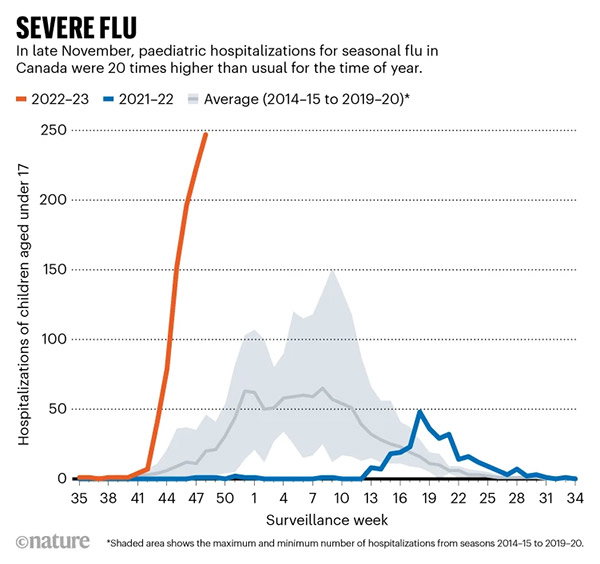
Surge of kids with flu in hospital in CanadaClinicians and parents in Canada are watching with concern as paediatric hospitalizations for seasonal influenza have reached more than ten times the normal rate for this time of year. The vast majority of flu samples gathered have been A(H3N2) — a subtype that is more severe than other common strains and is less susceptible to vaccines. The good news is that deaths in children from flu are still at normal, very low levels. And Australia’s 2022 winter flu season — which provides an early sense of how the Northern Hemisphere’s season might play out — suggests that an early surge can peter out after a vaccination push. Nature | 5 min readReference: Government of Canada FluWatch report |
|||||
|
|||||
International students returning to the USThe United States remains the leading host destination for international students and has reversed a pandemic-fuelled decline in enrolment. Foreign graduate students were responsible for most of the rebound. Concerns about the United States that could influence future trends include the high cost of living, abortion bans, racism and the possible impact that the 2024 US election might have on immigration policy. Political tensions between the United States and China have already contributed to an ongoing decline: last year, 9% fewer students from China chose to study in the United States than in 2020–21. Nature | 5 min readReference: The Open Doors Report from the Institute of International Education |
|||||
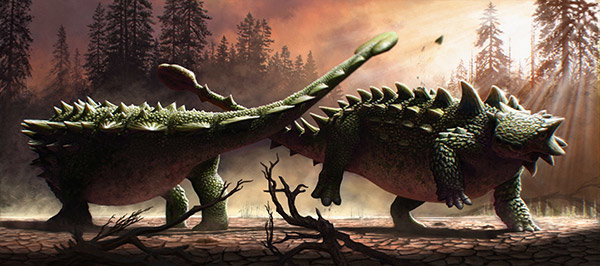
Ankylosaurs wooed mates with club combatAnkylosaurs might have used their enormous tail clubs to bash each other in battle over potential mates, rather than to ward off predators such as Tyrannosaurus rex. Researchers who analysed several Zuul crurivastator fossils (translation: ‘Zuul the shin-destroyer’) discovered that the spikes covering the animals’ bodies were often broken and half-healed around the hips. Since these scars were found only where another ankylosaurid club could have reached, the tail clubs were probably used for ritualistic combat, similar to how deer use their antlers. The New York Times | 5 min readReference: Biology Letters paper |
|||||
|
|||||
| (Illustrated by Henry Sharpe) | |||||
|
|||||
Stop racism from killing Black mothersThroughout her whole career, obstetrician Kecia Gaither had seen what systemic racism looks like for Black mothers in the United States: they receive lower-quality health care and are more at risk of complications and death during and after pregnancy. She explains how cardiovascular screening programmes, longer-term postpartum care and enhanced anti-bias training for physicians could help to turn the tide on maternal death rates. “In general, we need more physicians and researchers who look like us,” says Gaither. “Data show that Black patients fare better when they have Black doctors taking care of them.” Nature | 7 min read |
|||||
Why are astronauts going back to the Moon?Fifty years ago, the three-person crew of Apollo 17 became the last to visit the Moon. NASA’s Artemis I mission — which successfully returned to Earth on Sunday — aimed to rekindle the space-race spirit of lunar exploration. But as was the case during the cold war, US geopolitical prestige, rather than science, is the driving force, argues Alexandra Witze, Nature’s Earth and planetary sciences correspondent. Nature | 8 min read |
|||||
Access Nature and 54 other Nature journals
Nature+ gives you immediate online access to Nature and 54 other journals. Nature+ is a flexible monthly subscription and is currently available only to personal users in the United States and in the United Kingdom. |
|||||
The cliff-clinging plants of HawaiiIntrepid scientists are using drones to survey threatened cliff-dwelling plants in Hawaii. The technology can spare researchers from dangerous rappelling excursions and find samples that are unreachable, even to scientists on the end of a climbing rope. Admire some of the delightful discoveries made by high-flying botany-bots in this richly illustrated feature. Reuters | 7 min read |
|||||
|
|||||
|
|||||
|
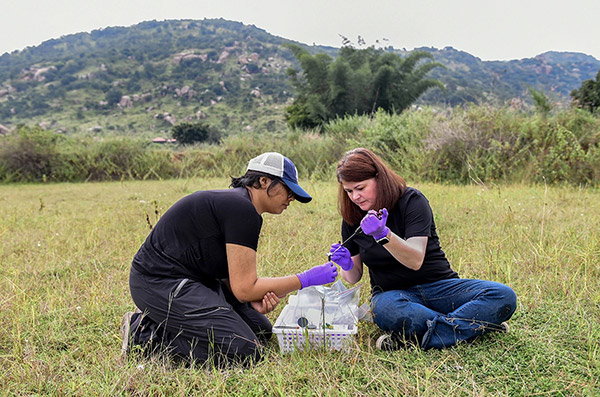
Chemical ecologists Shannon Olsson and Aditi Mishra trick insects with fake flowers. They planted their 3D printed flowers, which are coated with coloured paints and contain pollinator-attracting chemicals, in the Himalayas, Sweden and India. “Just out of the shot is our rolling lab, a rented jeep that we’ve decked out with delicate, specialist scientific equipment to measure the physiological activity of the pollinators, down to the rate of their heartbeats: a honeybee’s heart beats around 300 times a minute,” explains Olsson. This helps them to understand how insects identify and respond to flowers as people continue to alter the environment and climate. (Nature | 3 min read) (Sayan Hazra for Nature) |
|||||
|
|
|||||
|
|||||
|
|
|||||
|
|||||
|
You received this newsletter because you subscribed with the email address: - Please add [email protected] to your address book. Enjoying this newsletter? You can use this form to recommend it to a friend or colleague — thank you! Want to switch to the weekly edition? Update your preferences. Had enough? Unsubscribe from the Nature Briefing. Fancy a bit of a read? View our privacy policy. Forwarded by a friend? Get the Briefing straight to your inbox: subscribe for free. Want to master time management, protect your mental health and brush up on your skills? Sign up for our free short e-mail series for working scientists, Back to the lab. Get more from Nature: Register for free on nature.com to sign up for other newsletters specific to your field and email alerts from Nature Research journals. Would you like to read the Briefing in other languages? 关注Nature Portfolio官方微信订阅号,每周二为您推送Nature Briefing精选中文内容——自然每周简报。
Nature | The Springer Nature Campus, 4 Crinan Street, London, N1 9XW, United Kingdom Nature Research, part of Springer Nature. |