New organelle discovered inside animal cell
What matters in science |

Is this your brand on Milled? Claim it.
|
|||||
|
|||||
|
Hello Nature readers, |
|||||
|
|||||
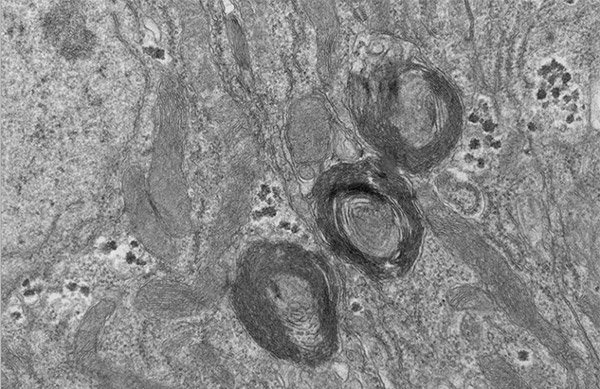
| Three of the newly discovered organelles in a fruit fly intestinal cell. The organelles appear to be a reservoir of phosphate, a molecule essential to life (Chiwei Xu et al./Nature) | |||||
New organelle discovered inside animal cellBiology textbooks look set for an update: researchers have just discovered a new kind of organelle, a tiny organ-like structure inside cells. Researchers made the discovery while investigating the role of phosphate in cell renewal in the guts of fruit flies (Drosophila melanogaster). The new organelle acts as a reservoir for phosphate, a nutrient that is essential for life. The discovery highlights how much there is to learn about cell physiology, says geneticist and study co-author Chiwei (Charles) Xu. “The beauty is there, it's just waiting for us to discover it.” Nature | 3 min readGo deeper with an expert analysis by developmental biologists Emily Strachan and Irene Miguel-Aliaga in the Nature News & Views article (7 min read, Nature paywall) Reference: Nature paper |
|||||
Promising Alzheimer’s drug donanemabFor the second time, an experimental drug has been shown to reduce the cognitive decline associated with Alzheimer's disease. On Wednesday, pharmaceutical company Eli Lilly announced in a press release that its monoclonal antibody donanemab slowed mental decline by 35% for some participants in a 1,736-person trial — a rate comparable to competitor drug lecanemab. Researchers warn that, until the full results are published, questions remain as to the drug’s clinical usefulness, as well as whether the modest benefit outweighs the risk of harmful side effects. Nature | 6 min read |
|||||
Wuhan market samples shed no more lightHopes have been dashed that genomic data from swabs collected in the early days of the pandemic will reveal the origins of COVID-19. Data from the swabs, collected by the Chinese Center for Disease Control and Prevention, have been analysed by three teams, but each has failed to pinpoint which animal species — if any — infected people at the market. “I would basically describe this as a negative result,” says Jesse Bloom, the virologist who conducted the latest analysis. Nature | 5 min readRead more: COVID-origins data from Wuhan market published: what scientists think (7 min read, from 5 April) Reference: bioRxiv preprint |
|||||
|
|||||
GISAID: controversy over genome databaseDuring the COVID-19 pandemic, the online platform GISAID emerged as the main repository for viral genome data. It now hosts more than 15 million SARS-CoV-2 genome sequences, more than any other existing database, as well as around 2 million influenza sequences. But several scientists have raised concerns about the platform’s lack of transparency, how it mediates disputes over credit and how it sanctions scientists who have allegedly violated its terms and conditions. Nature spoke with scientists in eight countries about what they see as the future of pathogen-genome sharing, and of GISAID. Nature | 11 min read |
|||||

|
|||||
ACCESS NATURE AND 54 OTHER NATURE JOURNALS
|
|||||
Futures: science fiction from NatureIn the latest short story for Nature’s Futures series:
|
|||||
Podcast: menopause and women’s healthThis week, features editor Kerri Smith and senior reporter Heidi Ledford join the Nature Podcast to discuss two stories that look at aspects of women’s health. The first drug that treats hot flushes without hormones represents a shift in thinking: menopause is driven by the brain, not just the ovaries. And many diseases that affect more women than men are underfunded; boosting investment in research into those conditions could reap big rewards. Nature Podcast | 27 min listenSubscribe to the Nature Podcast on Apple Podcasts, Google Podcasts or Spotify. |
|||||
|
|||||
Quote of the day“We have this binary concept of life and death that is ancient and outdated.”Pulmonologist Sam Parnia comments on a small study that showed a burst of brain activity in people while they were dying, which hints at an explanation for the experience of ‘life flashing before your eyes’. (Science | 5 min read) |
|||||
|
|
|||||
|
|||||
|
|
|||||
|
|||||
|
You received this newsletter because you subscribed with the email address: - Please add [email protected] to your address book. Enjoying this newsletter? You can use this form to recommend it to a friend or colleague — thank you! Want to switch to the weekly edition? Update your preferences. Had enough? Unsubscribe from the Nature Briefing. Fancy a bit of a read? View our privacy policy. Forwarded by a friend? Get the Briefing straight to your inbox: subscribe for free. Want to master time management, protect your mental health and brush up on your skills? Sign up for our free short e-mail series for working scientists, Back to the lab. Get more from Nature: Register for free on nature.com to sign up for other newsletters specific to your field and email alerts from Nature Research journals. Would you like to read the Briefing in other languages? 关注Nature Portfolio官方微信订阅号,每周二为您推送Nature Briefing精选中文内容——自然每周简报。
Nature | The Springer Nature Campus, 4 Crinan Street, London, N1 9XW, United Kingdom Nature Research, part of Springer Nature. |