No more, no less: six to eight hours sleep each day slows biological ageing
What matters in science |

Is this your brand on Milled? Claim it.
|
|||||
|
|||||
|
Hello Nature readers, |
|||||
|
|||||
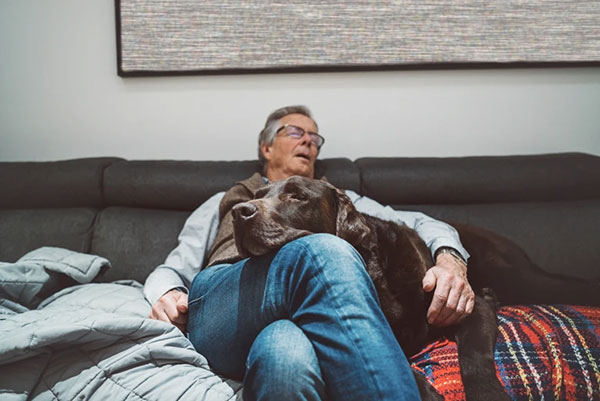
| The results of a new study provide one of the most comprehensive snapshots of the interplay between sleep and ageing throughout the body. (Justin Paget/Getty) | |||||
Seven hours is sleep ‘sweet spot’Getting about six to eight hours of sleep each day is linked to a lower risk of death and disease — any more or less is associated with accelerated biological ageing. Researchers analysed health data from more than 500,000 people and found that the ticks of 12 biological ‘clocks’ were generally slowest in people who got about seven hours of sleep, though the optimum amount of sleep time varied slightly between clocks that indicate age in different organs, and between men and women. Nature | 5 min readReference: Nature paper |
|||||
Mum’s a Denisovan, Dad’s a Homo erectusAncient proteins extracted from the teeth of Homo erectus individuals that lived in China suggest that the group might have interbred with Denisovans, another archaic human species. Researchers used enamel proteins from six H. erectus individuals and identified an amino-acid variant that’s previously been seen in Denisovans. The group also identified two amino-acid sequence variants shared by all six individuals that set H. erectus apart from humans and other human relatives — something that has proved hard to find in the past. Nature | 5 min readReference: Nature paper |
|||||
Antiviral pill prevents COVID infectionFor the first time, an antiviral pill has been shown to prevent people coming down with COVID-19 after being exposed to the SARS-CoV-2 virus. The drug, ensitrelvir, blocks an enzyme that coronaviruses need to make new copies of themselves. The results come years after the peak of the COVID-19 pandemic, but the drug could be a lifeline for those who still face real danger from the virus, such as care-home residents or transplant recipients on immune-suppressing medication. Nature | 5 min readReference: New England Journal of Medicine paper |
|||||
|
|||||
India’s DNA map reveals amazing diversityIndia’s biggest gene-sequencing effort has shed new light on the diversity of the population, identifying nearly 130 million genetic variants, almost a third of which have not been reported previously. The GenomeIndia project analysed the whole genomes of almost 10,000 people, uncovering 44 million variants that weren’t already in global scientific databases. The study also revealed genetic risk factors in some populations, such as variants in genes that affect how the body processes certain drugs, variants linked to anaesthesia-related complications and extremely high levels of genetic homozygosity — when individuals inherit identical forms of a gene at a particular chromosome location from both parents. This can be a risk factor for recessive genetic diseases. Nature India | 8 min readReference: medRxiv preprint (not peer reviewed) |
|||||
The last taxidermistTim Bovard is the last full-time taxidermist at any museum in the United States. He maintains the animal mounts at the Museum of Natural History in Los Angeles, some of which have been in the museum’s collection for more than a century. A life-long animal enthusiast, Bovard is still dedicated to his craft after more than four decades at the museum, often sleeping in his office to cut out his commute. “It wouldn’t be for everybody,” Bovard says. “But I am known to be slightly different. That’s putting it sort of mildly.” The New York Times | 5 min read |
|||||
Antibiotics look too similar to other drugsThe physical appearance of antibiotic drugs is contributing to the rise of antimicrobial resistance, argues medical microbiologist Heiman Wertheim. If people can’t easily distinguish antibiotics from other medications, they won’t use them with care. And it isn’t just a problem among people prescribed the drugs: “I’ve asked audiences of infectious-disease specialists, who you’d assume would know, to identify an antibiotic in a photograph of three capsules,” he says. “Most of them pick the green and yellow one, which is actually a painkiller.” Nature | 6 min readThis article is part of Nature Outlook: Antimicrobial resistance, an editorially-independent supplement produced with financial support from Meiji Seika Pharma. |
|||||
|
|||||
|
|||||
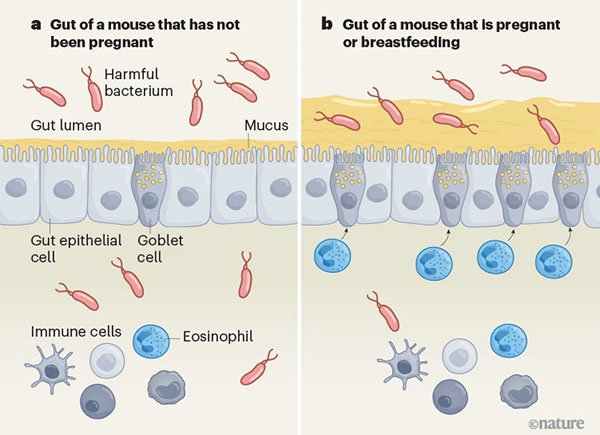
| Being pregnant, or breastfeeding, seems to cause immune changes that bolster the gut’s defence against harmful bacteria. In mice, immune cells called eosinophils boost the number of goblet cells in the gut lining, which produce a thick mucus that shuts out invading bacteria. (Nature News & Views | 8 min read) | |||||
Quote of the day“If you think about a ukulele, a guitar and a violin, their sound is defined by the material they are made out of, the number of strings and how you play them. The voice is the same.”People are pretty good at deducing information about others, such as height, just by listening, because physical characteristics can alter the sound of your voice, says neuroscientist Sophie Scott. (The Guardian | 8 min read) |
|||||
|
|
|||||
|
|||||
|
|
|||||
Free newsletters from NatureWant more? Update your preferences to sign up to our other Nature Briefing newsletters:
|
|||||
|
|||||
|
You received this newsletter because you subscribed with the email address: - Please add [email protected] to your address book. Enjoying this newsletter? You can use this form to recommend it to a friend or colleague — thank you! Had enough? To unsubscribe from this Briefing, but keep receiving your other Nature Briefing newsletters, please update your subscription preferences. To stop all Nature Briefing emails forever, click here to remove your personal data from our system. Fancy a bit of a read? View our privacy policy. Forwarded by a friend? Get the Briefing straight to your inbox: subscribe for free. Want to master time management, protect your mental health and brush up on your skills? Sign up for our free short e-mail series for working scientists, Back to the lab. Get more from Nature: Register for free on nature.com to sign up for other newsletters specific to your field and email alerts from Nature Portfolio journals. Would you like to read the Briefing in other languages? 关注Nature Portfolio官方微信订阅号,每周二为您推送Nature Briefing精选中文内容——自然每周简报。
Nature Portfolio | The Springer Nature Campus, 4 Crinan Street, London, N1 9XW, United Kingdom Nature Portfolio, part of Springer Nature. |