Octopus-inspired synthetic ‘skin’ changes colour and texture on demand
What matters in science |

Is this your brand on Milled? Claim it.
|
|||||
|
|||||
|
Hello Nature readers, |
|||||
|
|||||
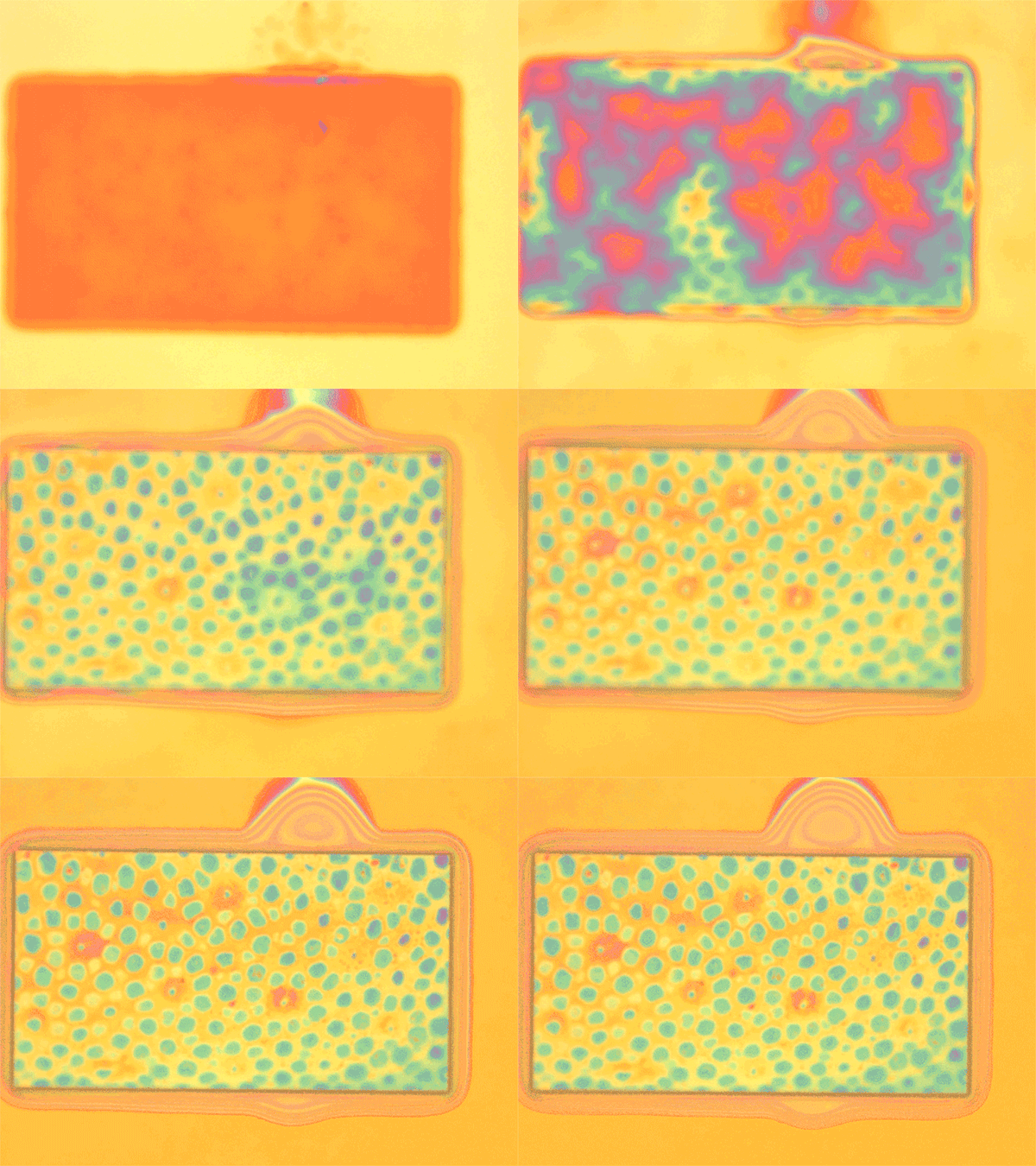
| A new colour- and texture-changing material was inspired by the ability of octopuses to camouflage themselves against rocks. (Siddharth Doshi, Neerav Soneji, Katie Richards) | |||||
Artificial ‘skin’ changes colour on cueResearchers have created a synthetic ‘skin’ that can change colour and texture on demand. The material can switch from matte to shiny and display a variety of other effects, before reverting back to its initial state. The team used an electron beam to make a ‘landscape’ of bumps on the surface of a polymer that reversibly swells on contact with water. The bumps absorb varying amounts of water, which resulted in a material that could drastically change its appearance when wet. The flow of liquid can be controlled by covering the material with a transparent film. Nature | 4 min readReference: Nature paper |
|||||
Poison arrows used 60,000 years agoTraces of toxic compounds have been found on 60,000-year-old arrowheads, providing the oldest chemical evidence that Palaeolithic hunter-gatherers used poison to bring down prey. Chemical analysis revealed a compound called buphandrine, derived from the poison bulb plant (Boophone disticha), on arrowheads discovered in KwaZulu-Natal, South Africa. The use of poisons “shows advanced planning, strategy and causal reasoning” among hunter-gatherers, says archaeologist Justin Bradfield. It also suggests that they had a complex understanding of the properties of plants, says archaeologist April Nowell. Nature | 4 min readReference: Science Advances paper |
|||||
Mpox evolution is a ‘bag of surprises’As mpox continues to spark localized outbreaks in Africa and elsewhere, researchers are racing to understand more about the virus that has caused two public-health emergencies in the past three years. In December, a preprint study found that one mpox strain seems to lurk in the testes of infected male mice. And health officials in the United Kingdom reported that a person had been infected with a never-before-seen strain that is a mashup of two other types. “We should not underestimate what it can do if it’s allowed to become firmly entrenched in human populations and continue to adapt,” says infectious-disease physician Boghuma Titanji. Nature | 6 min readReference: bioRxiv preprint (not peer reviewed) & UK Health Security Agency report |
|||||
|
|||||
The Da Vinci (DNA) codeScientists have recovered DNA from Holy Child, a more than 500-year-old artwork that is thought to have been drawn by Leonardo da Vinci. After analysis, the team suggests that the DNA could be da Vinci’s, which hints that the artwork is in fact his, and not one of his students’. Their current findings aren’t definitive proof, but could demonstrate the promise of ‘arteomics’, an emerging technique that uses DNA and other biological traces to authenticate artworks rather than relying on expert opinion. If proven to be reliable, arteomics “doesn’t just open a new window, it opens a whole new world” for authenticating art, says chemist Stefan Simon. Science | 15 min readReference: bioRxiv preprint (not peer reviewed) |
|||||
An antacid for the oceanLast year, scientists conducted a small test of a new, controversial geoengineering technique to combat ocean acidification: pumping the strongly alkaline sodium hydroxide into the water. If kept at a normal pH, the ocean could continue to absorb carbon from the atmosphere, and marine life would be spared the devastated effects of acidification. Early results suggest the method, called ocean alkalinity enhancement, can work, with negligible effects on marine ecosystems. But tackling ocean acidification globally would require the technique to be rolled out on a huge scale, which could have far more unpredictable impacts in the long term, say some researchers. The New York Times | 14 min read |
|||||
Don’t define UPFs, define their oppositeRather than wrangling over an ever-changing definition of ‘ultra-processed foods’ (UPFs), policymakers should draw up a universal definition of ‘non-ultra-processed foods’, argue three health-policy researchers. Using this static definition in health policies will make the regulatory decisions surrounding food products more clear-cut and prevent manufacturers from reformulating their products to avoid being designated as ultra-processed. “Instead of encouraging manufacturers to switch one ingredient for another, we need a definition that will incentivize the production and distribution of non-ultra-processed foods,” the authors write. Nature Medicine | 8 min read |
|||||
|
|||||
|
|||||
|
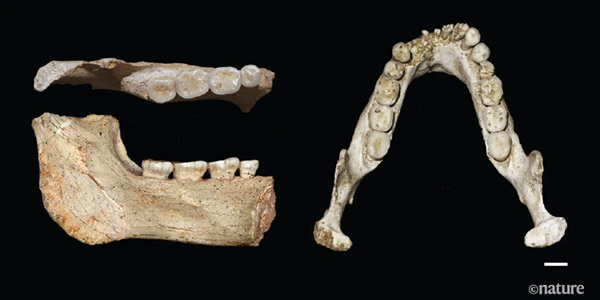
These 773,000-year-old fossils, recovered from a quarry in Morocco, could give researchers clues about the last common ancestor (LCA) — the ancient lineage we share with Neanderthals, whose exact identity has long eluded scientists. Researchers found that the fossils are similar in age to those of Homo antecessor, another proto-human species discovered in Spain, but are morphologically distinct. The age of the fossils fills a crucial gap from around 1,000,000 to 600,000 years ago in which few similar fossils have been discovered in Africa. (Nature News & Views | 7 min read) Reference: Nature paper |
|||||
Quote of the day“While all other nations are stepping forward together, this latest step back from global leadership, climate cooperation and science can only harm the US economy, jobs and living standards, as wildfires, floods, mega-storms and droughts get rapidly worse.”Simon Stiell, the head of the United Nations Framework Convention on Climate Change, says that the body’s “doors remain open” to the United States after President Donald Trump ordered that the country withdraw from dozens of international organisations, including many that work to combat climate change. (Euronews | 4 min read) |
|||||
|
|
|||||
|
|||||
|
|
|||||
Free newsletters from NatureWant more? Update your preferences to sign up to our other Nature Briefing newsletters:
|
|||||
|
|||||
|
You received this newsletter because you subscribed with the email address: - Please add [email protected] to your address book. Enjoying this newsletter? You can use this form to recommend it to a friend or colleague — thank you! Had enough? To unsubscribe from this Briefing, but keep receiving your other Nature Briefing newsletters, please update your subscription preferences. To stop all Nature Briefing emails forever, click here to remove your personal data from our system. Fancy a bit of a read? View our privacy policy. Forwarded by a friend? Get the Briefing straight to your inbox: subscribe for free. Want to master time management, protect your mental health and brush up on your skills? Sign up for our free short e-mail series for working scientists, Back to the lab. Get more from Nature: Register for free on nature.com to sign up for other newsletters specific to your field and email alerts from Nature Portfolio journals. Would you like to read the Briefing in other languages? 关注Nature Portfolio官方微信订阅号,每周二为您推送Nature Briefing精选中文内容——自然每周简报。
Nature Portfolio | The Springer Nature Campus, 4 Crinan Street, London, N1 9XW, United Kingdom Nature Portfolio, part of Springer Nature. |