Parasite gives wolves what it takes to be pack leaders
What matters in science |

Is this your brand on Milled? Claim it.
|
|||||
|
|||||
|
Hello Nature readers, |
|||||
|
|||||
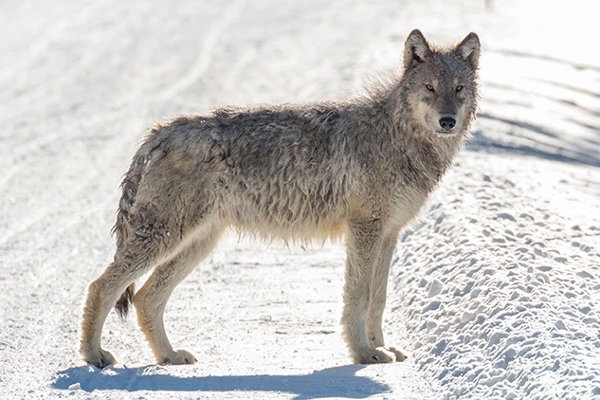
| Some wolves in Yellowstone National Park, Wyoming, share territory with cougars — and can become infected with their parasites. (mtnmichelle/Getty) | |||||
Parasite makes leaders of the packWolves infected with a parasite that commonly infects cats are more likely to become leaders of the pack or strike out on their own. In a data set spanning 27 years, wolves in Yellowstone National Parkthat were infected with Toxoplasma gondii were 46 times more likely to become pack leaders and 11 times more likely to start a new pack than were uninfected animals. “Parasites might have a much larger role than anyone generally gives them credit for,” says wildlife ecologist and study co-author Connor Meyer. Nature | 4 min readReference: Communications Biology paper |
|||||
Europe’s first Mars rover mission savedThe European Space Agency’s (ESA) ExoMars mission is back on track after it secured a reported €360 million (US$375-million) investment from European countries. The money will allow ESA to start designing a new landing platform intended to lower its first Martian rover onto the planet’s surface. The work is necessary because ESA severed ties with its former partner on the mission, the Russian space agency Roscosmos, in March, after Russia’s invasion of Ukraine. Russia was in charge of designing and building landing gear for the rover, as well as launching the mission from its site in Baikonur, Kazakhstan. Nature | 4 min read |
|||||
News round-upTop stories from earlier in the week:
|
|||||
|
|||||
Insidious interpretations of fossil findsIn Bones and Bodies, forensic anthropologist Alan Morris takes us on a journey to the past, revealing racist interpretations of historically important fossils and artefacts related to the origin of humanity. “The tour is fascinating, demoralizing and insightful,” writes reviewer Fatimah Jackson, a biological anthropologist. “Combing through more than 100 years of scholarship, Morris lays bare how anthropologists built a ‘scientific’ justification for the low status they afforded peoples of African descent, particularly in South Africa, and how this justification became part of a systematic effort to ensure African peoples’ disenfranchisement.” Nature | 6 min read |
|||||
Access Nature and 55 other Nature journals
For US$29.99 or £24.99 per month, the new Nature+ subscription gives you immediate online access to Nature and 55 other Nature journals. Nature+ is a flexible monthly subscription and is currently available only to personal users in the United States and in the United Kingdom. |
|||||
Include aerosols in climate risk assessmentsAerosols are the miasma of soot (black carbon), sulfur dioxide, organic carbon and other compounds that drives poor air quality over many of the world’s most-populated regions. Studies show that this toxic smog strongly affects the likelihood of extreme precipitation events, such as those that contributed to Pakistan’s deadly floods in June this year. But estimates of impending risk ignore this big player in regional change and climate extremes. “Worse, it is not clear whether aerosols are set to rise, fall or stabilize,” write three experts in aerosol–climate interaction, climate impacts and scenario development. Nature | 9 min read |
|||||
Futures: Science fiction from NatureIn the latest short stories for Nature’s Futures series:
|
|||||
Podcast: The satellite-free alternative to GPSSatellite navigation has revolutionized how humans find their way. However, these systems often struggle in urban areas, where buildings can interfere with weak satellite signals. This week the Nature Podcast explores an alternative, satellite-free navigation system based on mobile-phone signals, which could improve applications that require precise positioning in cities, such as self-driving cars. Nature Podcast | 24 min listenSubscribe to the Nature Podcast on Apple Podcasts, Google Podcasts or Spotify. |
|||||

|
|||||
Features & opinion round-upTop stories from earlier in the week:
|
|||||
Quote of the day“We know that even in the face of a shifting climate, direct exploitation remains the largest factor affecting aquatic animals.”A dramatic crash in the population of snow crabs (Chionoecetes opilio) — a loss of nearly 11 billion crabs — has been blamed mostly on climate change, but there is evidence that overfishing might have been ignored. (Nautilus | 12 min read) |
|||||
|
|
|||||
|
|||||
|
|
|||||
|
|||||
|
You received this newsletter because you subscribed with the email address: - Please add [email protected] to your address book. Enjoying this newsletter? You can use this form to recommend it to a friend or colleague — thank you! Want to switch to the weekly edition or change your email address? Update your preferences. Had enough? Unsubscribe from the Nature Briefing. Fancy a bit of a read? View our privacy policy. Forwarded by a friend? Get the Briefing straight to your inbox: subscribe for free. Want to master time management, protect your mental health and brush up on your skills? Sign up for our free short e-mail series for working scientists, Back to the lab. Get more from Nature: Register for free on nature.com to sign up for other newsletters specific to your field and email alerts from Nature Research journals. Would you like to read the Briefing in other languages? 关注Nature Portfolio官方微信订阅号,每周二为您推送Nature Briefing精选中文内容——自然每周简报。
Nature | The Springer Nature Campus, 4 Crinan Street, London, N1 9XW, United Kingdom Nature Research, part of Springer Nature. |