People older than 110 have more cancer-killing T cells
What matters in science |

Is this your brand on Milled? Claim it.
|
||
|
||
|
Hello Nature readers, |
||
|
||
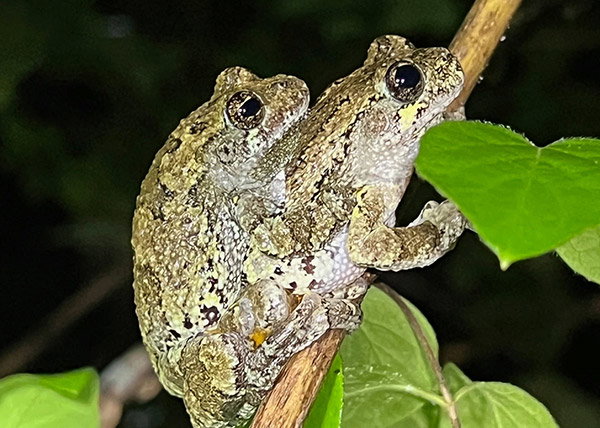
| As the number of calls increased, females became less accurate in selecting the target long-duration call, no matter the background noise. (Jessie C. Tanner) | ||
Too much mate choice overwhelms frogsFemale Cope’s gray treefrogs (Dryophytes chrysoscelis) struggle to pick the best mates when presented with too much choice. Typically, female treefrogs choose male suitors with the longest calls. When researchers played these longer ‘target’ calls alongside several shorter ‘distractor’ calls, the female frogs faced ‘choice overload’: they took longer to decide on a mate and picked the target call with less accuracy. Nautilus | 4 min readReference: iScience paper |
||
Cancer-killing cells in those who live to 110People who live to 110 years and older have large populations of a rare type of immune cell that can kill cancer. These killer T cells might help people to live to extraordinarily long ages by fighting off cancer — although this has yet to be proved. “Most of immune ageing research has focused on decline,” says biologist Kosuke Hashimoto, who co-authored the research. “Our study suggests that even at extreme old age, the immune system may still selectively adapt.” Nature | 7 min readReference: Cell Reports paper |
||
AI vibe coding in the quantum realmResearchers at Pasqal, a quantum-computing start-up company in Paris, have developed an artificial-intelligence tool that can turn an English-language prompt into quantum-computing code and then autonomously run it on a quantum computer, although it sometimes needs human intervention. Its makers say it can open doors to a field in which programming has notoriously required sophisticated skills. Nature | 7 min readReference: arXiv preprint (not peer reviewed) |
||
5-year-old organoids mimic growing brainResearchers have made the longest-lived organs made in a laboratory, so far: brain organoids that mirror the development of the human brain, and grew for more than five years. “They didn’t just survive for five years, they continued to change, develop and mature over time,” says developmental neurobiologist Paola Arlotta. The cells showed gene-expression changes similar to those that take place in the brains of fetuses and newborns, occurring around the same pace. And cells from ‘old’ organoids that were mixed with a fresh batch seemed to retain a ‘memory’ of their age and function, making neurons suitable for an older brain rather than their new situation. Nature | 6 min readReference: Nature paper |
||
|
||
Should babies have their genomes screened?Dozens of initiatives are assessing the feasibility of widespread screening for newborns to identify genetic variants associated with diseases. “If I had just kept scrolling on Facebook and not joined, then we’d probably still be, potentially even now, working out: ‘What’s wrong with her?’” says Justin Ghattas, whose daughter was diagnosed with — and successfully treated for — a rare condition as part of a trial programme in Australia. But the process is currently costly and difficult to scale up, and some people have ethical concerns about privacy and the potential for discrimination by insurance companies. Nature | 15 min read |
||
Geopolitics stands between jaguarsSince 2020, a small number of female jaguars (Panthera onca) have been spotted in northern Mexico. These females are nearing the domain of the male Cinco, the only known jaguar in the United States. A meeting could kickstart the return of the US jaguar population, but the border wall and fencing constructed by the US government stand in the way. And the planned extension of the barrier will block several more ‘corridors’ that wild animals use to move between countries. “This will have serious impacts on wildlife. It’s quite devastating,” says biologist Kinley Ragan. The New York Times | 8 min read |
||
Don’t be afraid of the informal chatThe prospect of an informal meeting with a potential manager or colleague might feel awkward, but it can be an invaluable opportunity to give them a full picture of your personality and working style that interviews can’t capture, writes career coach Alaina Levine. Be up-front about what you want from the chat, but remember to consider what advice or contacts you might be able to offer them in return. “When you network with honour and authenticity, everyone wins,” Levine writes. Nature | 8 min read |
||
|
||
|
||
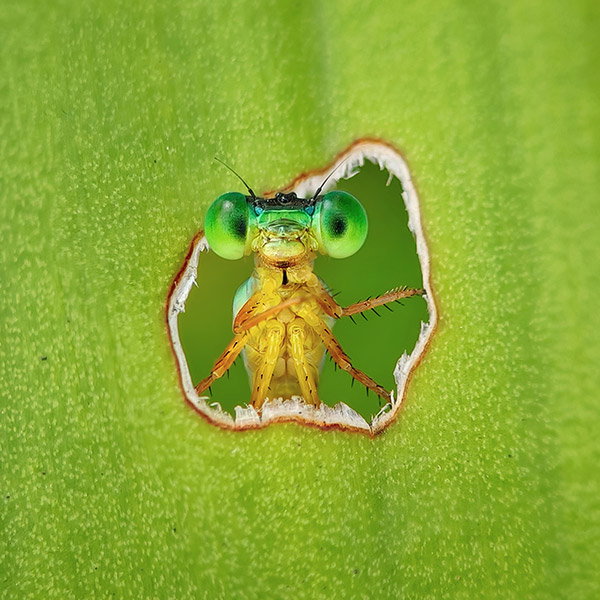
| This photo, titled Window to the Wetlands, is the overall winner of BMC Ecology and Evolution and BMC Zoology’s 2026 joint photo competition, which invited photographers around the world to submit photos that celebrate the diversity of nature. Wildlife photographer Sritam Kumar Sethy captured this orange-tailed marsh dart damselfly (Ceriagrion cerinorubellum) peering through a natural opening in a leaf, which he says “offers a glimpse into the often-overlooked world of freshwater biodiversity”. (Popular Science | Leisurely scroll) (Sritam Kumar Sethy) | ||
Quote of the day“Give them plenty of space, do not try to pick them up, and wish them luck on their quest for love.”Officials at Zion National Park, Utah, warn visitors that August marks the start of the breeding season for desert tarantulas (Aphonopelma iodius), which will bring the usually reclusive arachnids out into the open in search of a mate. (Popular Science | 4 min read) |
||
|
|
||
|
||
|
|
||
Free newsletters from NatureWant more? Update your preferences to sign up to our other Nature Briefing newsletters:
|
||
|
||
|
You received this newsletter because you subscribed with the email address: - Please add [email protected] to your address book. Had enough? To unsubscribe from this Briefing, but keep receiving your other Nature Briefing newsletters, please update your subscription preferences. To stop all Nature Briefing e-mails forever, click here to remove your personal data from our system. Fancy a bit of a read? View our privacy policy. Forwarded by a friend? Get the Briefing straight to your inbox: subscribe for free. Get more from Nature: Register for free on nature.com to sign up for other newsletters specific to your field and e-mail alerts from Nature Portfolio journals. Would you like to read the Briefing in other languages? 关注Nature Portfolio官方微信订阅号,每周二为您推送Nature Briefing精选中文内容——自然每周简报。
Nature Portfolio | The Springer Nature Campus, 4 Crinan Street, London, N1 9XW, United Kingdom Nature Portfolio, part of Springer Nature. |