Precise genome editing of human embryos inspires praise and alarm
What matters in science |

Is this your brand on Milled? Claim it.
|
|||||
|
|||||
|
Hello Nature readers, |
|||||
|
|||||
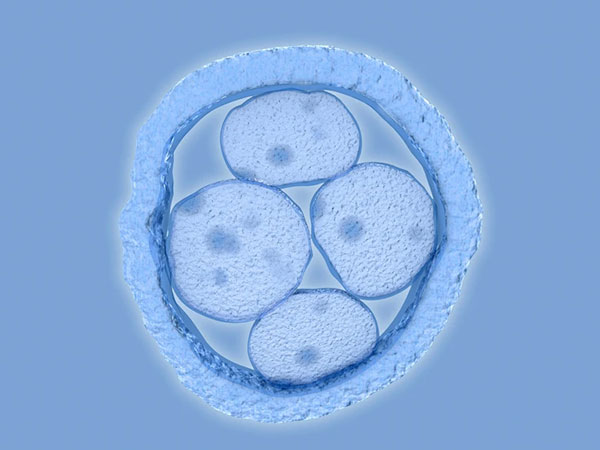
| Base editing is more precise and reliable than CRISPR–Cas9 gene editing, which biophysicist He Jiankui used to edit the DNA of human embryos in 2018 — an effort that ultimately landed him in jail. (Juan Gaertner/Science Photo Library) | |||||
Human embryos altered using base editingResearchers say they have used a precise genome-editing technique called base editing to alter the genome of human embryos — prompting praise and censure from scientists. Some say the new work is an impressive step towards being able to fix disease-causing mutations in embryos. Others worry the technology could be used to create ‘designer babies’. But it’s premature and risky to attempt this, says developmental cell biologist Dieter Egli, who co-authored the new study, because base editing can damage embryos. In its current form, “you can’t use it. It’s as clear as day and night,” he says. Nature | 7 min readReference: bioRxiv preprint (not peer reviewed) |
|||||
Police expel scientists from US conferenceSeveral diabetes experts were thrown out of the annual meeting of the American Diabetes Association (ADA) as they handed out copies of an editorial critical of the Trump administration’s science policies. Among them were the editor in chief of the organization's flagship journal, which published the editorial, and other physicians and researchers. “They physically grabbed us, forced us out of the conference center, and now are telling us we can no longer attend this meeting,” said Aaron Kelly, a professor of paediatrics. “It really has come to this in America.” The ADA said in a statement that it is obliged to “maintain a strictly nonpartisan environment”. MedPage Today | 6 min readReference: Diabetes Care editorial |
|||||
|
|||||
Stonehenge ‘altar’ carried on glacierA massive slab at the center of Stonehenge somehow travelled 700 kilometres from its origin in northeast Scotland to its current home in the south of England. A model of Neolithic ice flows suggests a glacier might have carried the six-tonne monolith as far as Doggerland — an area that is now beneath the North Sea. Then, roughly 3,000 years before it came to Stonehenge, people may have saved the rock from rising sea levels. “What is exciting about these findings is that they could imply that the people of Doggerland attached cultural significance to the Altar Stone long before it was incorporated into Stonehenge,” says glaciologist and study co-author Remy Veness. BBC Science Focus | 4 min readReference: Journal of Quaternary Science paper |
|||||
Why cancer is rising in young peopleAround the world, multiple types of cancer are climbing rapidly in people under the age of 50, leaving researchers scrambling to find what’s driving them. There’s no smoking gun, but suspects abound: ultra-processed foods, obesity, microbial toxins and agricultural chemicals were all in researchers’ line-up at two influential cancer meetings this year. But rising cancer incidence “does not tell a single story”, says epidemiologist Hyuna Sung. It’s important to investigate the rise of specific cancer types, rather than cases as a whole, to avoid muddying the evidence. Nature | 8 min read |
|||||
|
|||||
AI is taking on antibiotic resistanceAntibiotics are an effective, but somewhat indiscriminate solution to some gut infections. Helpful species of gut bacteria get caught in the crossfire, which increases the likelihood that drug-resistant bacterial strains will evolve. Researchers are now designing drugs to selectively target disease-causing species with the help of artificial intelligence. Some teams are using AI to screen drug molecules for the most promising candidates quickly and cheaply. Others have developed tools that predict how drug molecules bind to protein targets to reveal a drug’s mechanism of action, reducing the need for wet-lab experiments. Nature | 15 min read |
|||||
Decline and fall — or renaissance?In Tipping Out of Trouble, complex-systems researcher Marten Scheffer explores the ‘tipping points’ that led to societal transformations throughout history and what we can learn from them to build a sustainable future. “Humanity has tipped out of trouble many times before,” he writes, but doing so now requires a “fundamental shift of scale” in efforts to tackle climate change and nature loss. Scheffer highlights “the complexity of societal change”, writes geographer David Armstrong McKay in his review, and “how it often takes people by surprise but can have positive outcomes”. Nature | 11 min read |
|||||
Merton showed ‘what science should be’As the scientific enterprise in the United States is buffeted by political storms, social scientist Natalie Aviles and ethnographer Janet Vertesi take a fresh look at the influence of sociologist of science Robert K. Merton. Merton described four ‘norms’ — universalism, communalism, disinterestedness and organized scepticism — as the scaffolding of a science unsullied by politics or market forces. Merton’s ideas about a ‘pure’ science were criticized, but they now “take on a fresh urgency as a vision of what science should be”, write the authors. “They offer a direct critique of science under totalitarianism and a prescription for its democratic protection.” Issues in Science and Technology | 14 min read |
|||||
Quote of the day“If a researcher detects a candidate signal, which could be an artificial radio signal, or something else, such as a sign of alien technology, the first step isn’t a post on social media; it’s a quiet, rigorous attempt to prove themselves wrong.”The protocols for what happens if scientists find evidence of life beyond Earth have been carefully revised for the age of deepfakes and doxxing, explains astrophysicist Michael Garrett. (The Conversation | 7 min read) |
|||||
|
|
|||||
|
|||||
|
|
|||||
Free newsletters from NatureWant more? Update your preferences to sign up to our other Nature Briefing newsletters:
|
|||||
|
|||||
|
You received this newsletter because you subscribed with the email address: - Please add [email protected] to your address book. Enjoying this newsletter? You can use this form to recommend it to a friend or colleague — thank you! Had enough? To unsubscribe from this Briefing, but keep receiving your other Nature Briefing newsletters, please update your subscription preferences. To stop all Nature Briefing emails forever, click here to remove your personal data from our system. Fancy a bit of a read? View our privacy policy. Forwarded by a friend? Get the Briefing straight to your inbox: subscribe for free. Want to master time management, protect your mental health and brush up on your skills? Sign up for our free short e-mail series for working scientists, Back to the lab. Get more from Nature: Register for free on nature.com to sign up for other newsletters specific to your field and email alerts from Nature Portfolio journals. Would you like to read the Briefing in other languages? 关注Nature Portfolio官方微信订阅号,每周二为您推送Nature Briefing精选中文内容——自然每周简报。
Nature Portfolio | The Springer Nature Campus, 4 Crinan Street, London, N1 9XW, United Kingdom Nature Portfolio, part of Springer Nature. |