Save Hubble: should we rescue the iconic space telescope?
What matters in science |

Is this your brand on Milled? Claim it.
|
|||||
|
|||||
|
Hello Nature readers, |
|||||
|
|||||
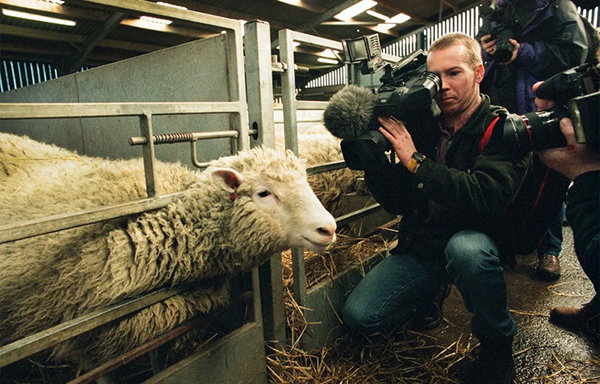
| Dolly the sheep propelled genetics and reproductive biology into the public eye. (Colin McPherson/Corbis/Getty) | |||||
Dolly: the sheep that changed everythingThirty years ago this week, a sheep named Dolly was born — the first mammal cloned from an adult cell. “It was absolutely bonkers,” recalls biotech researcher Bruce Whitelaw. “We weren’t ready for that.” Reproductive cloning is now being used to create cattle with no horns, pigs with more transplant-friendly organs and copies of cherished pets. Reference: Nature paper (from 1997) |
|||||
‘First Fleet’ brought smallpox to AustraliaThe 11 British ships that brought the first European colonizers to Australia in 1788 also brought smallpox, suggests new research — and its impact was enormous. Researchers modelled the spread of the disease and found that the outbreak originated with the ‘First Fleet’ — perhaps from material brought to inoculate against the disease. A second modelling study suggests that the continent might have been home to more than 2.5 million people at the time — meaning that the colonial invasion led to the deaths of almost 2.4 million people. Science | 10 min readReference: Research Square preprint 1 & Research Square preprint 2 |
|||||
Five graphs reveal heatwave dangerClimate change is making heatwaves more frequent, longer and more intense — and heat is the deadliest type of weather. New Scientist lays bare the facts of extreme heat in five graphs that show why heat is so dangerous — and what cities can do to adapt. New Scientist | 6 min read (free registration required) |
|||||
|
|||||
|
|||||
|
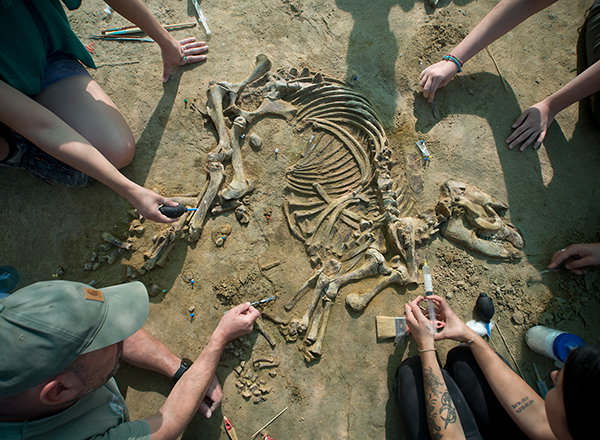
This 4-million-year-old fossil of a tapir (Tapirus arvernensis) excavated in Spain is one of the best-preserved skeletons of the species, which went extinct 2.6 million years ago. See more of the month’s sharpest science shots, selected by Nature’s photo team. (Gerard Campeny/IPHES-CERCA) |
|||||
|
|||||
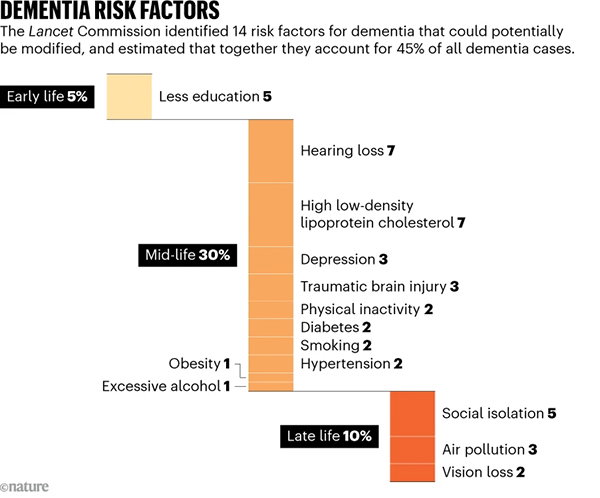
Can you head off the risk of dementia?A growing number of ambitious clinical trials aim to pin down the effects of lifestyle factors such as a healthy diet and social stimulation on reducing a person’s risk of dementia. So far, data suggest that even intensive interventions help only slightly, and none have reduced dementia incidence. But some researchers argue that any reduction in cognitive decline is worth the effort of implementing such programmes. Others are concerned that research focuses too much on personal responsibility when risk factors such as air pollution and access to education are mostly outside of people’s control. Nature | 12 min read |
|||||
|
|||||
| Exposure to many dementia risk factors, such as physical inactivity or drinking alcohol, could have occurred over decades, and it’s unclear whether changing them in mid-life will undo damage that’s already been done. | |||||
Hubble deserves to stay in spaceThe Hubble Space Telescope should remain operational for as long as technically feasible to continue collecting invaluable data on the Universe, argues astrophysicist Rogier Windhorst. Keeping Hubble active into its fifth decade will require NASA to boost the telescope into a higher, more stable orbit. Any viable options to enable that deserve serious consideration, Windhorst writes. “Scientific progress depends on continuity as much as it does on innovation.” Nature | 5 min read |
|||||
The world’s oldest people are probably dead“It is pretty hard to publish a scientific case report about a grandma reaching 88 years old, but if she manages 122 you might even squeeze a book out of it,” notes researcher Saul Justin Newman in his book Morbid, which aims to debunk modern longevity science. He argues that the field is beset with questionable data, tarnishing research findings and skewing policy decisions. For example, a government investigation found that 80% of Japanese centenarians on the books were missing or had died. The New Yorker | 19 min read |
|||||
Quote of the day“Public trust will keep eroding if every legal outcome is treated as though it were a scientific finding.”The US Supreme Court has ruled that the manufacturers of the weedkiller Roundup cannot be sued for a failure to include a warning that the product could be carcinogenic. But legal decisions like this one haven’t settled the scientific question of whether Roundup causes cancer, and shouldn’t be represented as having done so by the media, writes epidemiologist Alex Smolak. (STAT | 7 min read, intermittent paywall) |
|||||
|
|
|||||
|
|||||
|
|
|||||
Free newsletters from NatureWant more? Update your preferences to sign up to our other Nature Briefing newsletters:
|
|||||
|
|||||
|
You received this newsletter because you subscribed with the email address: - Please add [email protected] to your address book. Enjoying this newsletter? You can use this form to recommend it to a friend or colleague — thank you! Had enough? To unsubscribe from this Briefing, but keep receiving your other Nature Briefing newsletters, please update your subscription preferences. To stop all Nature Briefing emails forever, click here to remove your personal data from our system. Fancy a bit of a read? View our privacy policy. Forwarded by a friend? Get the Briefing straight to your inbox: subscribe for free. Want to master time management, protect your mental health and brush up on your skills? Sign up for our free short e-mail series for working scientists, Back to the lab. Get more from Nature: Register for free on nature.com to sign up for other newsletters specific to your field and email alerts from Nature Portfolio journals. Would you like to read the Briefing in other languages? 关注Nature Portfolio官方微信订阅号,每周二为您推送Nature Briefing精选中文内容——自然每周简报。
Nature Portfolio | The Springer Nature Campus, 4 Crinan Street, London, N1 9XW, United Kingdom Nature Portfolio, part of Springer Nature. |