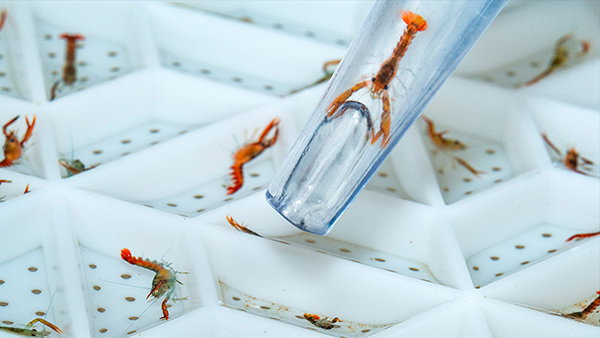
Say hello to the next generation of lobsters — August’s best science images
What matters in science |

Is this your brand on Milled? Claim it.
|
||
|
||
|
Hello Nature readers, |
||
|
||
| Juvenile European lobsters (Homarus gammarus) are pipetted into separate hatchery pods to prevent them from eating each other. (Francesca Page/OPY 2026) | ||
The month’s best science imagesThese tiny lobster tots are being raised at the UK National Lobster Hatchery before being released into the wild. The image was among the finalists for Ocean Photographer of the Year 2026. See more of the month’s sharpest science shots, selected by Nature’s photo team. Nature | Leisurely scroll |
||
Fear of a ‘negative’ leap secondThe leap second — a periodic adjustment that keeps the relentless march of the world’s atomic clocks in sync with the planet’s naturally varying rotation — could be scrapped as soon as October. The world’s timekeeping authorities want to fast-track a change, already planned for 2035, because we’re facing the possibility of the first-ever negative leap second — meaning that clocks must skip, rather than gain, a second. The unprecedented event could cause chaos, say researchers — especially because the leap second is handled slightly differently across crucial infrastructure such as electrical grids and financial systems. Better, say timekeepers, would be a leap hour — which would mean adjustments only once in hundreds, or thousands, of years. Nature | 6 min read |
||
Lift off for Roman Space TelescopeOn 30 August, NASA launched the US$4.3-billion Nancy Grace Roman Space Telescope, and with it, the largest infrared camera ever built. When it begins operations later this year, the Roman telescope will join forces with the Vera C. Rubin Observatory and fellow space telescope Euclid to collect unprecedented amounts of data about the Universe. These data and astoundingly detailed images will yield insight into millions of stars in the Milky Way and the force causing the Universe’s expansion. Nature | 6 min read |
||
Will Meta deal make kids safer?Social-media giant Meta has agreed to pay up to US$18 billion and make changes to its Facebook and Instagram platforms in the United States, including time limits, to settle a legal case about whether its technology harms kids’ mental health. But research is divided on whether social media is harmful in this way, and whether changes such as the ones announced by Meta can even be enforced. “The pessimistic side of me knows that Meta, in this case, is defining the game. It’s defining what harm is,” says psychologist Kathryn Modecki. “I always say, what if we instead ask, ‘How do we make social media better for all of us, kids included?’” Nature | 6 min read |
||
|
||
|
||
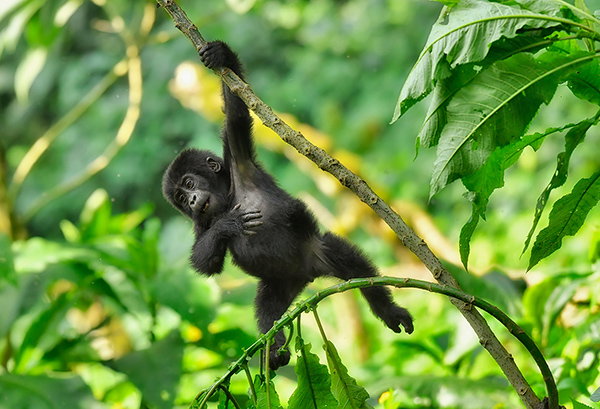
| Mountain gorillas (Gorilla beringei beringei) in Uganda are vulnerable to acquiring diseases from local human populations. (webguzs/Getty) | ||
Can AI help stop the next pandemic disease?Researchers are harnessing the ability of AI tools to identify patterns in large data sets to try to predict spillovers — the transfer of pathogens between species — before they happen. In Uganda, the approach is showing early promise in protecting endangered mountain gorillas, as well as the livestock and people who interact with them. Other researchers are trawling through databases to identify new zoonotic viruses in samples that were not necessarily collected for that purpose. Nature | 11 min read |
||
Moderna cancer vaccine is a starting gunThe first late-stage trial results showing that a personalized vaccine could help people with melanoma live longer without cancer recurrence “should galvanize efforts to speed up vaccine development across cancers”, argues medical oncologist Patrick Ott. Renewed interest and investment in personalized vaccines could allow researchers to improve alternative cancer-vaccine delivery platforms such as peptides and DNA, and deepen their understanding of how the vaccines affect tumours, both of which could broaden the technology’s applicability beyond just melanoma. Nature | 5 min read |
||
Why are rich people so pessimistic?People become happier as they get richer, up to a point. But they also become more pessimistic, writes political scientist Florence Gaub. Understanding the myriad factors at play can help us all feel a little more hopeful, she argues. It’s partly down to age — the populations of richer, Western nations tend to be older, and younger people are more optimistic. And there are different kinds of optimism: almost universally, people tend to score higher for personal optimism (‘my future will be good’), than the arc of their country or of history. Nature | 9 min read |
||
Quote of the day“Group assembly recommended. Some disagreement during assembly is normal and does not indicate a manufacturing defect. Consensus sold separately.”Astronomer Michelle Ntampaka and her colleagues offer a blank template — which might spark healthy debate — to help groups determine their ‘lab archetype’ when it comes to how they use AI tools. (Find the template in the arXiv preprint and read the Nature Careers story (7 min read) to find out more.) |
||
|
|
||
|
||
|
|
||
Free newsletters from NatureWant more? Update your preferences to sign up to our other Nature Briefing newsletters:
|
||
|
||
|
You received this newsletter because you subscribed with the email address: - Please add [email protected] to your address book. Had enough? To unsubscribe from this Briefing, but keep receiving your other Nature Briefing newsletters, please update your subscription preferences. To stop all Nature Briefing e-mails forever, click here to remove your personal data from our system. Fancy a bit of a read? View our privacy policy. Forwarded by a friend? Get the Briefing straight to your inbox: subscribe for free. Get more from Nature: Register for free on nature.com to sign up for other newsletters specific to your field and e-mail alerts from Nature Portfolio journals. Would you like to read the Briefing in other languages? 关注Nature Portfolio官方微信订阅号,每周二为您推送Nature Briefing精选中文内容——自然每周简报。
Nature Portfolio | The Springer Nature Campus, 4 Crinan Street, London, N1 9XW, United Kingdom Nature Portfolio, part of Springer Nature. |