See a tiny jumping robot powered by explosions
What matters in science |

Is this your brand on Milled? Claim it.
|
|||||
|
|||||
|
Hello Nature readers, |
|||||
|
|||||
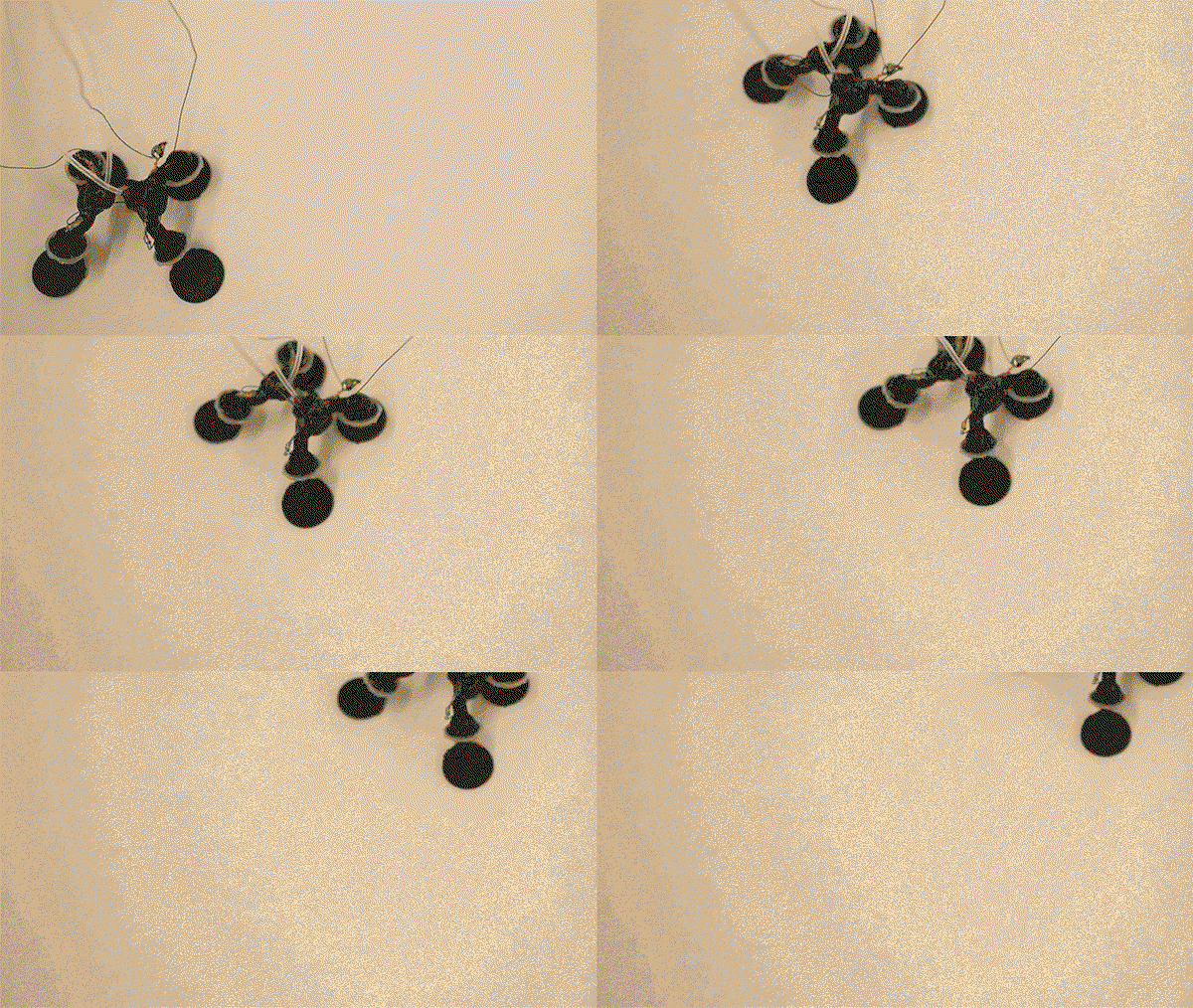
| This tiny robot is powered by small explosions in each of its four feet. It can crawl, jump and carry loads many times its own weight. (C. A. Aubin et al./Science) | |||||
Miniature robot carries heavy loadA four-legged, insect-sized robot can crawl, leap and lift a load that is 22 times its own weight. The miniature machine is powered by tiny actuators that create small chemical explosions in each foot that can launch the robot 56 centimetres into the air. Nature | 2 min readReference: Science paper |
|||||
Breakthrough Prize for cystic fibrosis drugThe trio of chemists who developed the cystic fibrosis treatment Trikafta has won one of this year’s US$3-million Breakthrough prizes — the most lucrative awards in science. The combination drug can increase life expectancy for people with cystic fibrosis from around 30 to more than 80 years. Prizes were also awarded to two geneticists who discovered genes associated with the risk of developing Parkinson’s disease, two physicists for their work on conformal field theories and a mathematician for contributions to differential geometry. Nature | 7 min read |
|||||
MDMA passes key hurdle for US approvalThe psychedelic drug MDMA could be approved in the United States as treatment for post-traumatic stress disorder (PTSD) as soon as next year. In a trial involving 104 people, 71% of those who received MDMA alongside therapy lost their PTSD diagnosis, compared with 48% of those who received a placebo and therapy. The low drop-out rate of only 9% was particularly promising, says neurologist and study co-author Jennifer Mitchell. Psychiatrist Erick Turner points out that, because MDMA produces an intense psychedelic experience, many trial participants correctly guessed whether they received the drug. “That is not a blinded study,” he says. Nature | 6 min readReference: Nature Medicine paper |
|||||
NASA UFO check is ‘a teachable moment’Yesterday, NASA released a report from an independent panel that looked at how and why the organization might want to be involved in studying unidentified anomalous phenomena (UAPs), more commonly known as UFOs. Whether data collection turns up alien visitors or not, the process would be beneficial to society, says astrophysicist David Spergel, who chaired the panel. “We have a problem in our society that people think there’s conspiracies and lots of things are hidden,” says Spergel. “To me, one of the most important recommendations in the report is that NASA develop an app for people’s cell phones that they can use to collect data. It's an opportunity to engage the public in what science is about.” Nature | 5 min read |
|||||
|
|||||
Trials of artificial wombs could start soonNext week, US regulators will start discussing human trials of a system that mimics the womb, which could reduce deaths and disability for the millions of babies that are born extremely premature. In 2017 experiments, preterm lambs survived for up to four weeks in the artificial womb. But “it’s a big leap to go to humans from lambs”, says fetal-medicine specialist Eduard Gratacós. Aside from safety concerns, the development of artificial wombs would raise ethical questions, such as what they mean for the definition of fetal viability. Nature | 11 min read |
|||||

|
|||||
ACCESS NATURE AND 54 OTHER NATURE JOURNALS
|
|||||
How create an equitable coding languageA broken elbow gave computer scientist Amy Ko an insight into the degree to which her discipline caters mainly to non-disabled people. “My work could no longer keep up with my thoughts,” she recalls. Popular platforms require a mouse, which excludes people with motor disabilities, and most code-editing programs assume that users have sight. Ko is developing a programming language, Wordplay, that strives to avoid assumptions about ability or natural-language fluency. It has no natural-language keywords (such as ‘if’ and ‘while’) and can be navigated, screen-read and edited using a mouse, keyboard and speech. Nature | 5 min read |
|||||
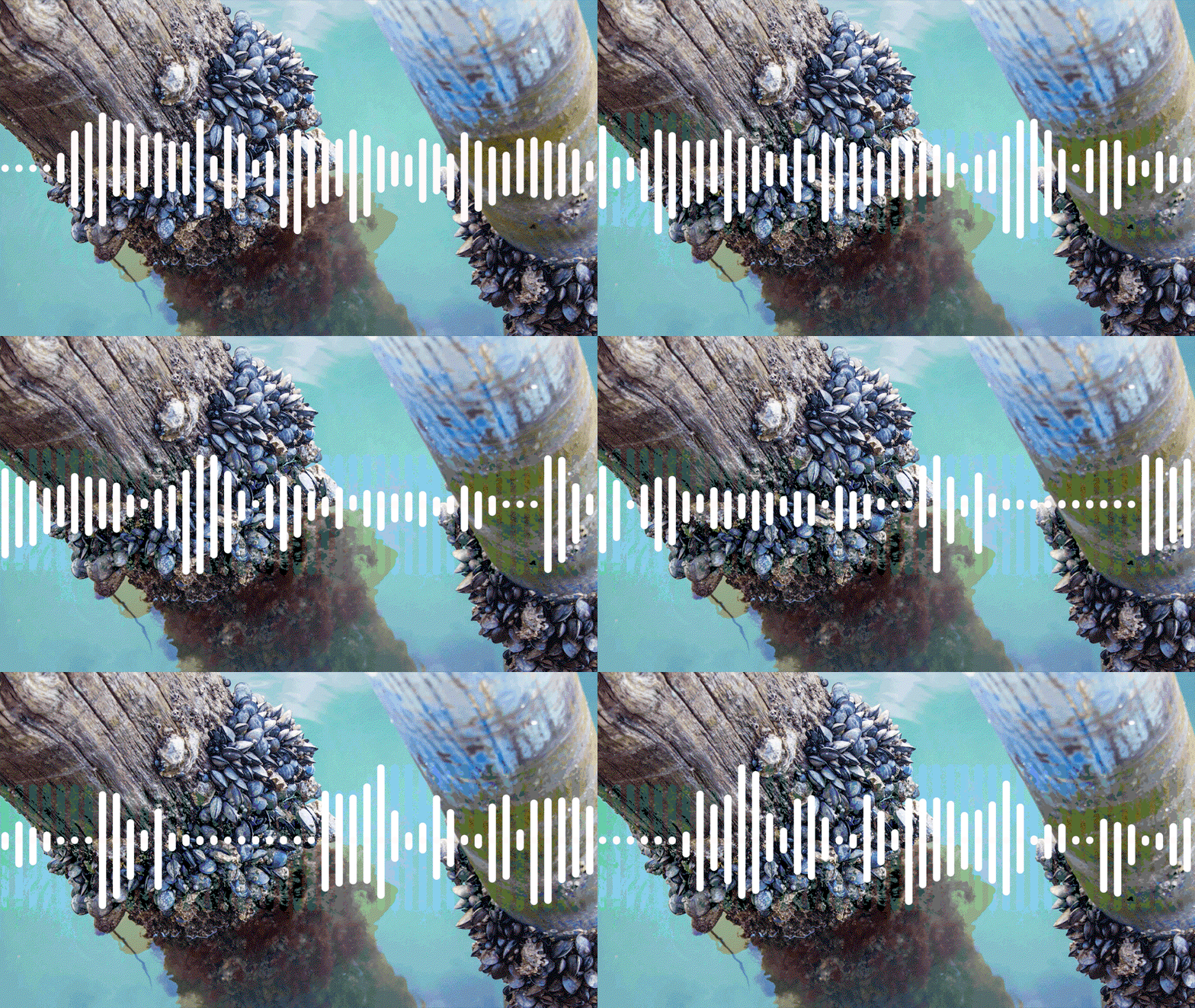
Podcast: Sustainable stickingScientists have developed a glue that takes inspiration from the proteins that marine animals such as mussels use to stick to rocks. It’s as strong as superglue — and, because one of its main components is made from soya oil, it could have a much smaller carbon footprint than conventional adhesives. “The plants absorb so much CO2 to form the components that we want,” chemist Jonathan Wilker tells the Nature Podcast. In a rough estimate, “you can get the numbers to be actually carbon negative”. Nature Podcast | 34 min listenSubscribe to the Nature Podcast on Apple Podcasts, Google Podcasts or Spotify, or use the RSS feed. |
|||||
|
|||||
Quote of the day“Quite often in the field in Wales, there are days when you don't have to lick rocks. But on dry days, that’s the standard repertoire.”Geologist Jan Zalasiewicz won a just-for-fun Ig Nobel Prize yesterday for his investigation into the history of licking, or even eating, rocks to discern their finer structural details. (Ig Nobel Prize ceremony | At 10:20 in a 1.5 hour video) |
|||||
|
|
|||||
|
|||||
|
|
|||||
|
|||||
|
You received this newsletter because you subscribed with the email address: - Please add [email protected] to your address book. Enjoying this newsletter? You can use this form to recommend it to a friend or colleague — thank you! Want to switch to the weekly edition? Update your preferences. Had enough? Unsubscribe from the Nature Briefing. Fancy a bit of a read? View our privacy policy. Forwarded by a friend? Get the Briefing straight to your inbox: subscribe for free. Want to master time management, protect your mental health and brush up on your skills? Sign up for our free short e-mail series for working scientists, Back to the lab. Get more from Nature: Register for free on nature.com to sign up for other newsletters specific to your field and email alerts from Nature Research journals. Would you like to read the Briefing in other languages? 关注Nature Portfolio官方微信订阅号,每周二为您推送Nature Briefing精选中文内容——自然每周简报。
Nature | The Springer Nature Campus, 4 Crinan Street, London, N1 9XW, United Kingdom Nature Research, part of Springer Nature. |