The battery that could change everything could finally be here
What matters in science |

Is this your brand on Milled? Claim it.
|
|||||
|
|||||
|
Hello Nature readers, |
|||||

|
|||||
| At the Hong Kong University of Science and Technology in Guangzhou, students can listen to lectures given by AI avatars. (Yawei Zhao) | |||||
China puts limits on AI avatar boomFrom assisting with health care to lecturing in universities, AI avatars are increasingly filling roles across China — so much so that the Cyberspace Administration of China, the country’s cyberspace regulator, has released new rules for the virtual digital humans. They require that people consent to the use of their personal information, appearance or voice. And companies are banned from providing children and young people with virtual relatives or virtual intimate relationships, and from creating services that could lead to children becoming addicted to virtual human services. In response, some tech companies have begun disabling features that allow users to create their own customized AI avatars. Nature | 7 min readReference: Administrative Measures for Digital Virtual Human Information Services (Draft for Public Comment) (in Chinese) |
|||||
Is this the oldest known rightie?Around 550 million years ago, a flat, segmented, worm-like creature called Spriggina floundersi wiggled its way through the seafloor mud of the Ediacaran period. And when it wiggled, it tended to wiggle to the right, say researchers. A study of more than 100 Spriggina specimens from South Australia — where it’s the state fossil — found that about twice as many were bending in a right-turning direction when they died compared to the opposite direction. “The presence of handedness in any kind of functional asymmetry, really deep into the fossil record, gives us important and interesting information,” says evolutionary biologist Russell Bicknell. Smithsonian Magazine | 5 min readReference: Scientific Reports paper |
|||||
| |||||
|
|||||
|
|||||
|
|||||
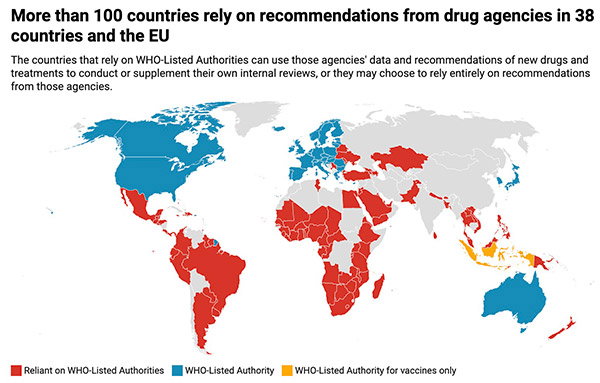
| Many countries can’t maintain their own regulatory drug approval processes, and so rely on reviews from others — especially the US Food and Drug Administration. “Since the 1980s, this model has been a win-win proposition for the countries, their citizens and the pharmaceutical companies,” writes pharmacy-practice researcher C. Michael White. However, changes under the administration of US President Donald Trump, such as staff cuts and a new programme that offers accelerated approval to some drugs, “could hurt international confidence in [the FDA’s] objectivity and rigor”, White argues. (The Conversation | 8 min read) (The Conversation (CC-BY-ND)) | |||||
|
|||||
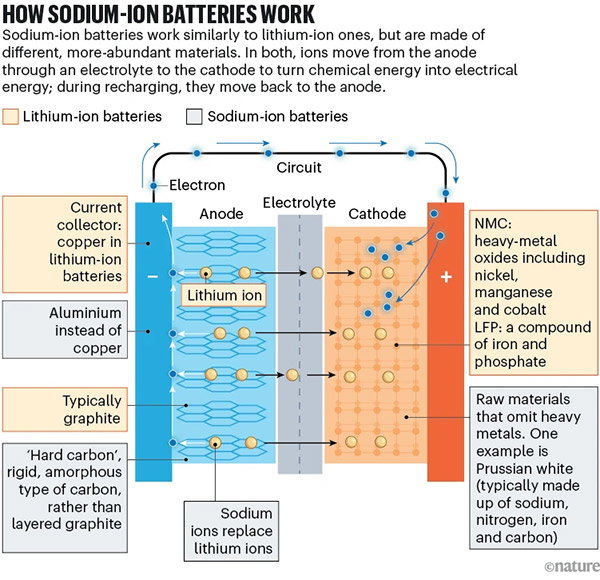
The battery that could change everythingSodium-ion batteries promise to be cheaper, safer and more environmentally friendly than the lithium-ion cells that currently dominate technologies such as electric cars. And the sea-change could finally be here: CATL — the world’s largest battery producer — has announced that it will start mass-producing sodium-ion batteries by the end of the year. A swell of interest from battery makers and researchers has helped to solve longstanding challenges, such as a lack of durability. Nature | 10 min read |
|||||
|
|||||
Exploring the final frontierAdvanced technologies are poised to reveal the mysteries of the deep ocean floor — and deeper. Data from hydrophones can detect tsunamis faster than the destructive megawaves can travel, and a system that piggybacks on the optical cables that carry our data can detect seismic events over thousands of kilometres. Meanwhile, scientists are planning to drill through the crust’s lower boundary — called the Mohorovičić discontinuity — and take the first-ever pristine samples of the underlying mantle. Nature | 7 min read |
|||||
Quote of the day“These changes risk undermining the predictability, stability, impartiality, and collaboration upon which America’s entire research-and-innovation system depends.”The Association of American Universities (AAU), which represents 69 leading research institutions, submitted one of the 340,000 comments that have flooded in response to a controversial proposal by the Trump administration to overhaul US science funding in a way that critics say will politicize research. (Science | 7 min read) |
|||||
|
|
|||||
|
|||||
|
|
|||||
Free newsletters from NatureWant more? Update your preferences to sign up to our other Nature Briefing newsletters:
|
|||||
|
|||||
|
You received this newsletter because you subscribed with the email address: - Please add [email protected] to your address book. Enjoying this newsletter? You can use this form to recommend it to a friend or colleague — thank you! Had enough? To unsubscribe from this Briefing, but keep receiving your other Nature Briefing newsletters, please update your subscription preferences. To stop all Nature Briefing emails forever, click here to remove your personal data from our system. Fancy a bit of a read? View our privacy policy. Forwarded by a friend? Get the Briefing straight to your inbox: subscribe for free. Want to master time management, protect your mental health and brush up on your skills? Sign up for our free short e-mail series for working scientists, Back to the lab. Get more from Nature: Register for free on nature.com to sign up for other newsletters specific to your field and email alerts from Nature Portfolio journals. Would you like to read the Briefing in other languages? 关注Nature Portfolio官方微信订阅号,每周二为您推送Nature Briefing精选中文内容——自然每周简报。
Nature Portfolio | The Springer Nature Campus, 4 Crinan Street, London, N1 9XW, United Kingdom Nature Portfolio, part of Springer Nature. |