The breakthrough proof bringing mathematics closer to a grand unified theory
What matters in science |

Is this your brand on Milled? Claim it.
|
|||||
|
|||||
|
Hello Nature readers, |
|||||
|
|||||
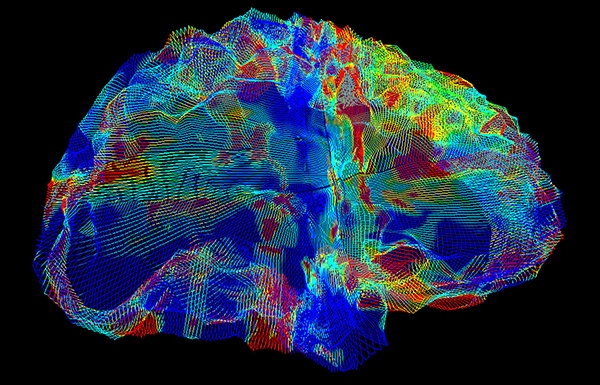
| A new study looked at proteomics data from 11,270 people, some 38% of whom were carriers of a gene variant called APOE ε4, and 40% of whom had some form of neurodegenerative condition. (Mark & Mary Stevens Neuroimaging and Informatics Institute/Science Photo Library) | |||||
One gene to influence them allA gene variant known to increase the risk of Alzheimer’s disease also makes people vulnerable to a host of other age-related brain disorders, from Parkinson’s disease to motor neuron disease. Using a massive, newly-established proteomics database, researchers found that the variant, called APOE ε4, produces a distinct set of proteins that contribute to chronic inflammation. Environmental factors could make the difference between whether people with the gene go on to develop a certain degenerative brain condition or not, says study co-author and neuroscientist Caitlin Finney. Nature | 4 min readReference: Nature paper 1 & paper 2 |
|||||
NIH to dismiss incoming grant reviewersThe US National Institutes of Health (NIH) will soon disinvite dozens of scientists who were about to take positions on advisory councils that make final decisions on grant applications for the agency. The move will leave advisory councils at most of the NIH’s institutes understaffed for an unknown period of time. NIH staff members have been instructed to nominate replacements that are aligned with the priorities of the administration of US President Donald Trump — and have been warned that political appointees might still override their suggestions and hand-pick alternative reviewers. The disinvited scientists had all passed the vetting process required for someone to take up one of these advisory positions, which will now have to re-start for new nominees. Nature | 6 min read |
|||||
Health data is fodder for low-quality papersData from five large open-access health databases are being used to generate thousands of poor-quality, formulaic papers. Researchers found that the number of studies using such databases rose from around 4,000 to 11,500 between 2021 and 2024. The spike could indicate that these data are being exploited by people using large language models to mass-produce scholarly articles, or even by paper mills that churn out papers to order. Nature | 5 min readReference: medRxiv preprint (not peer reviewed) |
|||||
‘Ammonite’ dims hopes of Planet NineThe discovery of a distant rock at the fringes of the Solar System seems to reduce the likelihood that there’s an undiscovered planet out there. 2023 KQ14, nicknamed ‘Ammonite’, is only the fourth known example of a ‘sednoid’. These small bodies are like the dwarf planet Sedna: they orbit far beyond Neptune, are thought to have originated closer to the Sun, and have weird-shaped paths that suggest they have been ‘herded’ by the gravitational influence of a mysterious ninth planet. Ammonite’s orbit doesn’t align with the other sednoids, suggesting that ‘Planet Nine’ either doesn’t exist, was long-ago ejected from the Solar System, or is very far away — possibly 500 times farther from the Sun than Earth. Forbes | 4 min readReference: Nature Astronomy paper |
|||||
|
|||||

|
|||||
| The Langlands programme is a sort of Rosetta stone that allows researchers to translate between different fields of mathematics, making more problems solvable and revealing seemingly different concepts to be aspects of a deeper truth. (Illustration: Andy Gilmore) | |||||
Inside mathematics’ ‘theory of everything’The Langlands programme is a group of interconnected conjectures that is often hailed as the grand unified theory of mathematics — but it remains largely unproven. Last year, researchers unveiled a proof of a key piece — the geometric Langlands conjecture — and that accomplishment is now forging bridges between different mathematical lands. “It’s a huge triumph. But rather than closing a door, this proof throws open a dozen others,” says mathematician David Ben-Zvi. Nature | 11 min readReference: arXiv preprint 1, preprint 2, preprint 3, preprint 4 & preprint 5 |
|||||
‘Living with bipolar motivates my research’Mental illness cost Imtiaz Zafar almost a decade of his academic life. Now he works on a 1-billion rupee (US$12 million) research project at the same mental-health institute where he was once a patient. “In my case, the diagnosis kept changing — from depression, then to schizophrenia, then to bipolar,” says Zafar. “This is why I do research across cell biology, genetics, molecular biology and bioinformatics, because misunderstanding it is so common.” Nature | 6 min read |
|||||
Prions: the shape-shifting proteinIn his new book The Power of Prions, neuroscientist and biochemist Michel Brahic explores the shape-shifting proteins that cause ‘mad cow’ disease (bovine spongiform encephalopathy), and its human counterpart, Creutzfeldt-Jakob disease. “It is now believed that every known neurodegenerative disease — from Alzheimer’s to Parkinson’s to ALS to Huntington’s to general dementia — involves a prion-like protein,” writes reviewer Stephen Buranyi. Yet prions remain fiendishly difficult to fully understand, with growing evidence that they do good as well as bad. The London Review of Books | 14 min read |
|||||
Quote of the day“Some folks will find moving abroad attractive, but it is simply not possible for the 1.4 million US post-secondary instructors to just move to Canada.”US-based academics are fighting to weather a perfect storm of financial instability, attacks on institutional autonomy, poorly prepared students, the assault of AI on traditional teaching and the erosion of their ability to travel and collaborate abroad, writes political scientist Paul Musgrave. (Systematic Hatreds newsletter | 7 min read) |
|||||
|
|
|||||
|
|||||
|
|
|||||
Free newsletters from NatureWant more? Update your preferences to sign up to our other Nature Briefing newsletters:
|
|||||
Access Nature and 54 other Nature journals
Nature+ is our most affordable 30-day subscription, giving you online access to a wide range of specialist Nature Portfolio journals, including Nature. |
|||||
|
|||||
|
You received this newsletter because you subscribed with the email address: - Please add [email protected] to your address book. Enjoying this newsletter? You can use this form to recommend it to a friend or colleague — thank you! Had enough? To unsubscribe from this Briefing, but keep receiving your other Nature Briefing newsletters, please update your subscription preferences. To stop all Nature Briefing emails forever, click here to remove your personal data from our system. Fancy a bit of a read? View our privacy policy. Forwarded by a friend? Get the Briefing straight to your inbox: subscribe for free. Want to master time management, protect your mental health and brush up on your skills? Sign up for our free short e-mail series for working scientists, Back to the lab. Get more from Nature: Register for free on nature.com to sign up for other newsletters specific to your field and email alerts from Nature Portfolio journals. Would you like to read the Briefing in other languages? 关注Nature Portfolio官方微信订阅号,每周二为您推送Nature Briefing精选中文内容——自然每周简报。
Nature Portfolio | The Springer Nature Campus, 4 Crinan Street, London, N1 9XW, United Kingdom Nature Portfolio, part of Springer Nature. |