The fight against fake-paper factories that churn out sham science
What matters in science |

Is this your brand on Milled? Claim it.
|
|||||
|
|||||
|
Hello Nature readers, |
|||||

|
|||||
| (Illustration by Ana Kova) | |||||
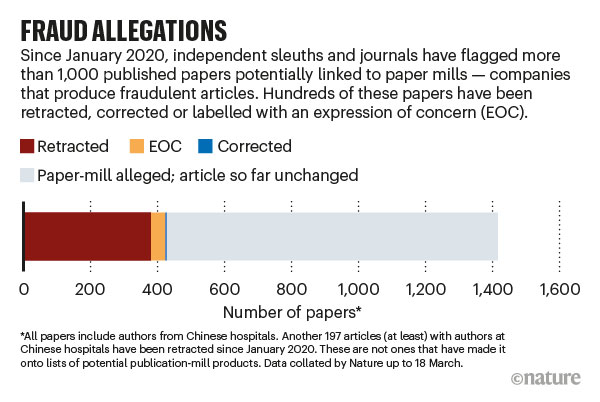
The fight against fake-paper factoriesSince last January, journals have retracted at least 370 papers that have been publicly linked to ‘paper mills’, an analysis by Nature has found, and many more retractions are expected. Physicians in China are a particular target customer for paper mills — companies that churn out fake scientific manuscripts to order — because of intense pressure to publish combined with long work hours. Much of this housecleaning has come about thanks to sleuths who have publicly flagged papers that share suspiciously similar features, such as western blots with identical-looking backgrounds. The effect of such trickery can be very serious, says molecular oncology researcher Jennifer Byrne, who points to suspected fake studies that link genes to particular cancers. “People die from cancer — it is not a game.” Nature | 14 min readRead more: Meet Elisabeth Bik, a super-spotter of duplicated images in science papers (Nature | 15 min read) |
|||||
|
|||||
|
|
|||||
Oldest wooden relic reshapes historyThe world’s oldest wooden sculpture is even older than previously thought. A new study suggests that the 2.7-metre-tall Shigir Idol was carved more than 12,000 years ago from a tree that was already more than 150 years old. The relic was preserved in a peat bog in the Ural Mountains and is the world’s only surviving Stone Age wood carving. Its complex iconography of geometric patterns and human faces suggests that the region’s ancient societies were more sophisticated than previously thought. “The new Shigir evidence makes archaeologists daydream of how the archaeological record may have looked if wooden remains had been preserved in greater abundance,” says archeologist Olaf Jöris. New York Times | 8 min readReference: Quaternary International paper |
|||||
|
|
|||||
Beauty decays into hints of new physicsResearchers at the Large Hadron Collider (LHC) have seen early hints of an undiscovered particle or interaction. More research is needed, but the results suggest an imbalance in how subatomic beauty quarks decay into two flavours of leptons: electrons and muons. If confirmed, that’s a violation of lepton flavour universality as described by the standard model of particle physics. “It's too early to say if this genuinely is a deviation from the standard model, but the potential implications are such that these results are the most exciting thing I've done in 20 years in the field,” says physicist Mitesh Patel. “We were actually shaking when we first looked at the results.” BBC | 5 min readReference: LHC seminar |
|||||
|
|||||
|
|||||
|
|||||
|
|||||
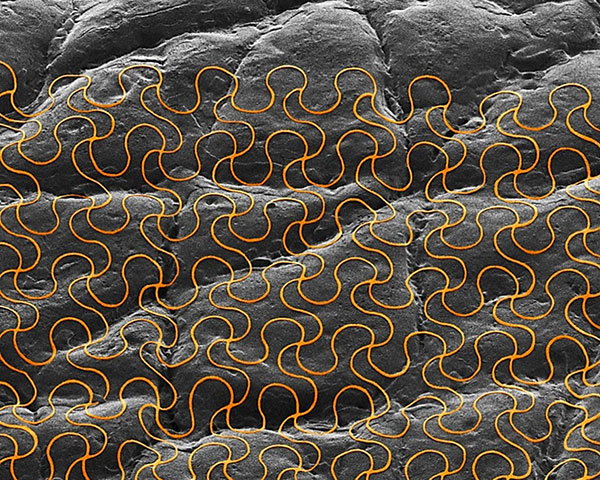
| Microscope image of a flexible circuit printed onto skin, which works even when stretched. (John Rogers, Univ. Illinois/SPL) | |||||
Flexible circuits inspired by human skinWearable, skin-inspired electronics have already made it into volunteers and clinics globally. For example, when used for health monitoring, they can spot early signs of COVID-19 in front-line health workers in Chicago. Other ‘e-skins’ are giving robots a lighter, human-like touch. But whether they are for people or robots, such devices represent a significant chemical and engineering challenge: electronic components are typically brittle and inflexible, and human skin is a malleable but difficult canvas. Nature | 11 min read |
|||||
|
|
|||||
Responsible publishing about suicideResearchers investigating the mental-health impacts of the pandemic should be aware of how to responsibly report research related to suicide, argue four authors writing on behalf of the International COVID-19 Suicide Prevention Research Collaboration. They outline six key points to consider and highlight useful resources. Scholarly Kitchen blog | 7 min read |
|||||
|
|||||
|
|||||
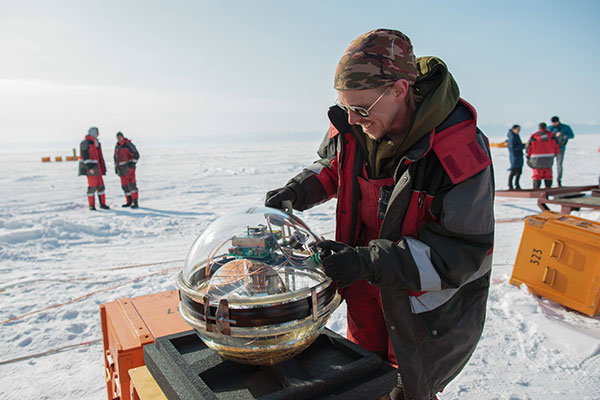
| Scientists have submerged a neutrino detector in the crystal-clear waters of the largest freshwater lake in the world, Russia’s Lake Baikal. The Baikal-Gigaton Volume Detector floats around a kilometre beneath the surface. It is made up of clusters of spherical glass and stainless-steel modules, which hang down like strings of beads under the water. The detector will search for high-energy neutrinos emitted by distant cosmic events. (Smithsonian Magazine | 4 min read) (Alexei Kushnirenko/TASS/Getty) | |||||
|
|
|||||
|
|||||
|
|
|||||
|
|||||
|
You received this newsletter because you subscribed with the email address: - Please add [email protected] to your address book. Enjoying this newsletter? You can use this form to recommend it to a friend or colleague — thank you! Want to switch to the weekly edition or change your email address? Update your preferences. Had enough? Unsubscribe from the Nature Briefing. Fancy a bit of a read? View our privacy policy. Forwarded by a friend? Get the Briefing straight to your inbox: subscribe for free. Would you like to read the Briefing in Arabic? Sign up for the weekly round-up e-mail, curated and translated by the editors of Nature Arabic Edition. Nature | The Springer Nature Campus, 4 Crinan Street, London, N1 9XW, United Kingdom Nature Research, part of Springer Nature. |