The scariest sound in the savanna: human voices
What matters in science |

Is this your brand on Milled? Claim it.
|
|||||
|
|||||
|
Hello Nature readers, |
|||||
|
|||||
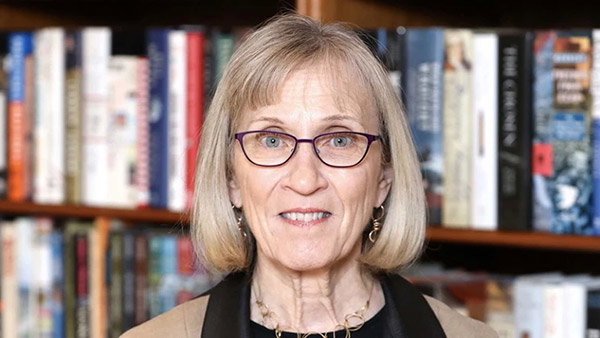
| Nobel laureate Claudia Goldin’s rigorous forensic analysis showed how changes in women’s participation in the labour force have been influenced by social, political and technological change over the past two centuries. (BBVA Foundation) | |||||
Economics Nobel for pay-gap researchEconomic historian Claudia Goldin has won the Sveriges Riksbank Prize in Economic Sciences for dismantling simple ideas about how gender inequalities in labour markets have changed over time. Women have been under-represented in the workplace for at least the past two centuries and continue to earn, on average, 13% less than men — an injustice as well as a puzzling ‘market inefficiency’. Goldin mined 200 years of data to show that greater economic growth did not lead to wage parity or to employment of more women. “Goldin has been saying for many years that the way work is organized in many professions is especially female-unfriendly,” says economist Barbara Petrongolo. Nature | 5 min read |
|||||
US on track to hit 25-year funding lowLast year, the US government promised to boost funding for some major science agencies by US$26.8 billion in 2024. But the legislation seems likely to fall short of this goal by around 28%, and funding for those agencies will continue to hover at a 25-year low. Science advocates worry about such funding cuts because they tend to disproportionately affect basic research. Nature | 5 min read |
|||||
Animals find humans scarier than lionsHuman voices evoke more fear among animals living in the South African savanna than do snarls from lions. Researchers set up speakers near 21 water holes, which played one of several sounds when triggered by animal movement. When they heard humans, giraffes, leopards, elephants and 16 other species were twice as likely to run as when they heard growling lions, barking dogs or guns. The researchers suggest that recordings of human voices could be used to keep animals away from areas where a lot of poaching happens. The New York Times | 5 min readReference: Current Biology paper |
|||||
|
|||||
The human body’s heat limitAs the world’s warming trend will lead to more heatwaves, researchers are seeking to understand what the human body can tolerate. Heat strains the heart and kidneys, causes headaches, disrupts sleep and slows cognition. Heat stroke can lead to multi-organ failure. A critical wet-bulb temperature (a measure that takes humidity into account) is 35 °C. At this temperature, even the healthiest people would succumb after about six hours. Strategies to lower the body’s temperature include using air conditioning or electric fans, or simply immersing the feet in cold water. Nature | 9 min read |
|||||

|
|||||
ACCESS NATURE AND 54 OTHER NATURE JOURNALS
|
|||||
Finally, a vaccine against RSVAfter decades of research and some disastrous clinical trials, there’s light at the end of the tunnel in the fight against respiratory syncytial virus (RSV): both conventional vaccines and antiviral antibodies that act like short-term vaccines should be available at hospitals this year. “RSV has been a major cause of morbidity and mortality around the world, and I think this is going to change dramatically,” says infectious-disease paediatrician Louis Bont. What remains unclear is how soon these products will arrive in low- and middle-income countries, where the toll of RSV is greatest. Nature | 12 min readThis article is part of Nature Outlook: Respiratory syncytial virus, an editorially independent supplement produced with financial support from Moderna. |
|||||
“I felt that I needed to ‘prove’ myself”For this year’s Ada Lovelace Day, which celebrates the achievements of women in science, six women share the highs and lows in computer science. “It is a creative and empowering field, as well as a challenging one,” says Sana Odeh. But it continues to be permeated by gendered biases: half of young women who go into technology fields drop out by the age of 35 — largely owing to workplace culture. “During my studies and my first job I felt that I needed to ‘prove’ myself to be capable, more than the men did,” recalls Soraia Raupp Musse. Nature | 12 min read |
|||||
|
|||||
|
|||||
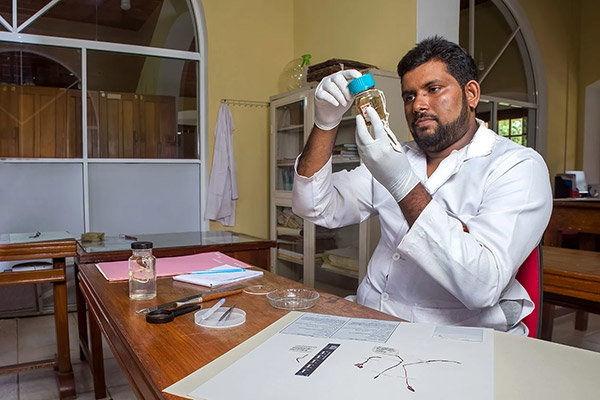
| Taxonomist Bhathiya Gopallawa is holding a preserved specimen of a newly characterized Sri Lankan orchid that relies entirely on symbiotic fungi for nutrients. Its amber-hued flower flowers stay in bloom for only three days, which makes it challenging to identify. “I relied on an island-wide network of early-career researchers for data collection — their help was crucial to bring this new species to light,” he explains. (Nature | 3 min read) (Kumudu Wijesooriya for Nature) | |||||
Quote of the day“He was so in love with what was going on in the science that he did not push at all in terms of recognition.”Geophysicist Jason P. Morgan says that his father W. Jason Morgan, co-discoverer of plate tectonics, didn’t make much of the controversy around who should receive credit for the theory. Another team that had independently arrived at the same idea ultimately published it just before him. W. Jason Morgan died in July, aged 87. (The Washington Post | 6 min read) |
|||||
|
|
|||||
|
|||||
|
|
|||||
|
|||||
|
You received this newsletter because you subscribed with the email address: - Please add [email protected] to your address book. Enjoying this newsletter? You can use this form to recommend it to a friend or colleague — thank you! Want more Briefings? Update your subscription preferences. Had enough? Unsubscribe from all Nature Briefing newsletters. Fancy a bit of a read? View our privacy policy. Forwarded by a friend? Get the Briefing straight to your inbox: subscribe for free. Want to master time management, protect your mental health and brush up on your skills? Sign up for our free short e-mail series for working scientists, Back to the lab. Get more from Nature: Register for free on nature.com to sign up for other newsletters specific to your field and email alerts from Nature Research journals. Would you like to read the Briefing in other languages? 关注Nature Portfolio官方微信订阅号,每周二为您推送Nature Briefing精选中文内容——自然每周简报。
Nature | The Springer Nature Campus, 4 Crinan Street, London, N1 9XW, United Kingdom Nature Research, part of Springer Nature. |