The surprising chemicals used to embalm Egyptian mummies
What matters in science |

Is this your brand on Milled? Claim it.
|
|||||
|
|||||
|
Hello Nature readers, |
|||||

|
|||||
| A body is embalmed in an underground chamber (artist’s impression). (Nikola Nevenov) | |||||
Egyptian mummification chemicals revealedPots from a 2,500-year-old embalming workshop have revealed the ingredients used to prepare ancient Egyptian mummies. Chemical analysis identified local plant extracts, animal fats and beeswax, as well as resins from plants grown as far away as southeast Asia. It’s the first time that pots with labels have been found, which will enable researchers to connect the ingredients with historical texts describing the embalming process. The discovery is “absolutely amazing,” says archaeologist Salima Ikram. “Who would have thought that they were getting stuff that might be coming from India?” Nature | 3 min readRead archaeologist Salima Ikram’s expert analysis of the discovery in the Nature News & Views article (7 min read, Nature paywall) Reference: Nature paper |
|||||
Pivot point for COVID ‘global emergency’The World Health Organization (WHO) says that COVID-19 will probably stop being a ‘public health emergency of international concern’ soon because high levels of immunity are beginning to limit the virus’s impact and reach — but we’re not there just yet. Many researchers agree with the WHO’s assessment to keep the emergency status in place for now, because it stops governments from moving on to other things. Others think that because SARS-CoV-2 has already spread to every corner of the globe, the pandemic has moved well beyond the original definition of an emergency. Contrary to reports, the WHO never officially declared COVID-19 a pandemic — it merely said in March 2020 that the term “‘characteriszed the situation’”. Nature | 5 min read |
|||||
Solar, wind helped EU stay away from coalIn 2022, wind and solar supplied more of the European Union’s electricity than any other power source for the first time ever, reports the think tank Ember. Other sources of low-carbon energy took hits: hydroelectric was hobbled by historic droughts, and an unexpectedly high number of French nuclear reactors had to be taken offline for maintenance. Meanwhile, mild weather and public efforts to reduce energy use kept demand lower than in 2021. The end result: Europe did not return to coal in a big way to replace gas supplies withheld by Russia. “Any fears of a coal rebound are now dead,” says Dave Jones, Ember's head of data insights. Carbon Brief | 6 min readReference: Ember report |
|||||
| |||||
|
|||||
|
|||||
Can a solar farm be built in space?The first orbiting solar power station could be operational by 2040. Until then, huge technical hurdles remain. The arrays would need to be more than one square kilometre in size, and would have to be assembled in space — an incredibly complex engineering challenge. Arguably the biggest problem: beaming the power generated in space back to Earth. The most promising option is to convert energy into microwaves that will be captured by receiving stations that are even larger than the solar-panel arrays. Nature | 6 min read |
|||||

|
|||||
ACCESS NATURE AND 54 OTHER NATURE JOURNALS
|
|||||
Tips for recruiting research participantsTwo things are required to get close to research participants, says social scientist Anna Lena Bercht: physical access and mental access, which means people opening up about what they think and feel. During her work in China and Norway, she took public transport to create opportunities to bump into people. She offers other tips, including using small talk to counteract the asymmetrical power relationship between the researcher and the researched. Most importantly, Bercht says, show respect and be humble. “Having a modest view of yourself is essential to communicate at eye level with people.” Nature | 8 min read |
|||||
How I wrote a popular science bestseller“I was really underprepared. I thought I had time in my schedule, but I still had to do my academic work,” says psychologist Chantel Prat about writing The Neuroscience of You. She credits her book’s success in part to the expert guidance from her agent and other scientists who had written books. It’s important to not compare your book with others, Prat says. “If you’ve found your lane, occupy that space and enjoy it.” Nature | 6 min read |
|||||
|
|||||
|
|||||
|
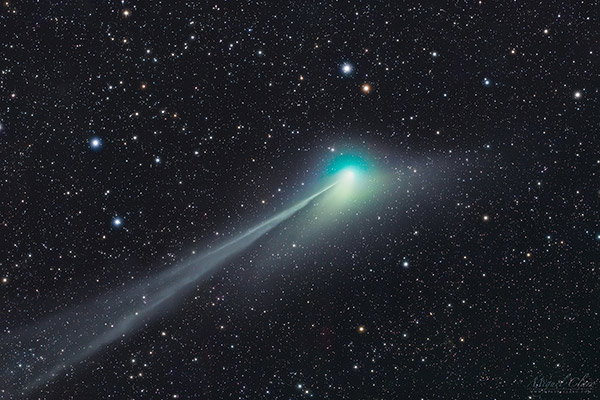
A green comet named Comet C/2022 E3 (ZTF) is swinging through our neighbourhood for the first time in about 50,000 years. (Its name comes from the Zwicky Transient Facility (ZTF) at the Palomar Observatory in California, where astronomers first spotted it last March.) Did you see it yesterday, when it was closest to Earth? (Sadly, my sky was cloudy.) If you want to try tonight, it should be just visible to the naked eye, although binoculars are even better. For astronomers, ZTF provides an opportunity to learn more about the make-up of the early Universe, when the comet formed. (Space.com | 6 min read & The New Yorker 8 | min read) It won’t get to you in time to spot the green comet, but we are giving away a lovely Celestron telescope. Enter your e-mail address here for a chance to win. Both new and existing Briefing readers are welcome to enter. (© Miguel Claro/Dark Sky® Alqueva) |
|||||
Quote of the day“Is it too extreme? Give me another alternative.”Conservation biologist Carlos Ruiz-Miranda supports a controversial last-ditch plan to vaccinate golden lion tamarins (Leontopithecus rosalia) against yellow fever spread by people. (Associated Press | 11 min read — well worth visiting for the stunning photos) |
|||||
|
|
|||||
|
|||||
|
|
|||||
|
|||||
|
You received this newsletter because you subscribed with the email address: - Please add [email protected] to your address book. Enjoying this newsletter? You can use this form to recommend it to a friend or colleague — thank you! Want to switch to the weekly edition? Update your preferences. Had enough? Unsubscribe from the Nature Briefing. Fancy a bit of a read? View our privacy policy. Forwarded by a friend? Get the Briefing straight to your inbox: subscribe for free. Want to master time management, protect your mental health and brush up on your skills? Sign up for our free short e-mail series for working scientists, Back to the lab. Get more from Nature: Register for free on nature.com to sign up for other newsletters specific to your field and email alerts from Nature Research journals. Would you like to read the Briefing in other languages? 关注Nature Portfolio官方微信订阅号,每周二为您推送Nature Briefing精选中文内容——自然每周简报。
Nature | The Springer Nature Campus, 4 Crinan Street, London, N1 9XW, United Kingdom Nature Research, part of Springer Nature. |