The thymus disappears as we age — can it be regrown?
What matters in science |

Is this your brand on Milled? Claim it.
|
|||||
|
|||||
|
Hello Nature readers, |
|||||

|
|||||
| Researchers found a four-carbon sugar called erythrulose in a cloud of gas and dust at the centre of the Milky Way (image from Spitzer Space Telescope shown here) (NASA, Caltech, Susan Stolovy (SSC, Caltech)) | |||||
First sign of life-boosting ‘space sugar’Astronomers have detected a four-carbon sugar molecule in a cloud of gas and dust near the centre of our galaxy. The molecule, erythrulose, is the most complex sugar detected outside of our Solar System, the team says. If erythrulose exists in these molecular clouds, it could be transferred to passing asteroids and comets as a star system forms. Such bodies could have brought sugars — the feedstock for early versions of DNA and RNA — to Earth during a period of heavy asteroid bombardment around four billion years ago, suggests astronomer and study co-author Izaskun Jiménez-Serra. Nature | 5 min readReference: Nature Astronomy paper |
|||||
Nurture, not nature, creates handednessResearchers taught people to write with their elbows to show that practice helps to make people left- or right-handed, not just the innate preference. People with pens taped to their arms wrote no better or worse on their dominant and non-dominant sides, the team found. And training helped them to improve, regardless of which side they used. “The dominant arm isn’t more capable because one hemisphere of the brain is simply better at controlling movement,” says neurologist and study co-author Ahmet Arac. “It is because we've spent a lifetime practicing the specific, complicated movements that tools and handwriting demand.” ScienceAlert | 5 min readReference: Proceedings of the National Academy of Sciences paper |
|||||
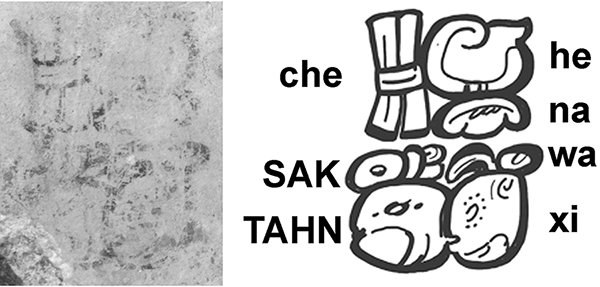
Maya glyph names maths powerhouseA mathematical formula inscribed on a wall at the Maya site of Xultun in Guatemala has revealed the name of an important Maya mathematician-astronomer. Sak Tahn Waax, or ‘White-Chested Fox’, was a scholar comparable with mathematical giants of the past, researchers suggest. The calculations inscribed in this set of hieroglyphs expresses the relationships between several calendar systems in a playful manner that hasn’t been seen before in Mayan texts, says archaeologist and study co-author Heather Hurst. “I think it was a mathematical flex,” she says. Nature | 5 min readReference: Antiquity paper |
|||||
|
|||||
| The penultimate hieroglyph in the phrase means “so says”, followed by the name Sak Tahn Waax, which suggests that the writer was taking or giving credit for the calculation. This credit is notable because it suggests that mathematicians were recognized in Maya society, says anthropologist Gerardo Aldana. (Franco D. Rossi et al./Antiquity (CC-BY-NC)) | |||||
|
|||||
The race to regrow a disappearing organThe past three years has seen a boom in research into the thymus — a peculiar immune organ that atrophies and practically disappears as people age. Once thought dispensible, some studies now report that a person’s thymus health is a probable indicator of their overall health. These findings have been followed by a flood of investment into potential therapies to regenerate the thymus, which might help to slow ageing and prevent cancer. Nature | 8 min read |
|||||
Summer reads: hot books for long nightsIt’s summer where I am, but wherever on the globe you dwell, it’s never the wrong season for a good book. Nature invited ten contributors to share their current book obsessions, including a book on water that “breathed life” into the vocation of space environmentalist Moriba Jah; and AI researcher Blaise Agüera y Arcas’s choice that introduces the “quietly radical” argument of naturalist Jean‑Baptiste Lamarck: “life is not merely shaped by external forces, but is actively, continuously involved in its own making”. Nature | 13 min read |
|||||
Epigenetic editors tune gene expressionResearchers are increasingly targeting specific epigenetic markers — chemical groups that sit on DNA and the proteins that it winds around — to explore the intricacies of gene expression and develop therapies. Compared with gene editing, “I find epigenome editing to be much more sophisticated, much more complex,” says biomedical engineer Charles Gersbach. “There are just so many more things that you can do with epigenome editing that aren’t necessarily doable with genome editing.” Nature | 16 min read |
|||||
Quote of the day“Even though I am still in the mid-career stage, I can already tell that my philanthropic work is going to be my legacy. It’s what I live for day to day. It’s what I want to show my three children and the rest of my family. It’s what I’m most proud of.”Plastic surgeon Caroline Yao volunteers for Operation Smile, a charity that provides cleft-lip and palate surgery and care in low- and middle-income nations. When it comes to volunteering, she says “you should do it even if people tell you that it’s not possible to fit it in”. (Nature | 16 min read) |
|||||
|
|
|||||
|
|||||
|
|
|||||
Free newsletters from NatureWant more? Update your preferences to sign up to our other Nature Briefing newsletters:
|
|||||
|
|||||
|
You received this newsletter because you subscribed with the email address: - Please add [email protected] to your address book. Enjoying this newsletter? You can use this form to recommend it to a friend or colleague — thank you! Had enough? To unsubscribe from this Briefing, but keep receiving your other Nature Briefing newsletters, please update your subscription preferences. To stop all Nature Briefing emails forever, click here to remove your personal data from our system. Fancy a bit of a read? View our privacy policy. Forwarded by a friend? Get the Briefing straight to your inbox: subscribe for free. Want to master time management, protect your mental health and brush up on your skills? Sign up for our free short e-mail series for working scientists, Back to the lab. Get more from Nature: Register for free on nature.com to sign up for other newsletters specific to your field and email alerts from Nature Portfolio journals. Would you like to read the Briefing in other languages? 关注Nature Portfolio官方微信订阅号,每周二为您推送Nature Briefing精选中文内容——自然每周简报。
Nature Portfolio | The Springer Nature Campus, 4 Crinan Street, London, N1 9XW, United Kingdom Nature Portfolio, part of Springer Nature. |