Thorium-fuelled nuclear reactor to begin tests in China
What matters in science |

Is this your brand on Milled? Claim it.
|
|||||
|
|||||
|
Hello Nature readers, |
|||||
|
|||||
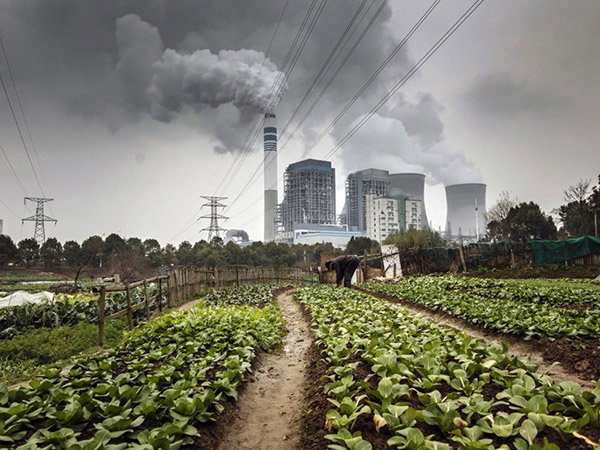
| A coal-fired power station in Tongling, China. (Qilai Shen/Bloomberg/Getty) | |||||
Fossil fuels must be left in the groundAlmost all economically viable global coal reserves must remain untapped if we are to have a chance of hitting internationally agreed climate-change goals. An updated model suggests that for us to have a 50% chance of remaining below 1.5 °C degrees of global warming — the more aspirational goal of the 2015 Paris agreement — the world must not emit more than 580 gigatonnes of carbon dioxide before 2100. Under this scenario, 89% of coal reserves, 58% of oil reserves and 59% of gas reserves must remain unextracted. The model also assumes substantial use of carbon dioxide removal and carbon capture and storage, because if they aren’t included — or are included at a smaller scale — “that target is unfeasible”, says environmental and energy economist Dan Welsby. Nature | 5 min readReference: Nature paper |
|||||
|
|
|||||
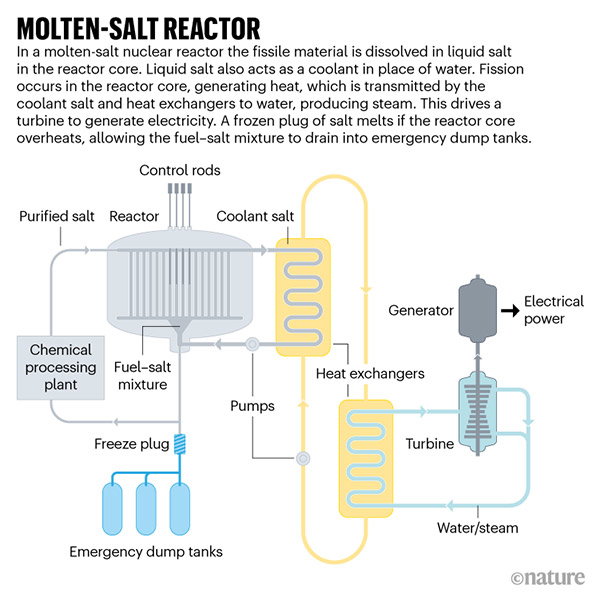
China prepares to test thorium reactorAn experimental thorium-fuelled nuclear reactor is about to begin tests in China. Although thorium has been trialled in reactors before, China looks to be the first country to have a shot at commercializing the technology. The reactor has the potential to produce nuclear energy that is relatively safe and cheap, while also generating a much smaller amount of very long-lived radioactive waste than conventional reactors. Thorium itself is a waste product of the growing rare-earth mining industry and is much more plentiful than uranium. Nature | 8 min read |
|||||
|
|||||
|
|
|||||
COVID advances win Breakthrough prizesTechniques that have helped scientists to understand COVID-19 have scooped two out of five of the most lucrative awards in science and mathematics. “These two awards are for research that has had such an impact on the world that they elevate the stature of the Breakthrough Prize,” says chemical biologist Yamuna Krishnan. “They have been saving lives by the millions.” This year’s US$3-million Breakthrough prizes went to:
|
|||||
|
|
|||||
Ground-breaking carbon capture plantThe largest direct-air carbon capture facility in the world has begun its task of pulling carbon dioxide from the air and entombing it in rocks. The plant, named Orca, is located in Iceland and powered by geothermal energy. It can collect about 4,000 tonnes of CO2 a year — about as much CO2 as is emitted globally every 4 seconds. And it’s expensive: Climeworks, the company behind the plant, sells its carbon offsets for as much as €1,000 (US$1,180) a tonne. But it shows what can be done. “The cost per ton of Orca is perhaps less important than what we will learn, to get quicker to the large scale and ultimately lower prices,” says Jan Wurzbacher, one of Climeworks’ co-founders. The Financial Times | 4 min read & Bloomberg Green | 6 min read |
|||||
|
|||||
How psychological science cleaned houseTen years ago, the revelation of widespread research fraud by high-profile psychologist Diederik Stapel rocked the field. “What happened next was inspiring,” writes methodologist Jelte Wicherts. “An open debate that went far beyond misconduct and focused on improving research.” In fits and starts, practices improved — often led by early-career researchers. “Now the system must assure them that they can build successful careers by following these methods,” argues Wicherts. Nature | 5 min read |
|||||
|
|
|||||
Five best science books this weekAndrew Robinson’s pick of the top five science books to read this week includes intellectual bees, a doyenne of dark matter and mathematical grief. Nature | 3 min read |
|||||
Quote of the day“I asked myself: If the only thing I knew about in enough detail to speak with any authority was how animals use sound, what could I do that might make a difference to the grim future of the natural world? And then I thought of whales.”Biologist Roger Payne reflects, 50 years later, on his decision to produce the influential popular album, Songs of the Humpback Whale. (Nautilus | 9 min read) |
|||||
|
|
|||||
|
|||||
|
|
|||||
|
|||||
|
You received this newsletter because you subscribed with the email address: - Please add [email protected] to your address book. Enjoying this newsletter? You can use this form to recommend it to a friend or colleague — thank you! Want to switch to the weekly edition or change your email address? Update your preferences. Had enough? Unsubscribe from the Nature Briefing. Fancy a bit of a read? View our privacy policy. Forwarded by a friend? Get the Briefing straight to your inbox: subscribe for free. Want to master time management, protect your mental health and brush up on your skills? Sign up for our free short e-mail series for working scientists, Back to the lab. Would you like to read the Briefing in Arabic? Sign up for the weekly round-up e-mail, curated and translated by the editors of Nature Arabic Edition. Nature | The Springer Nature Campus, 4 Crinan Street, London, N1 9XW, United Kingdom Nature Research, part of Springer Nature. |