Trust in science: what’s really happening
What matters in science |

Is this your brand on Milled? Claim it.
|
|||||
|
|||||
|
Hello Nature readers, |
|||||
|
|||||
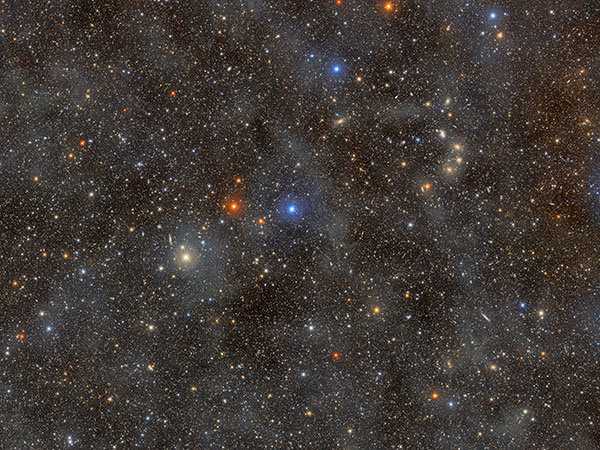
| This huge image of the constellation Lupus demonstrates the Rubin observatory's wide view of the sky combined with the ability to detect extremely faint objects. (See a bigger version here.) (NSF–DOE Vera C. Rubin Observatory/NOIRLab/SLAC/AURA) | |||||
Rubin opens its eye to the big wide skyYesterday, the Vera Rubin Observatory in Chile started a 10-year mission to image the sky with unprecedented breadth. In its first year, its nightly sweeps will generate more data than all previous optical telescopes combined. And this is just the beginning. “The first year of data is not going to be great for faint stuff, but as they build up the data over 10 years, it gets better and better,” says astrophysicist Aaron Romanowsky. Science | 7 min readRead more: Physicist Tony Tyson reflects on the Rubin Observatory — a project he first dreamt up more than 30 years ago (Nature | 5 min read) |
|||||
|
|||||
|
|||||
|
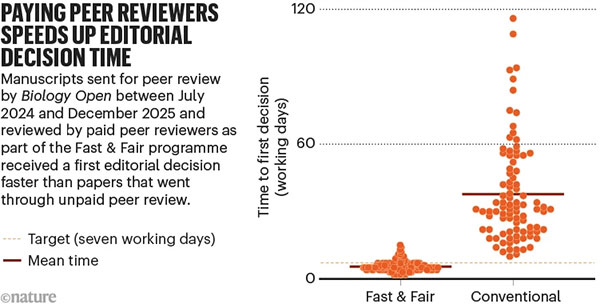
In July 2024, the journal Biology Open trialled paying peer reviewers that turned around ‘good quality’ reports within four working days. The experiment was a success: paying reviewers led to faster first editorial decisions and improved review quality, as judged by handling editors on the basis of helpfulness in making a decision. (Nature | 6 min read) Reference: bioRxiv preprint (not peer reviewed) |
|||||
|
|||||
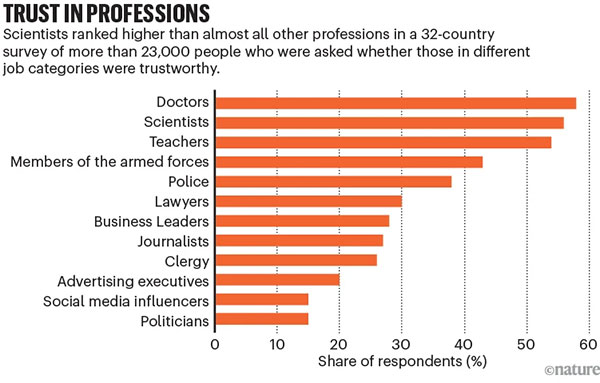
Trust in science: what’s really happeningTrust in science has collapsed — right? The evidence says that it’s not necessarily so. From a global perspective, public trust in science and scientists is high. Trust has dropped in certain groups, notably among Republican-leaning people in the United States. And research in the United Kingdom shows that the proportion of people who have “a lot” of trust in science tends to be lower among politically right-leaning groups than those on the left. In many countries, people are also increasingly questioning definitive evidence on divisive issues such as vaccines, partly because scientific information is being drowned out online. Nature | 16 min read |
|||||
|
|||||
Did big oil tarnish a landmark study?An influential climate study published 22 years ago has the fingerprints of oil executives all over it, reports ProPublica. In it, researchers identified a portfolio of actions they called “stabilization wedges” that used existing technology to limit atmospheric carbon dioxide. However, the study was funded by the oil company BP and much of its content was shaped by the company, finds ProPublica’s investigation. The result: too much focus on carbon capture and storage, an unproven idea that some think could neutralize some ongoing greenhouse gas emissions. A former BP exec says the company “did not oversee” the paper and took academic freedom seriously, and the study’s authors deny BP had any control over the paper’s scientific content. ProPublica | 35 min readReference: Science paper (from 2004) |
|||||
|
|
|||||
|
|||||
|
|
|||||
Free newsletters from NatureWant more? Update your preferences to sign up to our other Nature Briefing newsletters:
|
|||||
|
|||||
|
You received this newsletter because you subscribed with the email address: - Please add [email protected] to your address book. Enjoying this newsletter? You can use this form to recommend it to a friend or colleague — thank you! Had enough? To unsubscribe from this Briefing, but keep receiving your other Nature Briefing newsletters, please update your subscription preferences. To stop all Nature Briefing emails forever, click here to remove your personal data from our system. Fancy a bit of a read? View our privacy policy. Forwarded by a friend? Get the Briefing straight to your inbox: subscribe for free. Want to master time management, protect your mental health and brush up on your skills? Sign up for our free short e-mail series for working scientists, Back to the lab. Get more from Nature: Register for free on nature.com to sign up for other newsletters specific to your field and email alerts from Nature Portfolio journals. Would you like to read the Briefing in other languages? 关注Nature Portfolio官方微信订阅号,每周二为您推送Nature Briefing精选中文内容——自然每周简报。
Nature Portfolio | The Springer Nature Campus, 4 Crinan Street, London, N1 9XW, United Kingdom Nature Portfolio, part of Springer Nature. |