Unique mutation lets octopuses make proteins with precision
What matters in science |

Is this your brand on Milled? Claim it.
|
|||||
|
|||||
|
Hello Nature readers, |
|||||
|
|||||
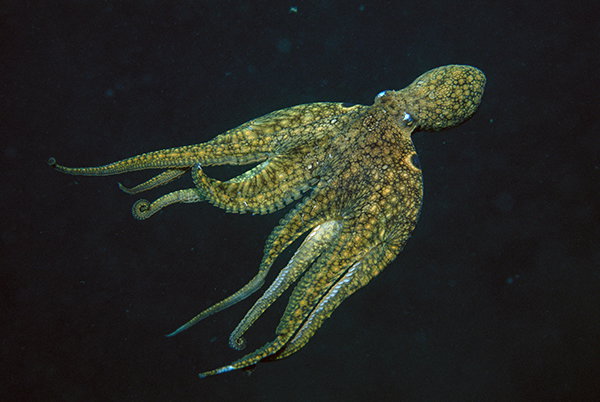
| Shallow-water octopuses appear to have picked up their protein-building mutation around 100 million years ago, around the same time they developed bigger brains. (Norbert Wu/Minden Pictures via Alamy) | |||||
Octopuses make near-flawless proteinsCertain species of shallow-water octopuses have a unique mutation that makes them extremely accurate protein builders. Researchers found that this mutation causes a break in an RNA strand in the core of the octopus's protein-making machinery. When they engineered a similar break into E. coli, the bacteria made around 50% fewer mistakes when building proteins than did bacteria without the mutation. This quirk means that proteins in these octopuses are less likely to misfold and form toxic clumps. Science | 5 min readReference: bioRxiv preprint (not peer reviewed) |
|||||
Nobel laureate leaves the US for ChinaNobel-prize-winning chemist Omar Yaghi has left the United States for a full-time position at Tsinghua University in Beijing, where he will lead a new artificial-intelligence-assisted materials discovery institute. Born in Jordan to Palestinian-refugee parents, Yaghi came to the US as a child and did his Nobel-winning work on metal-organic framework compounds there. The current state of US science is “not so encouraging”, Yaghi said recently, “because of the cutting back on grants”. In light of these cuts by the administration of President Donald Trump, China has been trying to lure US talent with the promise of money and support. Nature | 6 min read |
|||||
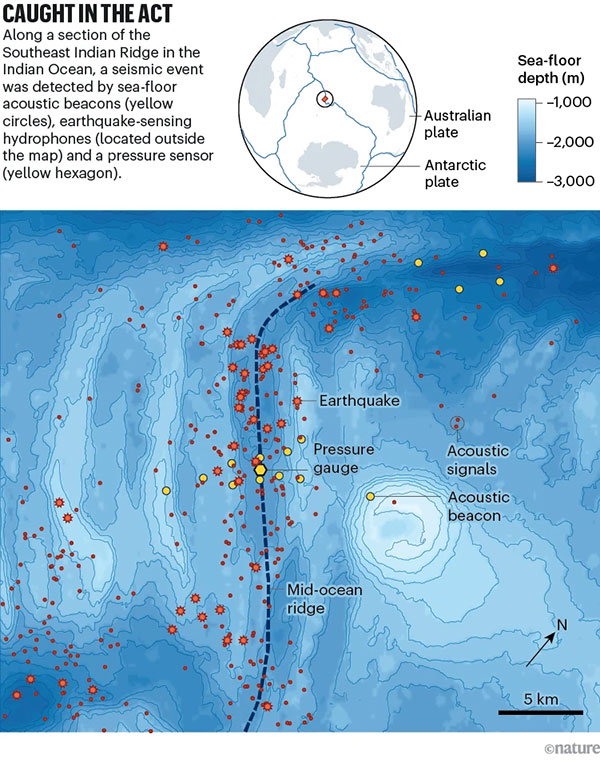
Scientists see the seafloor burst at the seamsFor the first time, geophysicists have caught the ocean floor splitting apart at its seams. Using an array of measuring stations laid across an 100-kilometre-long region of the Indian Ocean, the team witnessed a seismic event that shifted two sections of the oceanic crust apart by at least 2 metres in a matter of days, spewing around 160 million cubic metres of lava onto the sea floor as it did so. Nature | 4 min readReference: Nature paper |
|||||
|
|||||
|
|||||
Your brain in microgravityThe effects of living in microgravity on our bodies are well documented. The impact of spaceflight on the brain is more of a mystery, and finding out is crucial to knowing whether long-haul space missions are feasible. Now, researchers have pulled together data from studies of astronauts and spaceflight simulation experiments to glean how the absence of gravity physically affects the human brain. “It's a beautiful neuroplasticity — we found that there are both structural and functional alterations,” says cognitive neuroscientist and study co-author Elisa Raffaella Ferrè. BBC Future | 7 min readReference: Frontiers in Psychology paper |
|||||
Does all life have ‘agency’?In an attempt to pin down the je ne sais quoi that defines life, some scientists have suggested that living things have ‘agency’, that being an ability to pursue a goal. But the term is contentious in biology, not least because there’s no agreed upon definition of agency, either. Some researchers argue that goal-directed behaviour is often just a response to a stimulus, with little or no active choice involved. Others suggest that genes can only provide so many instructions, and that at some point, the organism must take the wheel. Quanta | 12 min read |
|||||
The travelling microbiome collectorsOver the past decade, biologists Mathilde Poyet and Mathieu Groussin have been travelling the world to collect microbiome samples from as diverse a range of people as possible. On their travels, the pair also interviewed donors about factors such as diet and lifestyle that might impact the bacteria that live on and in their bodies. Their data — housed in the Global Microbiome Conservancy, one of the biggest repositories of live bacteria in the world — has revealed that there’s no such thing as a ‘normal’ microbiome. The New York Times Magazine | 20 min read |
|||||
Quote of the day“This response is extraordinarily useful — if you are trying to escape a sabre-toothed tiger. It is much less useful when the ‘threat’ is an overflowing inbox.”Anatomist Michelle Spear explains that being ‘wired but tired’ — feeling physically exhausted but mentally energetic — stems from the brain’s desire to stay alert in stressful situations, which tended to be more life-threatening when the response evolved. (The Conversation | 5 min read) |
|||||
|
|
|||||
|
|||||
|
|
|||||
Free newsletters from NatureWant more? Update your preferences to sign up to our other Nature Briefing newsletters:
|
|||||
|
|||||
|
You received this newsletter because you subscribed with the email address: - Please add [email protected] to your address book. Enjoying this newsletter? You can use this form to recommend it to a friend or colleague — thank you! Had enough? To unsubscribe from this Briefing, but keep receiving your other Nature Briefing newsletters, please update your subscription preferences. To stop all Nature Briefing emails forever, click here to remove your personal data from our system. Fancy a bit of a read? View our privacy policy. Forwarded by a friend? Get the Briefing straight to your inbox: subscribe for free. Want to master time management, protect your mental health and brush up on your skills? Sign up for our free short e-mail series for working scientists, Back to the lab. Get more from Nature: Register for free on nature.com to sign up for other newsletters specific to your field and email alerts from Nature Portfolio journals. Would you like to read the Briefing in other languages? 关注Nature Portfolio官方微信订阅号,每周二为您推送Nature Briefing精选中文内容——自然每周简报。
Nature Portfolio | The Springer Nature Campus, 4 Crinan Street, London, N1 9XW, United Kingdom Nature Portfolio, part of Springer Nature. |