‘Virgin birth’ in fruit flies genetically engineered for the first time
What matters in science |

Is this your brand on Milled? Claim it.
|
|||||
|
|||||
|
Hello Nature readers, |
|||||
|
|||||
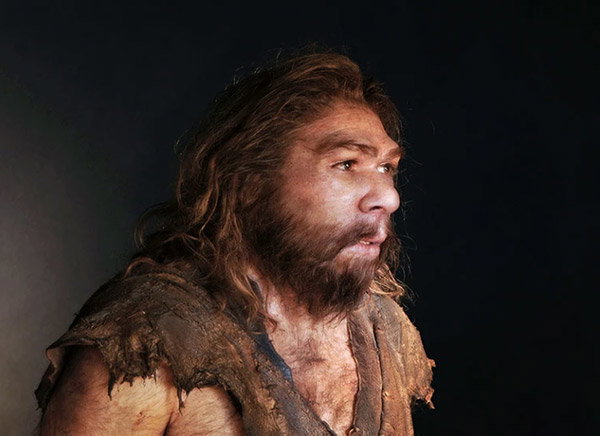
| Molecular ‘de-extinction’ of proteins made by Neanderthals (Homo neanderthalensis) could inspire new drugs to treat infections. (S. Entressangle/E. Daynes/Science Photo Library) | |||||
AI brings back Neanderthal protein snippetsArtificial intelligence (AI) has helped scientists to resurrect Neanderthal peptides — protein subunits that could be an untapped resource of new antibiotics. An algorithm was trained to recognize sites on human proteins where they are cut into peptides. When the algorithm and other tools were applied to publicly available protein sequences of Neanderthals and Denisovans, it found several peptides that halted the growth of certain bacteria in mice. Nature | 5 min readReference: Cell Host & Microbe paper |
|||||
‘Virgin birth’ engineered in fruit fliesFor the first time, scientists have genetically engineered female animals to reproduce without a male partner. Many insect and lizard species have naturally evolved to reproduce without a male, a process called parthenogenesis. Researchers identified some of the genes involved in parthenogenesis in a strain of fruit flies, and then altered equivalent ones in another strain that can’t reproduce asexually. As many as 11% of the engineered female fruit flies, including some of their offspring, became capable of reproducing without a male. Nature | 4 min readReference: Current Biology paper |
|||||
Scepticism around superconductor claimsScientists are sceptical about preprints that claim to have discovered the first superconductor that works at ambient temperature and pressure. If true, the finding could have huge technological implications. Superconductivity — the ability to transport electricity without any resistance — has so far been described only in materials cooled to ultra-low temperatures or under extreme pressures. Critics have pointed out that lead apatite, the basis for the superconductor, is an unpromising starting point. And there’s no solid explanation for the physics behind the claim. “The data seems a bit sloppy,” says physicist Nadya Mason. Several teams are trying to replicate the experiment. Science | 5 min readReferences: arXiv preprint 1 & preprint 2 (not peer reviewed) |
|||||
|
|||||
Is Barbie bad for body image?The Barbie movie explores the legacy of the iconic doll, which has been put forward as a feminist icon but has also been criticised for upholding thinness as a social norm for women. Whether Barbie has been good or bad for girls and women is a very complicated question, says clinical health psychologist Jennifer Webb. There’s limited evidence that exposure to thin dolls affects young girls’ body image, she explains. Webb points out that “there’s so much of the context that we are missing in these studies”. Overall, she enjoyed the film. “I appreciated that it really was trying to map on to what Mattel is trying to do with its renewed vision of increasing representation and diversity.” Nature | 6 min read |
|||||

|
|||||
ACCESS NATURE AND 54 OTHER NATURE JOURNALS
|
|||||
Lab leaders learn from Stanford controversyNeuroscientist Marc Tessier-Lavigne will step down as president of Stanford University. An investigation found that he had failed to take adequate action after allegations of data manipulation in high-profile papers dating back to 1999. He did not contribute to or know about the misconduct at the time, the report concludes. However, it faulted Tessier-Lavigne for creating a culture that fostered an “unusual frequency” of data improprieties. Some researchers questioned the feasibility of running a laboratory while holding a demanding administrative role, as Tessier-Lavigne did. Others said that, even with safeguards in place, problems with data will still arise. What’s important is that lab leaders take responsibility, says image-integrity consultant Elisabeth Bik. Nature | 6 min read |
|||||
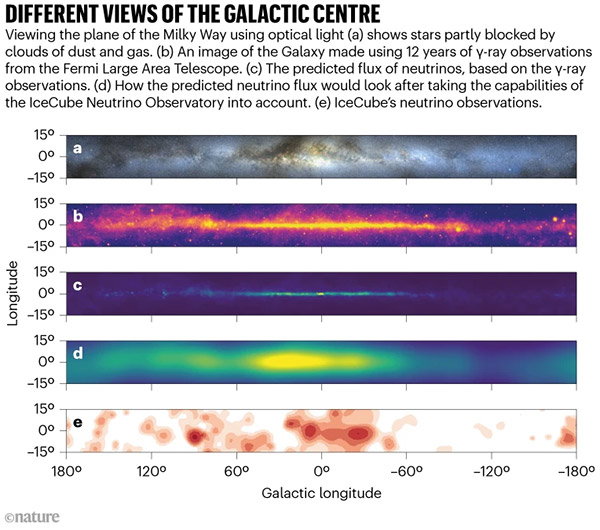
How to map the cosmos without lightA vast telescope buried beneath Antarctica, called IceCube, has captured the first neutrino map of our Galaxy. Neutrinos are the most abundant subatomic particles in the Universe, but they are difficult to detect because their interactions with matter are weak — they can travel through the entire Earth unimpeded. The nascent field of neutrino astronomy is now turning the particles into a tool to peer into places where light doesn’t reach, such as the dense maelstroms of matter swirling around supermassive black holes. Ultimately, neutrinos could help to unveil the mysterious source of high-energy cosmic rays. Nature | 8 min read |
|||||
|
|||||
| Different views of the galactic centre (IceCube/NASA/DOE/Fermi LAT Collaboration/Axel Mellinger, CMU) | |||||
Quote of the day“It is, in principle, possible to stop life for more or less an indefinite time and then restart it.”Biologist Teymuras Kurzchalia and his team revived two tiny roundworms that had been frozen in the Siberian permafrost for 46,000 years. The worms seem to have survived by entering a dormant state called cryptobiosis. (The New York Times | 4 min read) |
|||||
|
|
|||||
|
|||||
|
|
|||||
|
|||||
|
You received this newsletter because you subscribed with the email address: - Please add [email protected] to your address book. Enjoying this newsletter? You can use this form to recommend it to a friend or colleague — thank you! Want to switch to the weekly edition? Update your preferences. Had enough? Unsubscribe from the Nature Briefing. Fancy a bit of a read? View our privacy policy. Forwarded by a friend? Get the Briefing straight to your inbox: subscribe for free. Want to master time management, protect your mental health and brush up on your skills? Sign up for our free short e-mail series for working scientists, Back to the lab. Get more from Nature: Register for free on nature.com to sign up for other newsletters specific to your field and email alerts from Nature Research journals. Would you like to read the Briefing in other languages? 关注Nature Portfolio官方微信订阅号,每周二为您推送Nature Briefing精选中文内容——自然每周简报。
Nature | The Springer Nature Campus, 4 Crinan Street, London, N1 9XW, United Kingdom Nature Research, part of Springer Nature. |