We finally know what causes fainting
What matters in science |

Is this your brand on Milled? Claim it.
|
|||||
|
|||||
|
Hello Nature readers, |
|||||

|
|||||
| The protoplanet Theia, which was roughly the size of Mars, slammed into proto-Earth 4.5 billion years ago (artist’s impression). (Hernán Cañellas) | |||||
Strange mantle blobs are relics of collisionTwo mysterious blobs of rock in Earth’s mantle could be remnants of the planetary smash-up that formed the Moon. The formations sit in the layer between the crust and the core, are thousands of kilometres long and are slightly denser than their surroundings. Computer simulations suggest that they are from the protoplanet Theia, which smashed into Earth 4.5 billion years ago. Some of Theia’s remnants were flung into orbit, where they coalesced into the Moon. Nature | 4 min readReference: Nature paper |
|||||
Mysteries of fainting revealedExperiments in mice have identified a specific group of sensory neurons that is responsible for syncope, the brief loss of consciousness during fainting. The cells — called NPY2R vagal sensory neurons — are found in the vagus nerve, which connects the brain to the heart and other organs. Scientists activated these cells in mice that were roaming about, which then fainted within a few seconds. Their pupils dilated, their eyes rolled back and their heart rate, blood pressure and breathing rate all dipped. The team also found that a region of the brain’s hypothalamus is responsible for recovery from fainting. Nature | 5 min readReference: Nature paper |
|||||
First treatment against ‘super-gonorrhoea’The first new gonorrhoea antibiotic in decades could address a worrying rise of a drug-resistant form of the bacterium. The disease is often symptomless, and can cause infertility if left untreated. In a trial with 930 participants, the new drug, called zoliflodacin, was as effective and safe as two older drugs in curing infections. Researchers warn that zoliflodacin will have to be used wisely to avoid the bacterium developing resistance to it, too. Nature | 4 min read |
|||||
UK researchers launch anti-bullying groupAcademics and staff members at several UK universities have set up an initiative to combat bullying and harassment. The ‘21 Group’ advocates for the establishment of an independent advocate to whom people can turn if their institutions handle complaints badly. “Perpetrators are almost always protected, while targets frequently face retaliation,” says anti-bullying researcher Morteza Mahmoudi. Nature | 4 min read |
|||||
|
|||||

|
|||||
| (Totto Renna) | |||||
‘Peer pressure’ could help steer AI ethicsCan artificial intelligence (AI) systems be taught to make ethical choices? Human judgement is shaped by social interactions — and virtual ‘peer pressure’ for chatbots, in which ones trained with ethical standards interact with others to teach them how to behave, could mimic this process. Another approach is a sort of brain surgery for AI, in which the parts of a system that are responsible for undesirable behaviour are neatly excised. How AI systems are supposed to deal with differing opinions is an open question. “We’re looking to ideas from governance,” says cognitive scientist Sydney Levine. Ethical AI could even lead to insights about why humans make the moral choices they do, “to help humans be better at being human”, says computer scientist Oren Etzioni. Nature | 12 min readThis article is part of Nature Outlook: Robotics and artificial intelligence, an editorially independent supplement produced with financial support from FII Institute. |
|||||

|
|||||
ACCESS NATURE AND 54 OTHER NATURE JOURNALS
|
|||||
How to keep secrets in a quantum world“Your data could already be lost to a future quantum computer, even though one hasn’t been built,” says mathematician Dustin Moody. He’s one of the scientists working on ways to encrypt data that will resist quantum computers’ attempts at unravelling them. The task is urgent: spy agencies or cybercriminals could collect encrypted data now and simply wait for the technology to catch up. Of 69 potentially quantum-resistant algorithms that the US National Institute of Standards and Technology chose in late 2017, up to 30 have already been broken or suffered significant attack. “The strongest will survive,” says Moody. Nature | 10 min readRead more in Nature Spotlight: Cryptography |
|||||
Could the atomic ‘dual mandate’ tame AI?In 1957, the International Atomic Energy Agency was created with a dual mandate: promote the transfer of peaceful nuclear technology — while curtailing its military use. By providing a mechanism for sharing the benefits of nuclear technology, the dual mandate secured international support for measures to limit proliferation, write Harry Law and Lewis Ho, who are both AI governance researchers at Google DeepMind. “States on the frontier of artificial intelligence (AI) development could take inspiration from the dual mandate,” they argue. “They could provide assistance to other countries in harnessing the benefits of AI. This could incentivize buy-in to a system of global governance.” Nature Reviews Physics | 5 min read |
|||||
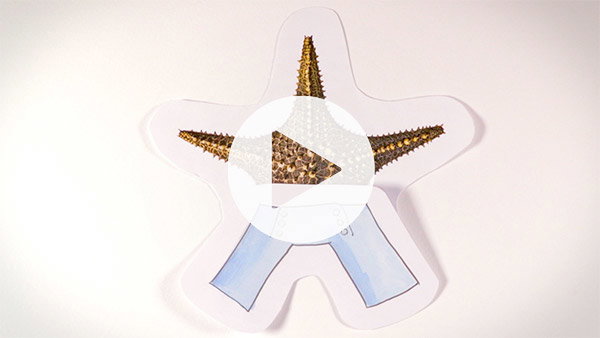
Video: How would a starfish wear trousers?A starfish is getting ready for a day out — but would it pop its trousers on over each of its arms, or maybe over each little tiny-tube foot? This light-hearted animated video shows how this silly question reveals a perplexing problem with bilateral symmetry and how the starfish’s body plan evolved. Nature | 3 min videoReference: Nature paper |
|||||
|
|||||
Quote of the day“Modern industrial products should not be recognized as foods at all.”Pediatric-obesity researcher David Ludwig says that parents and others must fight back againstagains the normalization of ultraprocessed foods to reduce the epidemic of childhood obesity in the United States. (The New York Times | 29 min read) |
|||||
|
|
|||||
|
|||||
|
|
|||||
|
|||||
|
You received this newsletter because you subscribed with the email address: - Please add [email protected] to your address book. Enjoying this newsletter? You can use this form to recommend it to a friend or colleague — thank you! Had enough? To unsubscribe from this Briefing, but keep receiving your other Nature Briefing newsletters, please update your subscription preferences. To stop all Nature Briefing emails forever, click here to remove your personal data from our system. Fancy a bit of a read? View our privacy policy. Forwarded by a friend? Get the Briefing straight to your inbox: subscribe for free. Want to master time management, protect your mental health and brush up on your skills? Sign up for our free short e-mail series for working scientists, Back to the lab. Get more from Nature: Register for free on nature.com to sign up for other newsletters specific to your field and email alerts from Nature Research journals. Would you like to read the Briefing in other languages? 关注Nature Portfolio官方微信订阅号,每周二为您推送Nature Briefing精选中文内容——自然每周简报。
Nature | The Springer Nature Campus, 4 Crinan Street, London, N1 9XW, United Kingdom Nature Research, part of Springer Nature. |