What does quantum mechanics mean? Physicists disagree on even the basics
What matters in science |

Is this your brand on Milled? Claim it.
|
|||||
|
|||||
|
Hello Nature readers, |
|||||
|
|||||
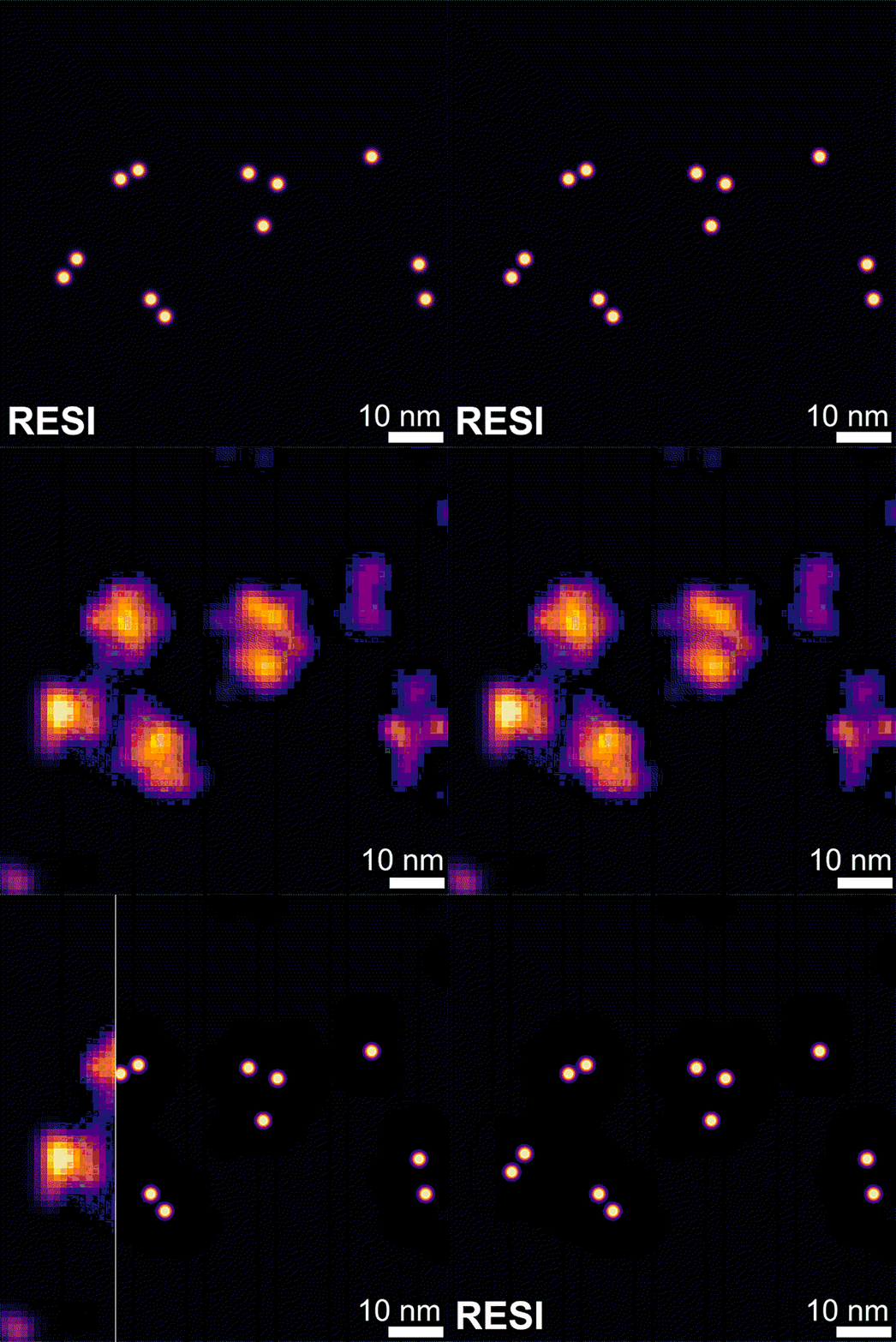
| Researchers used two Nobel prizewinning techniques — super-resolution fluorescence microscopy and click chemistry — to develop a new way of imaging individual sugars on the surface of a cell. (Luciano A. Masullo et al./Nat. Nanotech. (CC BY 4.0)) | |||||
Sugars as you’ve never seen them beforeUsing a new imaging technique, scientists have mapped individual sugars on the surface of cells at sub-nanometre resolution with a humble light microscope. Light microscopes usually blur structures smaller than 200 nanometres. The new technique has revealed the sugary structures at a resolution of just 9 Ångström, or 0.9 nanometres, outperforming even the best previously available super-resolution light microscopy tools. “The next step is to understand how these sugars on the cell surface change during health and disease,” says biophysicist and study co-author Karim Almahayni. Nature | 5 min readReference: Nature Nanotechnology paper |
|||||
AI to get African-language crash courseLanguage specialists have recorded 9,000 hours of people speaking 18 African languages and transformed the recordings into digitized language data sets. The group plans to release the data to the developers of artificial intelligence tools to use to train large language models (LLMs). Many LLMs are used to convert speech to text or provide automatic language translation, but a lack of training data for African languages means these tools can’t recognize them. Languages being recorded include Hausa, Yoruba, Igbo and Naijá. Nature | 4 min read |
|||||
Columbia reaches uneasy deal with TrumpScientists at Columbia University say they’re relieved, yet unsettled, after the institution reached an agreement with the US government to restore its research funding in exchange for an increase in federal oversight of the institution. The settlement means that Columbia will pay more than US$200 million to the government over three years to end multiple federal investigations that revolve mainly around allegations of antisemitism on campus. Despite scientists’ relief over the restored funds, many worry about the precedent that the deal sets, including the extra scrutiny of international applicants. Nature | 6 min read |
|||||
|
|||||
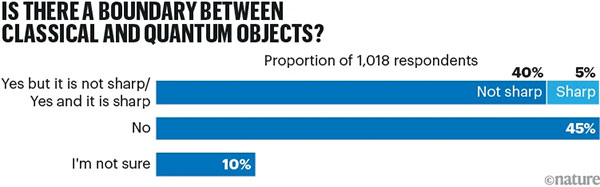
What does quantum physics mean anyway?First sketched out a century ago, the equations at the heart of quantum mechanics underpin technologies from computer chips to medical-imaging machines. But no one seems to agree on how best to describe the physical reality that lies behind the maths. A Nature survey of more than 1,100 researchers — the largest ever on the subject — has revealed just how widely researchers vary in their interpretations of the most fundamental features of quantum experiments, and their confidence in their answers. Nature | 14 min read |
|||||
|
Are you satisfied by the Copenhagen interpretation? Or are you more of a ‘many worlds’ kind of person? Find out which of the five quantum interpretations suits you with Nature’s quiz in this feature. Don’t worry, the explanations of what they all mean are in there too, if you need them. |
|||||
|
|||||
| Opinions on whether a boundary exists between classical and quantum objects were split almost exactly down the middle. | |||||
A life of scientific satire“I don’t think anyone has quite matched him before or since for his clever yet extremely informed mathematical and scientific lyrics,” says mathematician Marcus du Sautoy of satirical singer-songwriter and mathematician Tom Lehrer. A prodigy, Lehrer went to Harvard University at 15 years old, and later graduated with a degree in mathematics. What followed was a one-of-a-kind career in which he juggled science and the stage. His song ‘The Elements’ has “made a tremendous impact on the popularization of science, chemistry and of course the periodic table”, says science historian Eric Scerri. Lehrer has died aged 97. Nature | 5 min read |
|||||
Biology’s wildest research conferenceFor three days in June, biologists gathered in Prague, and a nearby wooded campsite, for a biology conference like no other. At Woodstock Bio2 + Night Science, the aim was “to reimagine science in a non-bureaucratic, non-boring way”, says molecular biologist and conference co-organizer Oded Rechavi. Attendees spoke in five-minute slots — some in rhyme, others supported by spontaneous dance — and were called to the podium in random order. The silliness “sets the tone for a very open conference where we can be very authentic”, says plant biologist and conference co-organizer Natanella Illouz-Eliaz. Nature | 8 min read |
|||||
Quote of the day“Looking after green spaces isn’t just environmental work. It’s emotional work. It’s care work. And changing the narrative on who gets to do it is vitally important.”Geographer Michael Joseph Richardson’s research explores ‘ecological masculinities’ — the gender and class expectations of climate action. He explains that anti-environmentalism can be borne from misogynistic views of who should be responsible for ‘care work’. (The Conversation | 4 min read) |
|||||
|
|
|||||
|
|||||
|
|
|||||
Free newsletters from NatureWant more? Update your preferences to sign up to our other Nature Briefing newsletters:
|
|||||
Access Nature and 54 other Nature journals
Nature+ is our most affordable 30-day subscription, giving you online access to a wide range of specialist Nature Portfolio journals, including Nature. |
|||||
|
|||||
|
You received this newsletter because you subscribed with the email address: - Please add [email protected] to your address book. Enjoying this newsletter? You can use this form to recommend it to a friend or colleague — thank you! Had enough? To unsubscribe from this Briefing, but keep receiving your other Nature Briefing newsletters, please update your subscription preferences. To stop all Nature Briefing emails forever, click here to remove your personal data from our system. Fancy a bit of a read? View our privacy policy. Forwarded by a friend? Get the Briefing straight to your inbox: subscribe for free. Want to master time management, protect your mental health and brush up on your skills? Sign up for our free short e-mail series for working scientists, Back to the lab. Get more from Nature: Register for free on nature.com to sign up for other newsletters specific to your field and email alerts from Nature Portfolio journals. Would you like to read the Briefing in other languages? 关注Nature Portfolio官方微信订阅号,每周二为您推送Nature Briefing精选中文内容——自然每周简报。
Nature Portfolio | The Springer Nature Campus, 4 Crinan Street, London, N1 9XW, United Kingdom Nature Portfolio, part of Springer Nature. |