What scientists can learn from a solar eclipse
What matters in science |

Is this your brand on Milled? Claim it.
|
||
|
||
|
Hello Nature readers, |
||
|
||
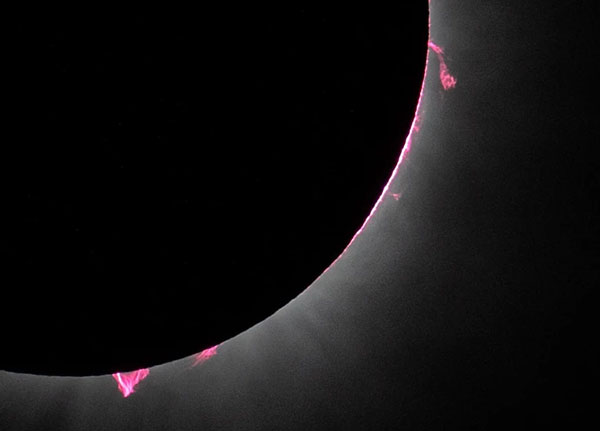
| The solar corona is only visible to the naked eye during eclipse events. (NASA/Keegan Barber) | ||
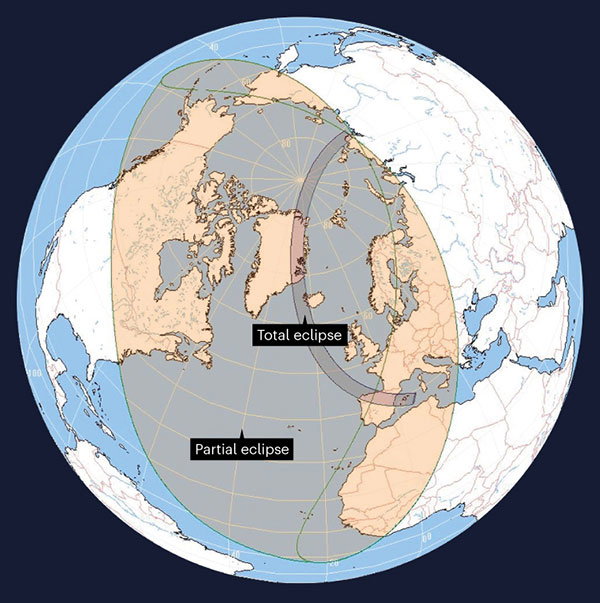
What we can learn from the solar eclipseOn 12 August, researchers will get roughly two minutes to study the Sun’s outermost layer — the solar corona — during a total solar eclipse. Scientists hope that data gathered during the eclipse will help them to answer questions such as why the corona is so much hotter than the Sun’s surface below it, and where the Sun’s magnetic energy comes from. A better understanding of the corona could help them to better predict space weather, which can affect satellites and power grids on Earth. Nature | 6 min read |
||
|
||
| Parts of Greenland, Iceland and Spain will experience a total eclipse, with a partial eclipse visible across some other parts of Europe, Africa, North America and northern Russia. | ||
We all feel the same ticklePeople from Greek, Dutch and Chinese backgrounds all have the same ‘tickle hotspots’, such as the armpits and soles of the feet, which suggests that how people experience ticklishness is consistent across cultures. Comparisons with maps of other sensations, such as pain or pleasure, suggested that the sensation is decidedly distinct and unique. The study is one of the first to systematically investigate gargalesis, the kind of tickling that is associated with play and involves using strong, repetitive pressure to elicit laughter. Nature | 4 min readReference: Nature Human Behaviour paper |
||
AI claims to pick cream of the preprint cropA start-up called QED Science has released a free artificial-intelligence tool that aims to judge whether life-sciences research is original and valid. The company recently used the tool to select the ‘top 1%’ of preprints posted on preprint server bioRxiv between May 2025 and April 2026. Its use has sparked debate among researchers, some of whom doubt the AI's ability to reliably and transparently judge the quality of scientific research. Researchers can use the platform to see “what information or explanation they should add,” says Niv Mastboim, chief executive of QED Science. “The goal is to produce good science.” Nature | 5 min readReference: QED Science press release |
||
|
||
El Niño threat looms large in the AmazonDroughts caused by the 2023-2024 El Niño event fuelled some of the Amazon rainforest’s worst wildfires, from which it has yet to fully recover. Now, another El Niño is brewing, which some forecasters predict could be the strongest in 150 years. This event, on top of warming and drying caused by climate change, might push the rainforest past its ‘tipping point’, researchers say. If that were to happen, rainforest would give way to savannah and degraded woodland over decades, potentially releasing an amount of carbon equivalent to several years of global emissions. Nature | 8 min read |
||
Science can champion open-weight modelsResearchers who work with AI tools must pioneer the use of open-weight models that can be run on personal computers, write three data scientists. These models don’t rely on data centres that have enormous energy and water demands, and so can make the use of AI in research more sustainable. Educators can facilitate this change by teaching students how to determine when local models are preferable to cloud-based systems and how to develop applications that run efficiently on local hardware, the authors write. Nature | 8 min read |
||
The collateral damage from review millsIn 2024, publisher MDPI added warnings to several papers to indicate that they were victims of ‘review mills’ — individuals or groups who duplicate reviewer reports, probably with the goal of increasing the number of times their or their collaborators’ papers are cited. “We did solid science,” says biophysical chemist Michael Börsch, the author of one flagged paper, but the mill’s work has left some of his team’s output tainted by wrongdoing. “For my PhD student, it’s a disaster to have his first paper branded like this,” he adds. Nature | 20 min read |
||
|
||
|
||
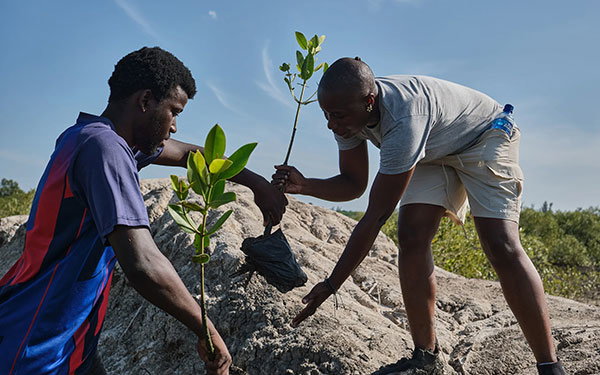
| Marine biologist Célia Macamo (right) is racing to save the mangrove forests threatened by the urban expansion of Maputo, Mozambique. She and her team conduct ecological assessments to estimate how much carbon is stored in the forests’ soil, which can help to produce carbon credits. Companies buy carbon credits to offset their greenhouse-gas emissions and landowners are financially rewarded for protecting their local area. This creates a way to protect habitats and to prevent the land from being cleared for development or aquaculture. (Nature | Visual-filled scroll) (Diego Menjíbar Reynés) | ||
Quote of the day“I try to ascertain whether we will be able to stay long enough for the future my daughter has already started to imagine.”Geophysicist Zaid Jangda moved to the United Kingdom to pursue his research career, but steep visa costs might limit his and his family’s time in the country, he says. (Science | 5 min read) |
||
|
|
||
|
||
|
|
||
Free newsletters from NatureWant more? Update your preferences to sign up to our other Nature Briefing newsletters:
|
||
|
||
|
You received this newsletter because you subscribed with the email address: - Please add [email protected] to your address book. Had enough? To unsubscribe from this Briefing, but keep receiving your other Nature Briefing newsletters, please update your subscription preferences. To stop all Nature Briefing e-mails forever, click here to remove your personal data from our system. Fancy a bit of a read? View our privacy policy. Forwarded by a friend? Get the Briefing straight to your inbox: subscribe for free. Get more from Nature: Register for free on nature.com to sign up for other newsletters specific to your field and e-mail alerts from Nature Portfolio journals. Would you like to read the Briefing in other languages? 关注Nature Portfolio官方微信订阅号,每周二为您推送Nature Briefing精选中文内容——自然每周简报。
Nature Portfolio | The Springer Nature Campus, 4 Crinan Street, London, N1 9XW, United Kingdom Nature Portfolio, part of Springer Nature. |