Who is doing ‘gain of function’ research on pathogens — and why
What matters in science |

Is this your brand on Milled? Claim it.
|
|||||
|
|||||
|
Hello Nature readers, |
|||||
|
|||||
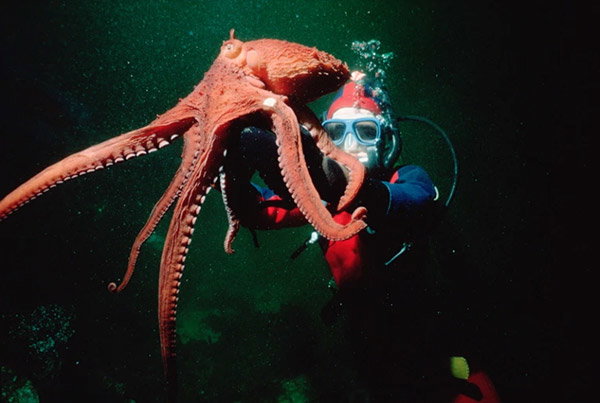
| A giant Pacific octopus (Enteroctopus dofleini) is weighed and tagged by a biologist. (Fred Bavendam/Minden Pictures/Alamy) | |||||
Octopuses might get ethics oversightThe US National Institutes of Health has proposed new guidelines for work with cephalopods (such as octopuses and squid) because of growing evidence that the animals perceive pain and have advanced cognitive abilities. Cephalopod researchers have welcomed the move. “Things that are good for animal welfare are also good for the quality of research,” says octopus biologist Clifton Ragsdale. But determining best research practices is tricky, because so little is known about how to effectively anaesthetize the animals. Nature | 5 min read |
|||||
Who is doing ‘gain of function’ research?Researchers have conducted the first global survey of ‘gain of function’ (GOF) studies — those in which microbes or viruses are given new abilities through genetic alteration. Some people argue that the virus responsible for the COVID-19 pandemic could have escaped from a laboratory conducting this kind of work on coronaviruses. Only a small fraction of GOF studies between 2000 and mid-2022 involved agents dangerous enough to require the strictest biosafety precautions. The report also finds that over-regulation of the technique would threaten work that is essential for creating vaccines and life-saving therapies. Nature | 5 min readReference: Center for Security and Emerging Technology report |
|||||
War and weather made Libya floods worseClimate change, civil war and international sanctions all contributed to the floods in Libya that are feared to have killed around 20,000 people. Extreme rain — the equivalent of a year’s rainfall in 24 hours — caused two dams to collapse, inundating the city of Derna and surrounding areas. Political disarray meant that the dams were probably not constructed to high standards or properly maintained, says water-security researcher Mark Zeitoun. And when severe-storm warnings came, they did not translate into action on the ground. Nature | 6 min read |
|||||
|
|||||
Researchers are honing in on long COVIDResearchers are making progress on the mysterious, long-lasting symptoms that some people experience following infection with SARS-CoV-2. A recent review pinpointed a possible cause: when a ‘reservoir’ of replicating virus or viral RNA persists in a person’s tissue and triggers their immune system. But not everyone with these viral antigens in their system feels ill. “At this point, we have hints and correlative data,” says physician-scientist Catherine Blish. “But in all honesty, we are so much further ahead at this relative point than for any other major disease in my lifetime as an infectious-disease specialist.” NPR | 9 min readReference: Nature Immunology paper |
|||||

|
|||||
ACCESS NATURE AND 54 OTHER NATURE JOURNALS
|
|||||
‘I consider retirement tantamount to death’High-profile geneticist J. Craig Venter is best known for his role in sequencing the human genome and creating a ‘synthetic’ cell containing only genes that are necessary for life. Since 2004, his research team has been sailing the world, collecting DNA samples of marine microorganisms. “Our approach has shown that discovery science is not a thing of the past,” he says. “I’m not afraid to ask the questions. The fortunate thing is, most of my ideas and intuition have been right.” Nature | 7 min read |
|||||
Are you smarter than a chatbot?Scientists are struggling to design tests that accurately benchmark the capabilities of artificial intelligence (AI). Try it for yourself by finding the machine imposter in a classic Turing test, taking on eight of the most popular AI assessment quizzes and conversing with the iconic ELIZA, a psychotherapy chatbot developed in 1966. Nature | 15 min readThis article is part of Nature Outlook: Robotics and artificial intelligence, an editorially independent supplement produced with financial support from the FII Institute |
|||||
|
|||||
|
|||||
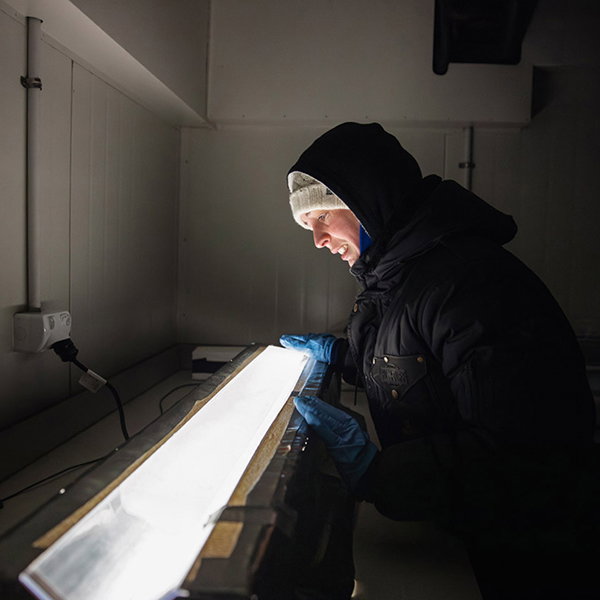
| As coordinator and caretaker at an ice-core facility, Rebecca Pyne preserves these precious records of past climate. “The ice core in the picture, which was taken in May, is a one-metre section of the Roosevelt Island Climate Evolution core, drilled from Antarctica’s Ross Ice Shelf,” she says. “We hit bedrock at 764 metres — this is the longest sample in our collection.” Pyne’s connection with polar ice is a family affair: her parents, both geologists, met in Antarctica. (Nature | 3 min read) (Becki Moss for Nature) | |||||
Quote of the day“It’s kind of like the telescope signs its own art work — like the telescope is an artist itself.”Conceptual artist Ashley Zelinskie, who works with images from the James Webb Space Telescope, discusses the distinctive diffraction spikes on the telescope’s groundbreaking images. (The New Yorker | 9 min read) |
|||||
|
|
|||||
|
|||||
|
|
|||||
|
|||||
|
You received this newsletter because you subscribed with the email address: - Please add [email protected] to your address book. Enjoying this newsletter? You can use this form to recommend it to a friend or colleague — thank you! Want to switch to the weekly edition? Update your preferences. Had enough? Unsubscribe from the Nature Briefing. Fancy a bit of a read? View our privacy policy. Forwarded by a friend? Get the Briefing straight to your inbox: subscribe for free. Want to master time management, protect your mental health and brush up on your skills? Sign up for our free short e-mail series for working scientists, Back to the lab. Get more from Nature: Register for free on nature.com to sign up for other newsletters specific to your field and email alerts from Nature Research journals. Would you like to read the Briefing in other languages? 关注Nature Portfolio官方微信订阅号,每周二为您推送Nature Briefing精选中文内容——自然每周简报。
Nature | The Springer Nature Campus, 4 Crinan Street, London, N1 9XW, United Kingdom Nature Research, part of Springer Nature. |