Why a bat virus keeps infecting people
What matters in science |

Is this your brand on Milled? Claim it.
|
||||||||
|
||||||||
|
Hello Nature readers, |
||||||||
|
||||||||
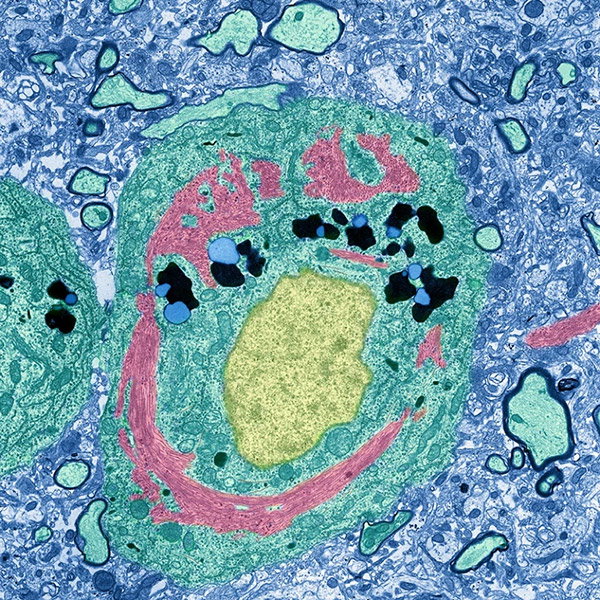
| A neuron (green) from a person with Alzheimer’s disease includes an unusual protein complex (pink) encircling the nucleus (yellow). (Thomas Deerinck, NCMIR/SPL) | ||||||||
How an Alzheimer’s gene ravages the brainNo gene variant is a bigger risk factor for Alzheimer’s disease than one called APOE4. But exactly how the gene spurs brain damage has been a mystery. A study has now linked APOE4 with faulty cholesterol processing in the brain, which in turn leads to defects in the insulating sheaths that surround nerve fibres and facilitate their electrical activity. Preliminary results hint that these changes could cause memory and learning deficits. And the work suggests that drugs that restore the brain’s cholesterol processing could treat the disease. Nature | 4 min readReference: Nature paper |
||||||||
Why a bat virus keeps infecting peopleResearchers have identified the environmental conditions that spark spillovers of a virus from bats to humans. Scientists can now predict probable spillovers of the deadly Hendra virus up to two years in advance — giving them the opportunity to intervene to prevent them. Drought, habitat loss and food stress are key drivers. When food is in short supply, bats shed more Hendra virus, and more horses — an intermediate host — get sick. The work “underscores the enhanced risk we are likely to see” with climate change and increasing habitat loss, says conservation biologist Alice Hughes. Nature | 6 min readReferences: Nature paper & Ecology Letters paper |
||||||||
| ||||||||
|
||||||||
|
||||||||
Short-circuiting the electronic-waste crisisThe computers, smartphones and other technologies that define modern life are creating waste across the world. A combination of technological and policy solutions could help to limit the damage. Nature | 12 min readNature Outlook: The circular economy is an editorially independent supplement produced with the financial support of Google. |
||||||||
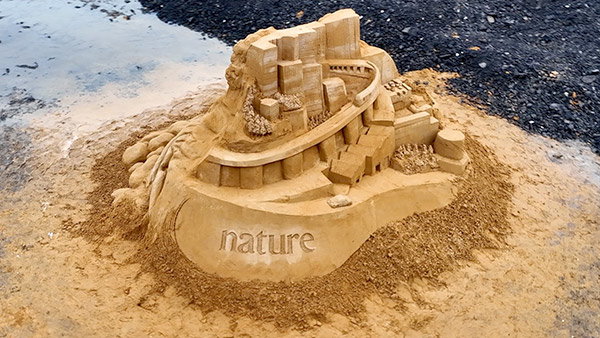
Video: how to recycle a buildingSand — specifically river and beach sand, which is needed for building — is running out. Without it, the construction industry is facing a crisis. A fresh framework for thinking about construction and the economy could help. A circular model, designed to keep materials in use for as long as possible, would mean that less sand ends up in landfill and less energy is wasted during construction, leading to a more sustainable industry that benefits businesses and the planet. Nature | 11 min video |
||||||||
|
||||||||
Quote of the day“These extreme environments are often treated with this ‘wild frontier’ mentality where no rules apply.”Sociologist Meredith Nash is one of the scientists working on making Antarctic programmes safer for field researchers. (Nature | 6 min read) |
||||||||
|
|
||||||||
|
||||||||
|
|
||||||||
|
||||||||
|
You received this newsletter because you subscribed with the email address: - Please add [email protected] to your address book. Enjoying this newsletter? You can use this form to recommend it to a friend or colleague — thank you! Want to switch to the weekly edition or change your email address? Update your preferences. Had enough? Unsubscribe from the Nature Briefing. Fancy a bit of a read? View our privacy policy. Forwarded by a friend? Get the Briefing straight to your inbox: subscribe for free. Want to master time management, protect your mental health and brush up on your skills? Sign up for our free short e-mail series for working scientists, Back to the lab. Get more from Nature: Register for free on nature.com to sign up for other newsletters specific to your field and email alerts from Nature Research journals. Would you like to read the Briefing in other languages? 关注Nature Portfolio官方微信订阅号,每周二为您推送Nature Briefing精选中文内容——自然每周简报。
Nature | The Springer Nature Campus, 4 Crinan Street, London, N1 9XW, United Kingdom Nature Research, part of Springer Nature. |