Why all living cells emit a faint glow
What matters in science |

Is this your brand on Milled? Claim it.
|
||
|
||
|
Hello Nature readers, |
||
|
||
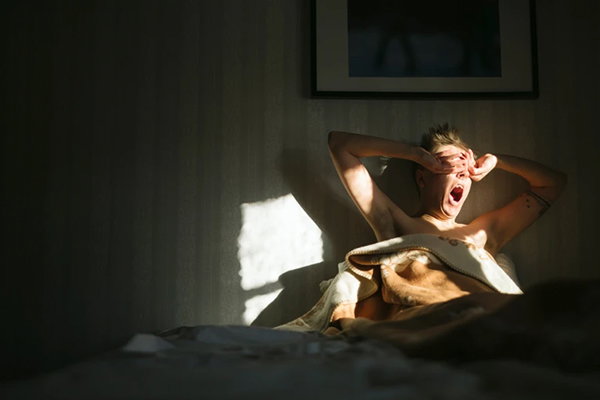
| Previous sleep research has focused mostly on the brain circuitry that snaps people awake in seconds or on how sleep debt accrues after days of bad sleep. (Getty) | ||
‘Timer’ in mouse brain tracks sleepChemical tags on proteins in a mouse’s brain serve as a marker of both the length of a sleep session and how likely an animal is to wake up at a given moment. An enzyme adds these tags to proteins on the surface of brain cells, and their levels follow a predictable rhythm, researchers found. The extent of protein tagging stayed high and steady when mice were awake and began a slow decline when they fell asleep, spiking if they experienced a brief interruption in their slumber. Nature | 5 min readReference bioRxiv preprint (not peer reviewed) |
||
Consciousness research ponders AIThe debate over whether artificial intelligence (AI) systems might become conscious has inspired some tech firms to hire philosophers. But researchers still haven’t agreed on what gives rise to consciousness in humans, let alone in an AI chatbot — and some say the issue is a red herring. “What we might see is a sort of capture of consciousness research by the AI sector,” says consciousness scientist Anil Seth. On the plus side, the influx of interest might help to validate a field that was not taken seriously as a scientific endeavour for years — and bring in all-important funding. Nature | 8 min read |
||
Alarm over ‘young mitochondria’ treatmentA small number of fertility clinics around the world are offering controversial mitochondrial replacement therapy (MRT): a procedure to furnish clients’ embryos or eggs with donated mitochondria. The theory behind the treatment — which remains unproven in rigorous clinical trials — is that the donor’s mitochondria might help the embryo to mature. “I’m pretty horrified,” says fertility specialist Richard Anderson, who reviewed the MRT offering of one of the clinics identified by Nature. He says that the technique is difficult, the risks are high and the benefits are uncertain. Nature | 8 min read |
||
|
||
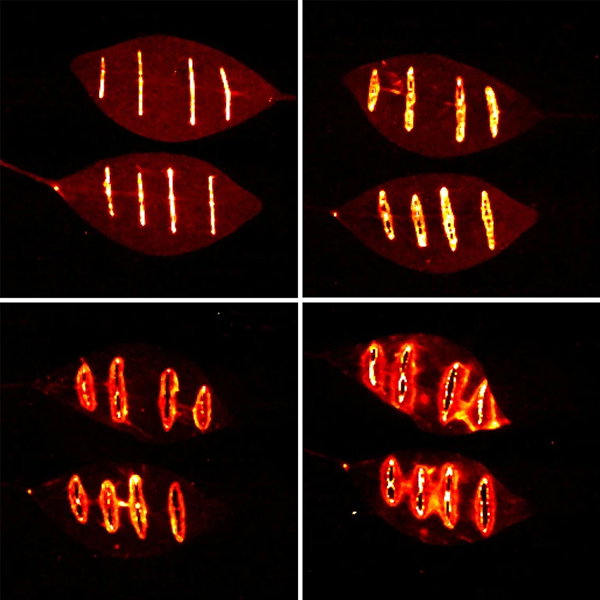
The faint glow of lifeAll living cells emit a faint glow, thanks to ‘biophotons’ produced by their metabolic activity. In the past, researchers have theorized that cells might use this glow as a way of communicating with one another, but the idea was dismissed as pseudoscience. Now, the study of biophotons is making a comeback, with some researchers hopeful that a cell’s glow could be a subtle marker of health, or a way of sending signals to its neighbours. “It’s one of those fields that feels like it is on the edge of respectability,” says biochemist Nick Lane. Nature | 12 min read |
||
|
||
| Researchers immediately saw a burst in photon emission at the site of small cuts in leaves from a dwarf umbrella tree (Heptapleurum arboricola). The lines soon spread to form a wider ring, which could indicate that they were watching the plant’s response to the injury evolving in real time, the team says. (Vishnu Seshan/University of Calgary) | ||
A kaleidoscope of scientific illustrationsIn The Art and Science of Ernst Haeckel, science historian Julia Voss and zoologist Rainer Willmann bring together 450 of the polymath’s drawings and watercolours of the natural world. Over his long and varied career, Haeckel identified thousands of species, many of which he depicted in the detailed and colourful illustrations that the book contains. Although his racist and eugenic personal views should be deplored, “it is still possible to be impressed by the sheer breadth of Haeckel’s artistry”, writes science journalist Josie Glausiusz in her review. Nature | 6 min read |
||
Who’s liable when AI treats patients?“With the benefits of AI tools come fresh patient-safety risks — and questions about who is responsible when things go wrong,” write a group that includes physician-scientist Eric Topol. This legal uncertainty could cause patients to fall into liability gaps when things go wrong, and hospitals to avoid useful tools because of concerns about murky legal risks. The authors define seven levels of AI capabilities — similar to the graded levels used by regulators for aircraft and self-driving cars — to help regulators, policymakers, governments, courts and health-care bodies to plan for future medical-AI systems. Nature | 15 min read |
||
Quote of the day“Our greatest scientific opportunity in my 35 years working in the field has been met by the most outrageous political and economic decision imaginable.”The promise offered by the breakthrough drug lenacapavir — an injection that can protect against HIV infection for six months — and other pre-exposure prophylaxis (PrEP) options is being squandered by cuts to foreign aid, says reproductive-health specialist Mitchell Warren. (Science | 27 min read) |
||
|
|
||
|
||
|
|
||
Free newsletters from NatureWant more? Update your preferences to sign up to our other Nature Briefing newsletters:
|
||
|
||
|
You received this newsletter because you subscribed with the email address: - Please add [email protected] to your address book. Had enough? To unsubscribe from this Briefing, but keep receiving your other Nature Briefing newsletters, please update your subscription preferences. To stop all Nature Briefing emails forever, click here to remove your personal data from our system. Fancy a bit of a read? View our privacy policy. Forwarded by a friend? Get the Briefing straight to your inbox: subscribe for free. Get more from Nature: Register for free on nature.com to sign up for other newsletters specific to your field and email alerts from Nature Portfolio journals. Would you like to read the Briefing in other languages? 关注Nature Portfolio官方微信订阅号,每周二为您推送Nature Briefing精选中文内容——自然每周简报。
Nature Portfolio | The Springer Nature Campus, 4 Crinan Street, London, N1 9XW, United Kingdom Nature Portfolio, part of Springer Nature. |