A new vision for how evolution works
What matters in science |

Is this your brand on Milled? Claim it.
|
||||||||
|
||||||||
|
Hello Nature readers, |
||||||||
|
||||||||
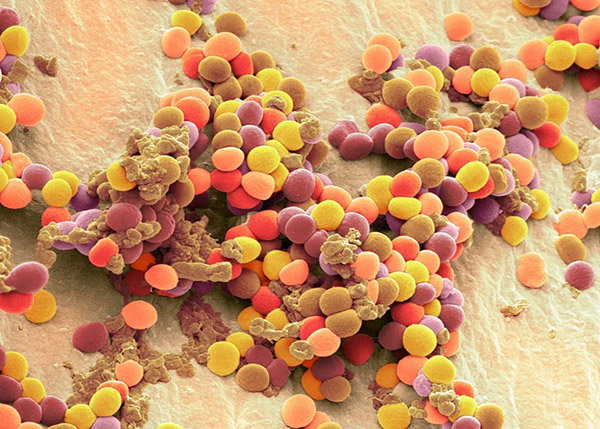
| When Paul Jensen wanted to see whether artificial-intelligence tools could synthesize research on different microorganisms, he gathered all the relevant papers on his study organism — a tooth-decay species called Streptococcus sobrinus — but discovered that there were only a few dozen and he’d already read them all. (Steve Gschmeissner/SPL) | ||||||||
Ten bacteria hog scientists’ attentionScientists have identified more than 45,000 bacterial species — but just a handful of these have been deeply studied. Paul Jensen, a microbial-systems biologist, discovered that just 10 bacterial species account for half of all publications, whereas nearly three-quarters of all named bacteria don’t have a single paper devoted to them. “Automating microbiology with robotics and artificial intelligence will accelerate our field, but we need to apply these tools to the myriad species that live in the understudied corners of our world,” Jensen wrote, including ones important to human health and those found in the ocean or soil. Nature | 4 min listenReference: bioRxiv preprint (not peer reviewed) |
||||||||
Facebook axes fact-checking: does it matter?Facebook’s parent company Meta has announced plans to scrap the platform’s fact-checking programme, which pays independent groups to verify selected articles and posts. The programme could be replaced by a system similar to the ‘community notes’ used by X (née Twitter), in which corrections and context are crowdsourced from users and added to posts. “Studies provide very consistent evidence that fact-checking does at least partially reduce misperceptions about false claims,” says social psychologist Sander van der Linden. “Replacing fact checking with community notes just seems like it would make things a lot worse.” Nature | 5 min read |
||||||||
| ||||||||
|
||||||||
|
||||||||
A new take on an old theory“Evolution must proceed where development leads,” write Kevin Lala and four other eminent evolutionary biologists in their book Evolution Evolving. Their argument challenges a central tenet of the theory of evolution, reasoning that the development of an organism impacts its evolution, not just natural selection. Their intention is not to overthrow modern thinking, but to offer “a fresh vision of how evolution works”, writes evolutionary geneticist Eva Jablonka in her review. “It’s rare that researchers question theories that make up the backbone of whole fields,” says Jablonka. But Lala and his colleagues “do just that”. Nature | 7 min read |
||||||||
Why I gave my spin-off a silly nameGenomics researcher Richard Kuo launched a biotech spin-off company called Wobble Genomics, which is using breast-cancer testing as a proof-of-concept for the idea that long-read RNA sequencing can be used to detect signs of diseases in the blood. Along with the tech-transfer team at his university, he was aided by a government grant programme and mentorship by a life-sciences venture capitalist. As for the name, it came from Francis Crick’s term for the way that for every three nucleotides, the third base in that triplet could pair in a more flexible way, or with a ‘wobble’. “I had this test for myself: if your company name could be used as the name of an evil organization in a sci-fi film, it’s probably not a great name,” says Kuo. “I thought, with Wobble Genomics, that probably wouldn’t happen.” Nature | 9 min read |
||||||||
|
||||||||
|
||||||||
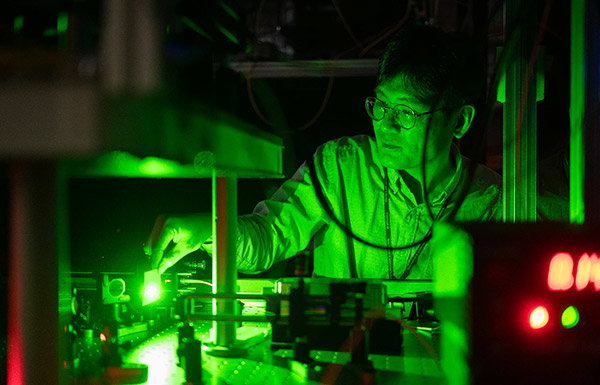
| Sang-Wook Han leads the quantum-technology centre at the Korea Institute of Science and Technology. “These machines will be able to do massive computations that were impossible with conventional methods, sparking innovation in materials science, drug development, finance and defence,” he says. “Better technology can come from simply advancing existing methods, but innovative and disruptive technology requires something entirely new. This is the essence of quantum technology.” (Nature | 3 min read) (Dave Tacon for Nature) | ||||||||
Quote of the day“Even if [AES] do a perfect job, using perfect lights that probably don’t even exist and perfect shielding, there will be an impact and that will be significant.”Xavier Barcons, director of the European Southern Observatory, reacts to the AES Corporation’s proposal to build a green energy project just a few kilometres away from some of the world’s most powerful telescopes in Chile’s northern Atacama Desert. Stray light from the project threatens to pollute some of the darkest skies on Earth. (Science | 6 min read) |
||||||||
|
|
||||||||
|
||||||||
|
|
||||||||
Free newsletters from NatureWant more? Update your preferences to sign up to our other Nature Briefing newsletters:
|
||||||||
Access Nature and 54 other Nature journals
Nature+ is our most affordable 30-day subscription, giving you online access to a wide range of specialist Nature Portfolio journals, including Nature. |
||||||||
|
||||||||
|
You received this newsletter because you subscribed with the email address: - Please add [email protected] to your address book. Enjoying this newsletter? You can use this form to recommend it to a friend or colleague — thank you! Had enough? To unsubscribe from this Briefing, but keep receiving your other Nature Briefing newsletters, please update your subscription preferences. To stop all Nature Briefing emails forever, click here to remove your personal data from our system. Fancy a bit of a read? View our privacy policy. Forwarded by a friend? Get the Briefing straight to your inbox: subscribe for free. Want to master time management, protect your mental health and brush up on your skills? Sign up for our free short e-mail series for working scientists, Back to the lab. Get more from Nature: Register for free on nature.com to sign up for other newsletters specific to your field and email alerts from Nature Portfolio journals. Would you like to read the Briefing in other languages? 关注Nature Portfolio官方微信订阅号,每周二为您推送Nature Briefing精选中文内容——自然每周简报。
Nature Portfolio | The Springer Nature Campus, 4 Crinan Street, London, N1 9XW, United Kingdom Nature Portfolio, part of Springer Nature. |