AI model predicts which breast-cancer drugs work best
What matters in cancer research |

Is this your brand on Milled? Claim it.
|
||
|
||
|
Hello Nature readers, |
||
|
||
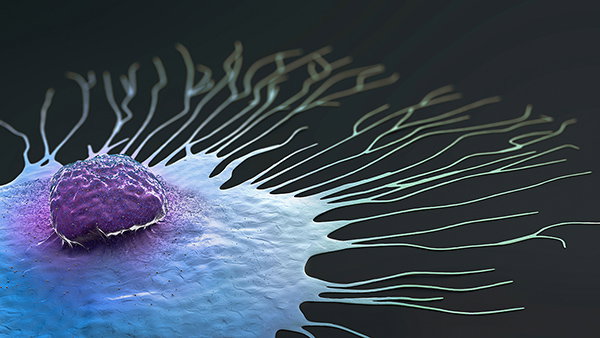
| Researchers have developed a virtual model of breast cancer cells using proteomics data. (Christoph Burgstedt/SPL) | ||
Virtual cell model predicts best cancer drugA prototype tool called ProteinTalks can predict how the cells in triple-negative breast cancer tumours — which can behave very differently at the molecular level — will respond to various drugs. Researchers trained the computational simulation on millions of protein measurements collected over time from breast cancer cell lines that were treated with dozens of antitumour drugs and drug combinations. The model did a good job of predicting how cells would respond to drugs it hadn’t seen before and real-world clinical outcomes. Nature | 6 min readReference: Nature paper (9 September) |
||
Strokes rise after cancer diagnosesPeople are more likely to have a stroke in the year following a cancer diagnosis. A retrospective study of more than 182,000 people aged over 40 in Israel found that the risk of stroke was 2.5 times higher three months after a cancer diagnosis, and 1.8 times higher a year on. The risk of stroke was elevated across all cancer types except breast and prostate and was highest in people with pancreatic or lung cancer. “This supports a more targeted approach to cerebrovascular risk assessment,” says study co-author and public-health researcher Carmit Libruder. Medscape | 3 min readReference: Cancer paper (8 September) |
||
Liver enzymes linked with colorectal cancerPeople are more likely to be diagnosed with early-onset colorectal cancer if they have low levels of two liver enzymes. Healthcare software company Epic analysed data from more than 11,000 adults aged 44 or younger and found that those who had low levels of liver enzymes aspartate transaminase and alanine transaminase in the three years before screening were more likely to be diagnosed with early-onset colorectal cancer than their peers. However, the connection might not be causal and the results have not been peer reviewed. CNN | 11 min readReference: Epic Research analysis (not peer reviewed) |
||
Hot drinks elevate cancer riskPeople who have a preference for hot beverages are more likely to develop oesophageal cancer. In a decade-long study of nearly a million adults in the United Kingdom, people who drank hot beverages had almost twice the risk of developing oesophageal cancer as those who liked their drinks warm. Close to half of the participants reported drinking more than six hot beverages per day — a habit that was associated with a 71% higher risk of a form of oesophageal cancer. The relative risk, however, remains low — people in the United Kingdom have around a 1% lifetime risk of developing oesophageal cancer. CNN | 5 min readReference: International Journal of Cancer paper (8 September) |
||
|
||
Cancers from 9/11 keep comingTwenty-five years on, thoracic surgeon Raja Flores is still treating people who developed cancers after the 9/11 attacks. “Disease rarely captures the nation’s attention the way catastrophe does,” he writes. “But for thousands of families, the attack did not end when the fires were extinguished. It simply changed form.” STAT | 5 min read |
||
People are travelling to China for CAR TChina is becoming a destination-of-choice for foreign nationals with cancer looking for cheaper, faster CAR-T-cell therapy. Michael Walters, a 25-year-old from New Zealand with blood cancer, travelled to SinoUnited Hospital in Shanghai to receive CAR-T-cell therapy at less than half the cost of what he would have paid in Australia or the United States. He is now in remission. “China has basically done to CAR-T-cell therapy the same thing that it’s done to other industries, which is, they’ve industrialized it,” says cancer clinician Sairah Ahmed. The Wall Street Journal | 7 min read (paywall) |
||
Video: bacteria shuttle drugs to tumoursTo minimize the off-target effects of cancer therapies, researchers need to find ways to deliver drugs to tumours accurately. Some species of bacteria are attracted to the low-oxygen environment in tumours, which makes them ideal candidates to shuttle drugs directly to their target. These bacteria can also be engineered to manufacture the drug inside their cells, and even to sense the conditions of their environment to ensure that they only release their cargo inside a tumour. Nature | 4 min videoThis video is part of Nature Outlook: Drug delivery, an editorially independent supplement produced with financial support from Taiho Oncology, Inc. |
||

|
||
Proton therapy projects stall in AustraliaThe decades-long effort to bring proton therapy to Australia has hit funding roadblocks and development delays in multiple states. Children are being flown to the United States to access the radiation treatment for rare cancers because Australia doesn’t have a facility that can deliver it. A project to build a unit in South Australia was shut down by rising costs and legal disputes, despite AU$100 million of government investment. Now, a development in New South Wales has been approved, but needs to raise AU$22 million to acquire the technology. ABC News (Australia) | 17 min read |
||
‘What I learnt about assisted dying’US journalist Steven Petrow says that more information would have helped prepare for the day when his sister, Julie, would choose medical aid in dying following a diagnosis of terminal ovarian cancer. “I had blind spots in what I knew,” he writes. The family believed that a healthcare worker couldn’t legally be present when Julie took the medications that would end her life. That’s not true in most US states, so long as healthcare professionals don’t administer the medications. “The presence of an experienced hand would have lessened our anxiety on a day already freighted with worry,” writes Petrow. The Washington Post | 8 min read |
||
|
||
|
||
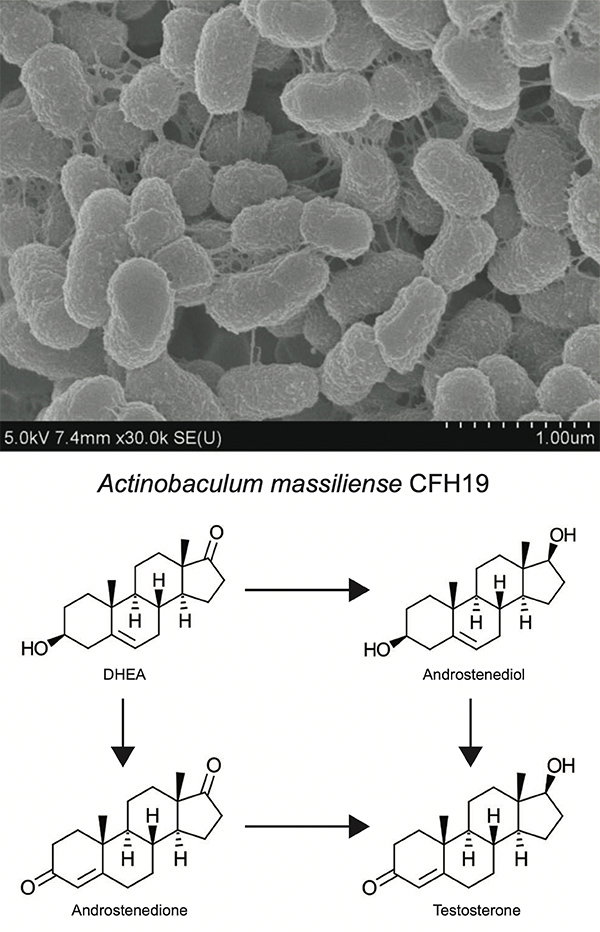
| The bacterium Actinobaculum massiliense can convert a chemical called DHEA into testosterone inside the body, which could be playing a role in prostate cancer. (ZME Science | 5 min read) Reference: Nature Communications paper (3 September) (Wang, T. et al./Nat. Commun.) | ||
Quote of the week"If these things were working, it wouldn't be some amazing secret. They would be getting Nobel Prizes. They wouldn't be selling things in sketchy clinics."Alternative cancer clinics in the United States and Mexico are charging people tens of thousands of dollars for unproven, experimental treatments. It’s very unlikely that these therapies are effective against cancer, says an oncologist based in California. (Medscape | 22 min read) |
||
|
|
||
|
||
|
|
||
|
||
|
If you enjoy this newsletter, please recommend it to a friend or colleague. You received this newsletter because you subscribed with the email address: - To stop all Nature Briefing e-mails forever, click here to remove your personal data from our system. |
||
|
Nature Portfolio | The Springer Nature Campus, 4 Crinan Street, London, N1 9XW, United Kingdom Nature Portfolio, part of Springer Nature. |