AlphaFold reveals ‘family tree’ of viruses including hepatitis C, dengue and Zika
What matters in science |

Is this your brand on Milled? Claim it.
|
|||||
|
|||||
|
Hello Nature readers, |
|||||
|
|||||
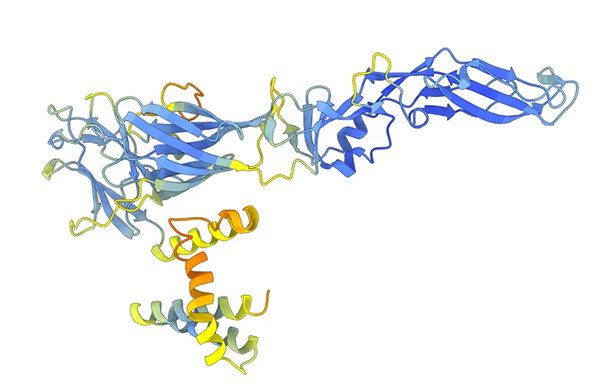
| The predicted structures of ‘viral entry’ proteins generated by AlphaFold revealed that the well-studied entry proteins of Zika and dengue virus have the same origins as those of lesser studied, “weird and wonderful” flaviviruses. (Spyros Lytras and Joe Grove) | |||||
AlphaFold reveals how viruses evolvedProtein structures predicted by AI models have revealed some twists in the evolution of flaviviruses — a group that includes hepatitis C, dengue and Zika viruses. Researchers used DeepMind’s AlphaFold2 and Meta’s ESMFold to generate more than 33,000 predicted structures for proteins from 458 flavivirus species. They already uncovered some surprises. For example, the hepatitis C virus infects cells using an entry system similar to one seen in the pestiviruses — a group that includes animal pathogens like swine fever. Another big surprise was the discovery that some flaviviruses have an enzyme that seems to have been stolen from bacteria. Nature | 5 min readReference: Nature paper |
|||||
Mosquito-borne disease cases risingRising temperatures and heavy rainfall are turning Europe into a breeding ground for mosquito-borne diseases, researchers warn. New figures show there have been 715 locally acquired cases of West Nile virus across 15 European countries this year. Climate change is creating cosy conditions for Culex pipiens and Aedes albopictus mosquitoes in places they couldn’t previously thrive, extending their range and the transmission period of the diseases they carry. “We are faced with a problem where new places could become hotspots of transmission that were not prepared for this before,” says genetic epidemiologist Houriiyah Tegally. Nature | 5 min readReference: European Centre for Disease Prevention and Control report |
|||||
A portrait of pregnancy brain changesResearchers took 26 MRI scans of one woman’s brain during her first pregnancy to chart how her brain changed in unprecedented detail. The 38-year-old woman, who conceived using IVF, gave scans and blood samples starting before conception and extending for two years after the birth of her child. The data show a widespread decrease in grey matter, and a temporary increase of white matter toward the end of the second trimester, both linked to hormonal changes. “The maternal brain undergoes this choreographed change across gestation and we’re finally able to observe the process in real time,” said neuroscientist and study co-author Emily Jacobs. The Guardian | 4 min readRead more: How pregnancy transforms the brain (Nature | 9 min read, Nature paywall) Reference: Nature Neuroscience paper |
|||||
|
|||||
‘Zeta-class’ supercomputer six years outWork to develop a supercomputer that could out-pace the world’s current fastest by 1,000 times is officially underway. Expected to cost the Japanese government around US$775 million, the Fugaku Next machine should be online by 2030. The world’s fastest current supercomputer functions in the realm of one quintillion (1017) calculations per second, or exaFLOPS. Fugaku Next is expected to operate in the realm of zetaFLOPS, 1,000 times that speed. Popular Mechanics | 3 min read |
|||||
|
|||||
AI models for the foundations of biologyThere is a steadily growing number of industry and academic efforts to build AI models that can derive fundamental biological principles based on protein, RNA, DNA or even cell imaging data, and then use those principles to guide diverse analytical or design tasks. Many of these are described as ‘foundation models’ — a term that broadly describes systems that perform well across a range of different problems through a process of ‘pretraining’ on enormous, unlabeled datasets. This is in contrast to most machine- and deep-learning algorithms in the biology world, which tend to be focused on very specific tasks. Nature Biotechnology | 10 min read |
|||||
Science for peace: learning from the pastThe universal nature of science, with its supposedly neutral language and methods, provides common ground for communication between people - and so can help build peaceful relations between nations. At least, that’s an argument that’s often made, and science historians Roberto Lalli and Jaume Navarro unpick it in an essay for Nature. They explore the many ways that physicists, both individually and collectively, navigated geopolitical tensions throughout the twentieth century, and what scientists more broadly can learn from that when considering responses to, for example, the ongoing war in Ukraine. Nature | 10 min read |
|||||
The underdogs fighting for the planetIn his new book, The Burning Earth: A History, Sunil Amrith chronicles the fights of the poor and powerless against those seeking to profit from the planet’s natural resources throughout history. A testament to perseverance, Amrith narrates the rebellions of environmentalists over the past 600 years “with flair, in his epic exploration of human innovation and destruction”, writes Josie Glausiusz, as he brings us to the movements still fighting for Earth’s future today. Nature | 6 min read |
|||||
Quote of the day“I tried my best to remove my human perspective from the story and see the world through the eyes of an urban Canada goose.”Filmmaker Karsten Wall invites us to reconsider our relationship with the Canada goose as a method of self-reflection in a new take on the nature documentary. (The New York Times | 2 min read or 15 min watch) |
|||||
|
|
|||||
|
|||||
|
|
|||||
|
Want more? Update your preferences to sign up to our other free Nature Briefing newsletters:
|
|||||
Access Nature and 54 other Nature journals
Nature+ is our most affordable 30-day subscription, giving you online access to a wide range of specialist Nature Portfolio journals, including Nature. |
|||||
|
|||||
|
You received this newsletter because you subscribed with the email address: - Please add [email protected] to your address book. Enjoying this newsletter? You can use this form to recommend it to a friend or colleague — thank you! Had enough? To unsubscribe from this Briefing, but keep receiving your other Nature Briefing newsletters, please update your subscription preferences. To stop all Nature Briefing emails forever, click here to remove your personal data from our system. Fancy a bit of a read? View our privacy policy. Forwarded by a friend? Get the Briefing straight to your inbox: subscribe for free. Want to master time management, protect your mental health and brush up on your skills? Sign up for our free short e-mail series for working scientists, Back to the lab. Get more from Nature: Register for free on nature.com to sign up for other newsletters specific to your field and email alerts from Nature Portfolio journals. Would you like to read the Briefing in other languages? 关注Nature Portfolio官方微信订阅号,每周二为您推送Nature Briefing精选中文内容——自然每周简报。
Nature Portfolio | The Springer Nature Campus, 4 Crinan Street, London, N1 9XW, United Kingdom Nature Portfolio, part of Springer Nature. |