Cancer researchers face disciplinary action following research-integrity scandal
What matters in cancer research |

Is this your brand on Milled? Claim it.
|
|||||
|
|||||
|
Hello Nature readers, |
|||||

|
|||||
| Student Geng’s videos pointing out data integrity issues in five Nature Portfolio papers have collectively been watched almost 10 million times. (Tom Houghton/Nature) | |||||
China reels from research-integrity scandalSeveral cancer researchers in China have been fired or disciplined after a vlogger exposed potential instances of data fabrication in papers published in Nature Cancer and other Nature-branded journals. In videos posted to Chinese social-media platform Bilibili, former PhD student Geng Hongwei, known online as ‘Student Geng’, showed that many digits in the figures of one paper were suspiciously identical, suggesting the data had been made up. Following an investigation into the co-authors by Nankai University, Chen Quan was removed from his position as dean of the College of Life Sciences, Zheng Hao was found to have committed academic misconduct and was fired from his role as a postdoctoral researcher and another scientist was cautioned. Nature Cancer editors are investigating the concerns. (Nature Briefing: Cancer is editorially independent from Nature’s research division.) Nature | 11 min readReference: Nature Cancer paper (under investigation, from 2024) |
|||||
Vaping after smoking worse than quittingData from more than 4.5 million people in South Korea indicates that former smokers who used electronic cigarettes had a higher risk of both lung cancer incidence and lung cancer-related death, compared to those who quit completely. But both groups had lower rates of death than those who continue to smoke cigarettes. New Scientist | 5 min read (paywall) or read the short Nature Research HighlightReference: Nature Medicine paper (8 June) |
|||||
Nonprofit buys cancer drug supplyA nonprofit organization called Blood Cancer United is buying the existing supply of a discontinued drug called Luvelta (luveltamab tazevibulin), which is used to treat a rare form of childhood blood cancer. The organization will distribute the experimental antibody-drug-conjugate free of charge for compassionate use. Sutro Biopharma, the company developing the medication, decided to discontinue it last year to focus on funding the development of other drugs. STAT | 5 min read |
|||||
Billion-dollar deal for KRAS inhibitorsThe pharmaceutical giant Johnson & Johnson is buying a startup called Firefly Bio for US$1 billion, and with it, its innovative KRAS inhibitors. Such drugs have garnered a lot of attention after Revolution Medicines showed they could nearly double survival in people with advanced pancreatic cancer, one of the deadliest tumours, earlier this year. Firefly Bio, which was co-founded by Nobel Prize-winning chemist Carolyn Bertozzi in 2022, is creating drugs that latch onto and degrade KRAS proteins, which are often mutated in tumours. STAT | 2 min read |
|||||
In the news
|
|||||
|
|||||
Life in limboAlmost four years since her diagnosis, 42-year-old Kate Dietrick describes herself as ‘living with and dying from’ stage 4 breast cancer. In the past, a stage 4 diagnosis usually meant that a person had just months to live, but modern treatment options have given people like Dietrick more time to live life — and to contemplate its end. While her friends are raising children and planning for the future, she is facing difficult decisions about how to best spend her time. The New York Times | 13 min read |
|||||
Cancer makes menopause harder to treatPeople who have breast or endometrial cancers that feed off oestrogen can’t take hormone replacement therapy (HRT) to treat the brain fog and hot flashes that often accompany perimenopause. But there are other, lesser-known options, experts say. “We have so many other things in our tool kit,” says women’s health physician Stephanie Faubion. These include the drugs fezolinetant and elinzanetant that can alleviate hot flashes by modifying neurological pathways. Antidepressants and other drugs can be used off-label to treat symptoms and some lifestyle modifications, such as resistance training, can make a difference. The New York Times | 7 min read |
|||||
|
|||||
|
|||||
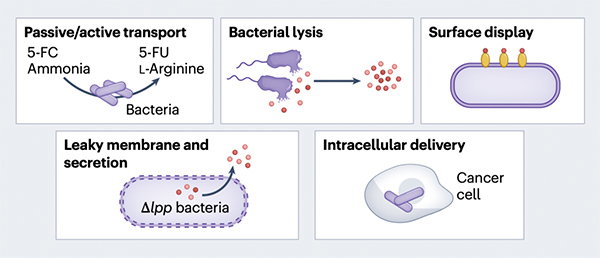
| Engineered bacteria can carry drugs into tumours in several ways, including breaking apart to release payloads, displaying molecules on their surface, delivering the therapeutic directly into cancer cells, having leaky membranes and through passive or active transport across the cell membrane. (Nature Cancer | 29 min read) | |||||
Quote of the week“Ten minutes of naked cartwheels in the backyard might not be a terrible idea.”The risk of skin cancer has made some people wary of spending time outdoors but brief periods of sun exposure are essential for natural vitamin D production, science communicator Rowan Jacobsen writes in his book In Defense of Sunlight. (Nature | 10 min read) |
|||||
|
|
|||||
|
|||||
|
|
|||||
Free newsletters from NatureWant more? Update your preferences to sign up to our other Nature Briefing newsletters:
|
|||||
|
|||||
|
You received this newsletter because you subscribed with the email address: - Please add [email protected] to your address book. Enjoying this newsletter? You can use this form to recommend it to a friend or colleague — thank you! Had enough? To unsubscribe from this Briefing, but keep receiving your other Nature Briefing newsletters, please update your subscription preferences. To stop all Nature Briefing emails forever, click here to remove your personal data from our system. Fancy a bit of a read? View our privacy policy. Forwarded by a friend? Get the Briefing straight to your inbox: subscribe for free. Get more from Nature: Register for free on nature.com to sign up for other newsletters specific to your field and email alerts from Nature Portfolio journals. Nature Portfolio | The Springer Nature Campus, 4 Crinan Street, London, N1 9XW, United Kingdom Nature Portfolio, part of Springer Nature. |