ChatGPT listed as author on research papers
What matters in science |

Is this your brand on Milled? Claim it.
|
||||||
|
||||||
|
Hello Nature readers, |
||||||

|
||||||
| Zhurong (pictured, centre) spent a year exploring Mars before it went into hibernation last May. (Xinhua/Shutterstock) | ||||||
What’s happened to China’s Mars rover?Is something amiss with Zhurong, China’s first Mars rover? The vehicle has been in induced hibernation since May. It was supposed to awaken last month, but the Chinese space agency has been tight-lipped about its status, leading some researchers to speculate that it might not have survived the harsh Martian winter and dust storms. “There’s a long history of solar-powered landers and rovers on Mars running out of power,” says astrobiologist David Flannery. Nature | 4 min read |
||||||
Gender gap and self-publishing at journalsA study of more than 80,000 Elsevier journal editors reveals a bigger-than-expected gender gap in senior editors. Women made up just 14% of editorial boards and filled 8% of editor-in-chief positions. The proportion of female editors has changed little over the past four decades. Self-publishing was also common. One-quarter of editors published at least 10% of their papers in journals that they edit. But some published as much as two-thirds of their career output in their own journals. Nature | 4 min readDig deeper with an expert analysis by sociologist Molly King in the Nature News & Views article (3 min read, Nature paywall) Reference: Nature Human Behaviour paper |
||||||
ChatGPT banned from authoring papersThe artificial-intelligence (AI) chatbot ChatGPT has been listed as a co-author on four papers and preprints. Publishers are starting to ban AI authorship because chatbots can’t take responsibility for a paper’s content and integrity. Some publishers say that chatbot use should be documented in the methods or acknowledgements sections — and that not doing so could be considered plagiarism. Nature | 6 min read |
||||||
No prison for China Initiative scientistUS chemical engineer Feng ‘Franklin’ Tao will not go to prison after being convicted of failing to disclose ties to China on a university form. He was the first academic to be prosecuted under the now-defunct China Initiative, which was intended to protect US science from espionage but faced accusations of being biased against researchers of Chinese descent. Prosecutors had asked for 2.5 years prison, but the judge sentenced Tao to ‘time served’, which amounts to a week in jail. According to one of Tao’s attorneys, the judge “reiterated that this was never a case about espionage”. Nature | 5 min read |
||||||
News round-upTop stories from earlier in the week:
|
||||||
Question of the weekThis week, we learnt that ChatGPT can write fake abstracts that scientists have trouble distinguishing from those written by humans. And the easy-to-use, free tool has already started popping up on author lists. What do you think — should researchers be allowed to use generative AIs like ChatGPT to help them write academic papers?
|
||||||
|
||||||
Beyond mentorship: sponsorshipSponsorship relies on senior researchers leveraging their influence to help junior colleagues to climb the career ladder. This can come in many forms, write sociologist Christine Parsons and neuroscientist Pat O’Connor, such as inviting a PhD student to an informal meeting with a visiting professor or including an early-career researcher on a prestigious conference panel. Such small but career-making actions particularly benefit those from under-represented groups — they might receive formal mentoring, but what’s missing is sponsorship. Nature | 5 min read |
||||||
How to break bad news to grant applicantsIt’s hard for researchers to find out that their proposal won’t be funded. Giving good feedback can soften the blow, writes research-development manager Adam Golberg. His top tips for breaking the bad news: start with a clear and quick message about the outcome, then follow up with more details. Never share ‘raw’ reviewers’ comments — take the time to produce a humane summary. Researchers need to remember that funding is a contest, not a test, Golberg says: “The reason applications don’t get funded has at least as much to do with the applications that are chosen.” Nature | 7 min read |
||||||

|
||||||
ACCESS NATURE AND 54 OTHER NATURE JOURNALS
|
||||||
Futures: The Schwarzschild defenceA daredevil takes a jump too far into a black hole in the latest short story for Nature’s Futures series. Nature | 4 min read |
||||||
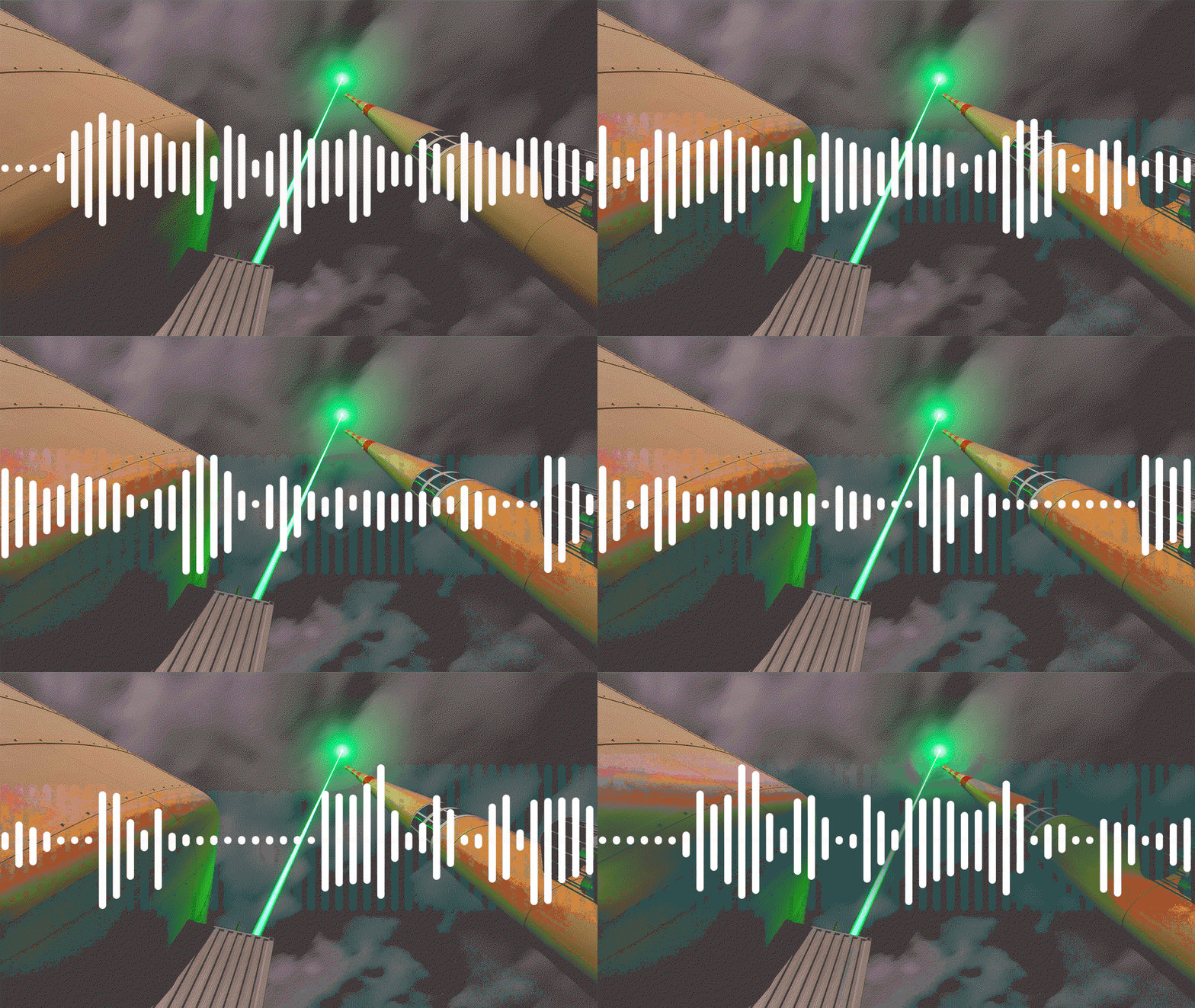
Podcast: a laser lightning rodScientists have used a high-energy pulsing laser to divert lightning strikes on top of a Swiss mountain. Physicist Jean-Pierre Wolf tells the Nature Podcast what it was like seeing photos of the system in action for the first time: “Wow, we dreamed of this picture for 20 years.” Researchers hope that, eventually, lasers will be used to force cloud discharge to better protect large infrastructure, such as airports. Nature Podcast | 20 min listenSubscribe to the Nature Podcast on Apple Podcasts, Google Podcasts or Spotify. |
||||||
|
||||||
Features & opinion round-upTop stories from earlier in the week:
|
||||||
Quote of the day“The carnivorous mushroom P. ostreatus has evolved a ‘nerve gas in a lollipop’ strategy to rapidly paralyze and kill nematodes.”Oyster mushrooms, which live on rotting trees, use small lollipop-shaped structures containing a volatile toxin to poison nematode worms — maybe to defend themselves, or to acquire nutrients. (Science Advances | 34 min read) |
||||||
|
|
||||||
|
||||||
|
|
||||||
|
||||||
|
You received this newsletter because you subscribed with the email address: - Please add [email protected] to your address book. Enjoying this newsletter? You can use this form to recommend it to a friend or colleague — thank you! Want to switch to the weekly edition? Update your preferences. Had enough? Unsubscribe from the Nature Briefing. Fancy a bit of a read? View our privacy policy. Forwarded by a friend? Get the Briefing straight to your inbox: subscribe for free. Want to master time management, protect your mental health and brush up on your skills? Sign up for our free short e-mail series for working scientists, Back to the lab. Get more from Nature: Register for free on nature.com to sign up for other newsletters specific to your field and email alerts from Nature Research journals. Would you like to read the Briefing in other languages? 关注Nature Portfolio官方微信订阅号,每周二为您推送Nature Briefing精选中文内容——自然每周简报。
Nature | The Springer Nature Campus, 4 Crinan Street, London, N1 9XW, United Kingdom Nature Research, part of Springer Nature. |