Cochrane does a U-turn on prostate cancer screening
What matters in cancer research |

Is this your brand on Milled? Claim it.
|
|||||
|
|||||
|
Hello Nature readers, |
|||||
|
|||||
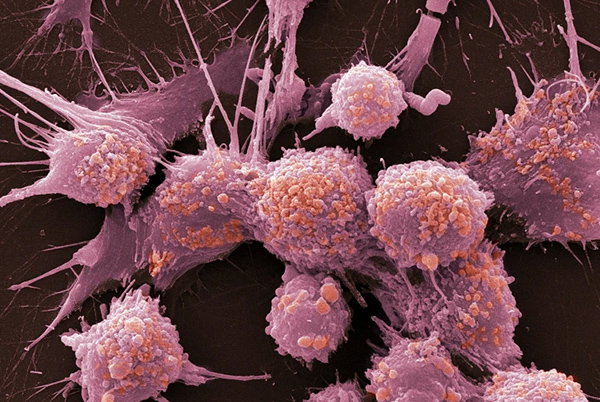
| There were around 1.5 million new cases of prostate cancer worldwide in 2022. (Dr Gopal Murti/Science Photo Library) | |||||
Cochrane U-turns on prostate screeningCochrane, an influential group that reviews medical evidence, has reversed its position on prostate cancer screening. In two prior reviews, published in 2006 and 2013, the group found that the prostate-specific antigen (PSA) blood test did not reduce mortality. The latest review, based on data from nearly 800,000 people, found a small benefit, with two fewer deaths from prostate cancer for every 1,000 people screened and “little to no difference” in the number of adverse effects. “For the first time, we are saying in a fairly authoritative way that prostate cancer screening does reduce prostate cancer mortality,” says urologist and review co-author Philipp Dahm. Nature | 5 min readReference: Cochrane Database of Systematic Reviews paper (15 May) |
|||||
Stiffer cancer cells make better targetsMaking the membranes of cancer cells stiffer lets T cells latch onto them more strongly and improves T-cell efficacy in mice. Cancer cells tend to be softer than healthy cells in both humans and mice, but a compound called methyl β-cyclodextrin can firm them up by drawing cholesterol out of the cell membrane. Mice with melanoma given CAR T cells engineered to fight cancer and an immunotherapy drug that boosts the cancer-killing abilities of T cells lived longer if they were also given methyl β-cyclodextrin instead of saline. “It’s a completely new concept,” says bioengineer Yi Sui. “It’s really tackling a medical problem from a physical point of view. I think it’s highly promising.” New Scientist | 4 min readThis abstract was presented at the Biophysical immunoengineering: from insight to clinical application conference in London |
|||||
In the news
|
|||||
|
|||||
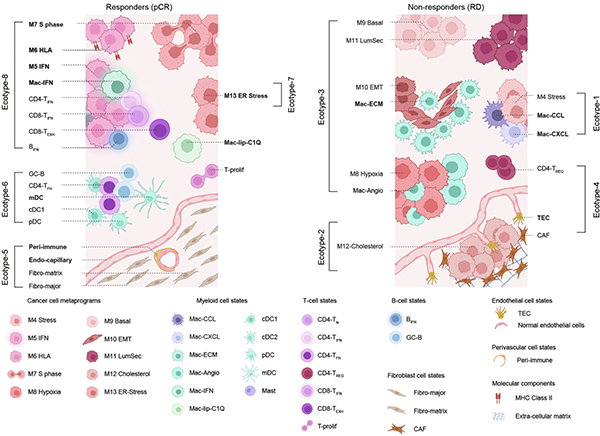
Immune cell mix predicts chemo responseImmune cells called macrophages might determine whether people with an aggressive form of breast cancer respond to chemotherapy or not. After examining tissue samples from more than 100 people with triple-negative breast cancer, researchers identified eight distinct cellular communities, or ecotypes, in tumours. “Some macrophage subtypes are associated with good response to chemotherapy, while others are associated with poor response — they play a dual role,” says biologist and co-author Nicholas Navin. “This is important in triple-negative breast cancer where most of the focus on immune cells has previously been on the T-cell populations.” Reference: Nature paper (13 May) |
|||||
|
|||||
| Researchers have found eight distinct cellular communities (called ecotypes) in triple-negative breast cancer, half that achieve a pathological complete response (left) and half that do not respond to treatment (right). (Here’s a high-resolution version of this image.) (Yan, Y. et al./Nature) | |||||
|
|||||
One patient’s poop is ‘lightning in a bottle’Forty people with non-small cell lung cancer will soon take a pill containing about 50 strains of bacteria isolated in the stool of a 76-year-old woman with stage 4 colorectal cancer who went into remission after taking the immunotherapy Keytruda (pembrolizumab). Her unique microbiome is thought to be the reason for her strong response to the drug. “We captured that lightning in a bottle to immortalize the best parts of her microbiome and reverse-engineer it into a therapy,” says Matt Cheng, the CEO at biotech startup Kanvas Biosciences, which is running the trial. Endpoints News | 7 min read |
|||||
|
|||||
|
|||||
|
|||||
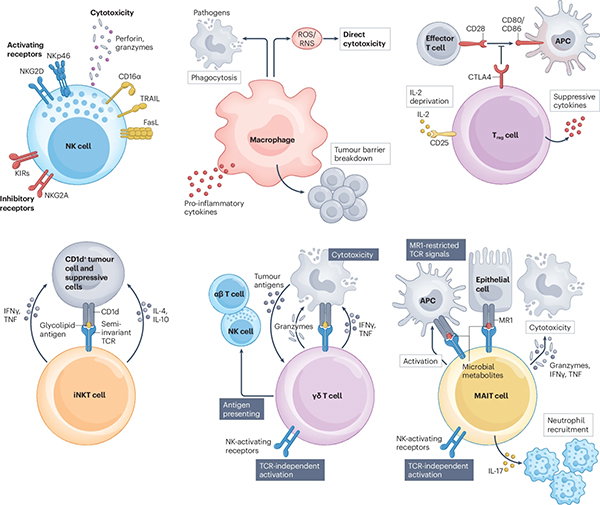
| Conventional CAR T cells often get exhausted and can’t infiltrate solid tumours. So, researchers are now looking at other types of engineered immune cells — called ‘CAR X cell platforms’ (shown above) — that might overcome these limitations. These alternative immune cells include natural killer cells, macrophages, regulatory T cells and unconventional T cells. (Nature Reviews Bioengineering | 51 min read) (Li, X. et al./Nat. Rev. Bioeng.) | |||||
Quote of the week“Every time there was an advance, it led to another dumping of dogma and finding out that what everybody assumed was true was actually not true.”To create the first treatment for pancreatic cancer that substantially extends lifespan, the drug daraxonrasib, researchers had to overturn conventional wisdom — and find a way to target an ‘undruggable’ KRAS protein, says cancer biologist Adrienne Cox. (The New York Times | 11 min read) |
|||||
|
|
|||||
|
|||||
|
|
|||||
Free newsletters from NatureWant more? Update your preferences to sign up to our other Nature Briefing newsletters:
|
|||||
Access Nature and 54 other Nature journals
Nature+ is our most affordable 30-day subscription, giving you online access to a wide range of specialist Nature Portfolio journals, including Nature. |
|||||
|
|||||
|
You received this newsletter because you subscribed with the email address: - Please add [email protected] to your address book. Enjoying this newsletter? You can use this form to recommend it to a friend or colleague — thank you! Had enough? To unsubscribe from this Briefing, but keep receiving your other Nature Briefing newsletters, please update your subscription preferences. To stop all Nature Briefing emails forever, click here to remove your personal data from our system. Fancy a bit of a read? View our privacy policy. Forwarded by a friend? Get the Briefing straight to your inbox: subscribe for free. Get more from Nature: Register for free on nature.com to sign up for other newsletters specific to your field and email alerts from Nature Portfolio journals. Nature Portfolio | The Springer Nature Campus, 4 Crinan Street, London, N1 9XW, United Kingdom Nature Portfolio, part of Springer Nature. |