Common sweetener reduces immune response in mice
What matters in science |

Is this your brand on Milled? Claim it.
|
|||||
|
|||||
|
Hello Nature readers, |
|||||
|
|||||
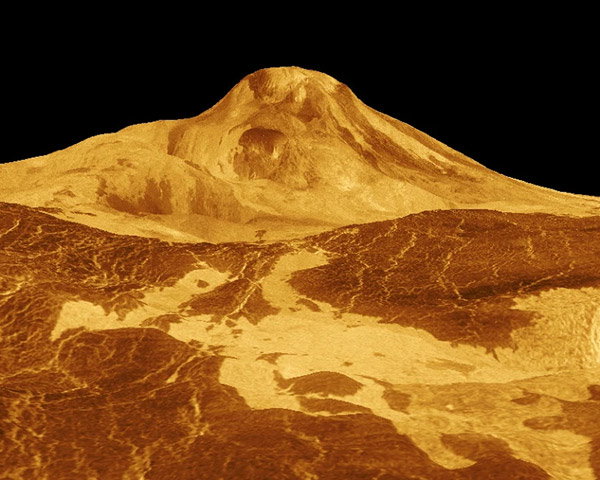
| A computer-generated image based on data from NASA’s Magellan spacecraft shows lava flows extending for hundreds of kilometres around the base of Maat Mons, an 8-kilometre-high volcano on Venus. (NASA/JPL) | |||||
Volcano eruption spotted on VenusScientists think they’ve spotted a volcano erupting on Venus. Radar images taken 8 months apart by NASA’s Magellan spacecraft in the early 1990s show changes to a volcanic vent that suggest an eruption or magma flow. Venus is covered in volcanoes, and this is some of the strongest evidence yet that at least one of them is still active. Venus doesn’t have plate tectonics that could drive volcanic activity, so it could be caused by heat released from radioactive elements. Nature | 5 min readReference: Science paper |
|||||
Sweetener reduces mouse immune responseIn high doses, the calorie-free sugar substitute sucralose suppresses the immune system in mice. The sweetener impairs the rodents’ T cells, immune cells that fight infections. Once the mice stopped being fed sucralose, their T-cell responses recovered. The researchers say that it is unlikely that eating sucralose in normal amounts is harmful to humans. There might even be a bright side for autoimmune conditions: mice predisposed to type 1 diabetes were less likely to develop the condition after consuming the sweetener. Nature | 4 min readReference: Nature paper |
|||||
Nord Stream blasts stirred toxic sedimentExplosions that ripped open the Nord Stream gas pipelines in the Baltic Sea last September kicked up long-buried toxins that could threaten marine life for more than a month. It isn’t clear who was behind the explosions, which released more than 100,000 tonnes of methane and threw up 250,000 tonnes of heavily contaminated sediment. The site is a historical dumping ground for chemical-warfare agents from the Second World War. Contaminants — including lead and an endocrine disrupter used to protect ship hulls — were above the safety threshold for more than a month at one site. The full impact on the area’s animals, such as cod and a rare harbour porpoise, is not yet known. Nature | 4 min readReference: Research Square preprint (not peer reviewed) |
|||||
|
|||||
A spell-checker for statisticsA free tool for detecting statistical errors reduces mistakes in psychology papers by more than fourfold. Statcheck identifies errors in P values, a popular statistical measure of how likely it is that any observed difference between groups is due to chance. Statistical errors were reduced by 4.5 percentage points in two psychology journals that introduced clean statcheck reports as a prerequisite to publication, compared with two journals that didn’t use statcheck. Nature | 4 min readReference: PsyArXiv preprint (not peer reviewed) |
|||||

|
|||||
ACCESS NATURE AND 54 OTHER NATURE JOURNALS
|
|||||
Science needs to fill gaps in high seas treatyScientists have a once-in-a-generation opportunity to use their knowledge to support offshore conservation, argues a Nature editorial The United Nations high seas treaty will be the first international law to offer some protection to the nearly two-thirds of the ocean that have few environmental safeguards. But the treaty won’t stop unsustainable fishing practices or deep-sea mining activities, nor will it prevent farming run-off and plastic waste from flowing into the oceans. The international community, supported by the research community, must now work to remedy these gaping holes. Nature | 6 min read |
|||||
Reframe climate change as an opportunityMuch of humanity’s reluctance to change our ways of doing things in the face of climate change comes from the assumption that it means trading abundance for austerity, writes historian Rebecca Solnit. “But what if it meant giving up things we’re well rid of,” she asks — from contaminated air to feelings of doom. This could be our chance to rethink wealth to consist not of money and goods, but of things like environmental and societal security. The Washington Post | 4 min read |
|||||
Quote of the day“I was a paid-up member of the male–female brain brigade. It took me several years and a long struggle to realize that I was just not finding the kinds of differences I expected.”Cognitive neuroscientist Gina Rippon explains that there was never a scientific basis to the myth that male and female brains are biologically different — instead, a major reason why even young children behave differently depending on their gender is because they are “tiny social sponges”. (Nature Careers Podcast | 26 min listen or 16 min read) |
|||||
|
|
|||||
|
|||||
|
|
|||||
|
|||||
|
You received this newsletter because you subscribed with the email address: - Please add [email protected] to your address book. Enjoying this newsletter? You can use this form to recommend it to a friend or colleague — thank you! Want to switch to the weekly edition? Update your preferences. Had enough? Unsubscribe from the Nature Briefing. Fancy a bit of a read? View our privacy policy. Forwarded by a friend? Get the Briefing straight to your inbox: subscribe for free. Want to master time management, protect your mental health and brush up on your skills? Sign up for our free short e-mail series for working scientists, Back to the lab. Get more from Nature: Register for free on nature.com to sign up for other newsletters specific to your field and email alerts from Nature Research journals. Would you like to read the Briefing in other languages? 关注Nature Portfolio官方微信订阅号,每周二为您推送Nature Briefing精选中文内容——自然每周简报。
Nature | The Springer Nature Campus, 4 Crinan Street, London, N1 9XW, United Kingdom Nature Research, part of Springer Nature. |