DNA reveals surprise ancestry of mysterious Chinese mummies
What matters in science |

Is this your brand on Milled? Claim it.
|
|||||
|
|||||
|
Hello Nature readers, |
|||||

|
|||||
| Cemeteries in the Taklamakan Desert, China, hold human remains up to 4,000 years old. (Wenying Li, Xinjiang Institute of Cultural Relics and Archaeology) | |||||
Mystery mummies’ surprise ancestryThe genomes of 13 remarkably preserved 4,000-year-old mummies from China’s Tarim Basin suggest they weren’t migrants who brought technology from the West, as was previously supposed. Instead, the remains probably belong to Indigenous people who might have adopted agricultural methods from neighbouring groups. Researchers traced the ancestry of these early Chinese farmers to Stone Age hunter-gatherers who lived in Asia some 9,000 years ago. The study hints at “the really diverse ways in which populations move and don’t move, and how ideas can spread with, but also through, populations”, says molecular archaeologist Christina Warinner. Nature | 5 min read |
|||||
|
|
|||||
Planning Africa’s first synchrotronScientists are advancing plans for Africa’s first synchrotron light source, a particle accelerator that produces intense radiation used to probe matter at the molecular and atomic level. Globally, there are some 70 light sources — synchrotrons and free electron lasers — but none in Africa. “These light sources are just transforming science, and Africa has to be a player,” says physicist Sekazi Mtingwa. The project has wide backing from the global synchrotron community, but challenges remain — including how to fund the estimated US$1 billion set-up costs, and how the light source will be run. Nature | 5 min read |
|||||
|
|
|||||
Index to world’s research papers put onlineAn American technologist has released online a gigantic index of 355 billion words and short phrases contained in more than 100 million journal articles — including many paywalled papers. This ‘General Index’ is an effort to help scientists use software to search through and glean insights from published work even if they have no legal access to the underlying papers, says its creator Carl Malamud. Legal researcher Arul George Scaria says its release is a “major development for the wealth of information it has unlocked from those 107 million journal articles”. Nature | 5 min read |
|||||
|
|
|||||
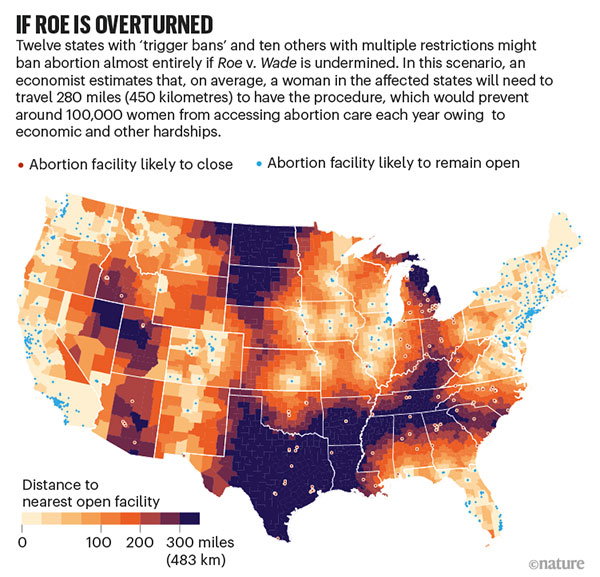
Scientists weigh in on US abortion caseMore than 800 scientists have provided evidence in an upcoming case in the US Supreme Court that could hasten the end of abortion across roughly half of the United States. The case is between the state of Mississippi, which has issued a ban on abortion after 15 weeks of pregnancy, and the only clinic in the state that provides abortions. The clinic argues that the ban violates Roe v. Wade, a 1973 case that enshrined the federal right to an abortion until the point that a fetus can live outside the womb. “The scientific community is eager to weigh in on such an important issue, especially given five decades of evidence concerning the importance of abortion access,” says lawyer Stephanie Toti. Nature | 12 min read |
|||||
|
|||||
| Source: Caitlin Myers/Middlebury College | |||||
|
|||||
Biodiversity crisis: debt is not the answerFinding an answer to the biodiversity crisis should not mean the poorest countries having to take on yet more debt, argues a Nature editorial. This month, China announced the allocation of 1.5 billion yuan (US$235 million) to a new biodiversity fund that will support projects aimed at slowing down or reversing the loss of species and ecosystems. Observers say the fund is a step in the right direction, but money should be provided as grants — not loans — with fair and transparent rules of access. Nature | 6 min read |
|||||
|
|||||
|
|||||
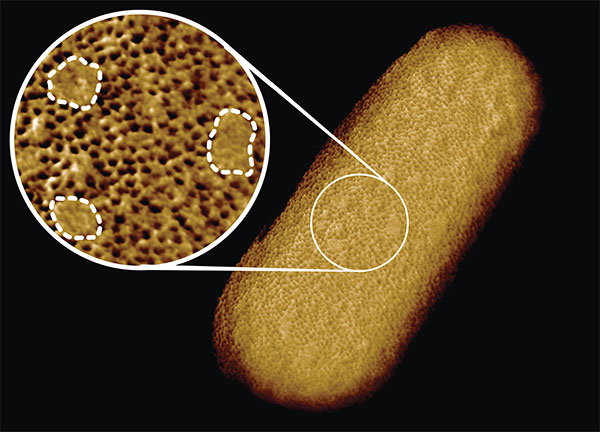
| Researchers have imaged the surface of a bacterium in unprecedented detail, revealing flaws in its protective outer membrane. These weak spots (shown with dashed outlines) are like chinks in the bacteria’s armour that could one day be exploited by new antibiotics. (ZME Science | 10 min read) (Benn et al. UCL) | |||||
Quote of the day“We can either wait for something to arise, and then fight it, or we can anticipate that certain things will arise, and instead we can preemptively build our arsenals.”Virologist Juliet Morrison discusses ‘gain-of-function’ research, which can involve experiments that improve a pathogen’s abilities to spread or cause disease. The mystery of the origins of COVID-19 has reignited the debate about these potentially risky studies and the fuzzy terminology that describes them. (Nature | 15 min read) |
|||||
|
|
|||||
|
|||||
|
|
|||||
|
|||||
|
You received this newsletter because you subscribed with the email address: - Please add [email protected] to your address book. Enjoying this newsletter? You can use this form to recommend it to a friend or colleague — thank you! Want to switch to the weekly edition or change your email address? Update your preferences. Had enough? Unsubscribe from the Nature Briefing. Fancy a bit of a read? View our privacy policy. Forwarded by a friend? Get the Briefing straight to your inbox: subscribe for free. Want to master time management, protect your mental health and brush up on your skills? Sign up for our free short e-mail series for working scientists, Back to the lab. Would you like to read the Briefing in other languages? 关注Nature Portfolio官方微信订阅号,每周二为您推送Nature Briefing精选中文内容——自然每周简报。
Nature | The Springer Nature Campus, 4 Crinan Street, London, N1 9XW, United Kingdom Nature Research, part of Springer Nature. |