Groundwater pumping is tilting Earth’s axis of rotation
What matters in science |

Is this your brand on Milled? Claim it.
|
|||||
|
|||||
|
Hello Nature readers, |
|||||
|
|||||
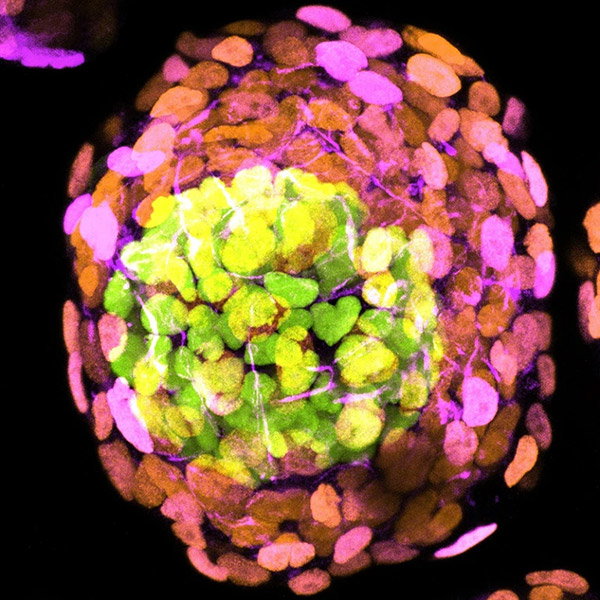
| Scientists have created synthetic human embryos that they say show signs of developmental stages seen in natural embryos 6 to 14 days after fertilization. (Magdalena Zernicka-Goetz, Bailey Weatherbee, and Carlos Gantner) | |||||
Most advanced synthetic human embryosScientists’ claims to have developed the most advanced synthetic human embryos, grown to a stage equivalent to that of 14-day-old natural embryos, have sparked controversy in the field. The structures, made from human stem cells, provide unprecedented opportunities to study embryonic development at later stages than ever before. So far, no one has made embryo models that can develop into human beings. Critics say that the latest model embryos can’t be considered analogous to real 14-day embryos. Some researchers say that a revised definition of an embryo is needed. Others think the purpose of synthetic embryos is to circumvent constraints on embryo research, which prohibit use of natural human embryos older than 14 days. Nature | 6 min readReference: bioRxiv preprint 1 & preprint 2 (not peer reviewed) |
|||||
Groundwater loss changed Earth’s tiltHumans have pumped enough water from underground reservoirs to shift Earth’s geographic North Pole at a speed of 4.36 centimetres per year. The motion of atmospheric masses and water masses during seasonal changes causes the planet’s poles to naturally wobble by up to several metres every year. But to fully explain how much the axis has tilted between 1993 and 2010, human-made groundwater shifts have to be taken into account. More than 2 trillion tons of water were depleted from underground reservoirs during that time, particularly for irrigation in northwestern India and western North America. Nature | 4 min readReference: Geophysical Research Letters paper |
|||||
|
|||||
No one knows when ITER will be readyThe International Thermonuclear Experimental Reactor (ITER) is one of the most ambitious scientific projects ever undertaken: a 35-country collaboration that aims ultimately to change how we fuel the modern world. Unsurprisingly, it’s over budget and running late. Scientific American has obtained documents from a lawsuit indicating that even the project’s leaders are struggling to pin down how much more money and time ITER will take to complete. Scientific American | 10 min read |
|||||

|
|||||
ACCESS NATURE AND 54 OTHER NATURE JOURNALS
|
|||||
The species lost before they were ever foundResearchers trawling museum collections for new wonders are uncovering the troubling evidence of ‘dark extinctions’ — species that are gone before ever being described by science. “It seems trivial on a planet with millions of species to sit back and go, ‘Okay, well, you documented two stingless bees that were lost,’” says entomologist Michael Engel, who while studying a museum collection found two bees trapped in amber that had lived in destroyed coastal forests in east Africa. But it’s “a very common phenomenon”. Undark | 11 min read |
|||||
‘These kids have courage to be themselves’Increasing vitriol against trans people is putting both physicians and children at risk, says physician–scientist Jack Turban, who researches the mental health of young people who are trans or from gender minorities, with a focus on providing evidence to support public-policy decisions. “Misinformation scares people and has driven them to make threats of violence toward medical providers and children’s hospitals around the country,” he says. But the “incredible strength” of trans youth gives him hope. “These kids have the courage and sense of self to be themselves anyway — to combat the shame and live openly and authentically. That too makes me optimistic for the future.” Nature Mental Health | 10 min read |
|||||
How to organize your lab inventoryA homemade spreadsheet system transformed laboratory inventory and purchase management for cell biologists Nicollette Jessica Setiawan and Christina Termini. They share five steps scientists can take to better organize their lab:
|
|||||
|
|||||
|
|||||
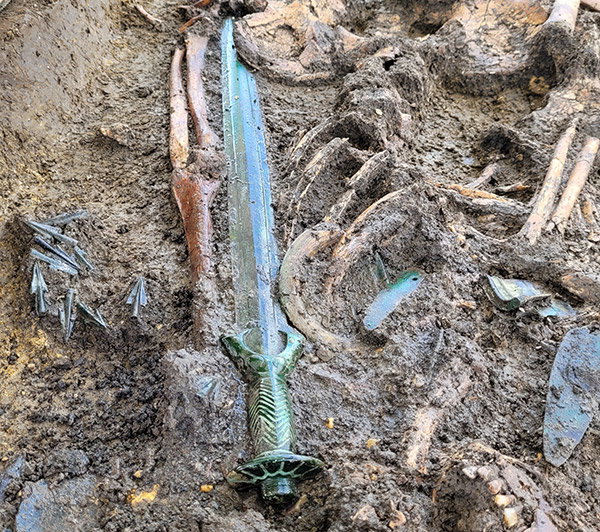
| This 3,000-year-old bronze sword with an octagonal hilt has been unearthed during excavations in southern Germany. It comes from a grave in which a man, a woman and a boy were buried in quick succession with bronze objects. It’s not clear yet whether the three were related. Archaeologists think the sword is a real weapon, not just ornamental like other well-preserved Bronze Age swords found so far. (The Guardian | 2 min read) (Archäologie-Büro Dr. Woidich/Sergiu Tifui) | |||||
Quote of the day“People always joke that you’re going to the ‘dark side’ when you move to pharma — but if you choose a good employer with a good reputation, whose products genuinely benefit patients, then you are working for the greater good.”Jonathan Bowen left clinical medicine in 2016 for a role in the pharmaceutical industry and has a wealth of advice for others looking to make the move — but says it’s not always easy. (Nature | 7 min read) |
|||||
|
|
|||||
|
|||||
|
|
|||||
|
|||||
|
You received this newsletter because you subscribed with the email address: - Please add [email protected] to your address book. Enjoying this newsletter? You can use this form to recommend it to a friend or colleague — thank you! Want to switch to the weekly edition? Update your preferences. Had enough? Unsubscribe from the Nature Briefing. Fancy a bit of a read? View our privacy policy. Forwarded by a friend? Get the Briefing straight to your inbox: subscribe for free. Want to master time management, protect your mental health and brush up on your skills? Sign up for our free short e-mail series for working scientists, Back to the lab. Get more from Nature: Register for free on nature.com to sign up for other newsletters specific to your field and email alerts from Nature Research journals. Would you like to read the Briefing in other languages? 关注Nature Portfolio官方微信订阅号,每周二为您推送Nature Briefing精选中文内容——自然每周简报。
Nature | The Springer Nature Campus, 4 Crinan Street, London, N1 9XW, United Kingdom Nature Research, part of Springer Nature. |