How placebos ease pain in the mouse brain
What matters in science |

Is this your brand on Milled? Claim it.
|
|||||
|
|||||
|
Hello Nature readers, |
|||||
|
|||||
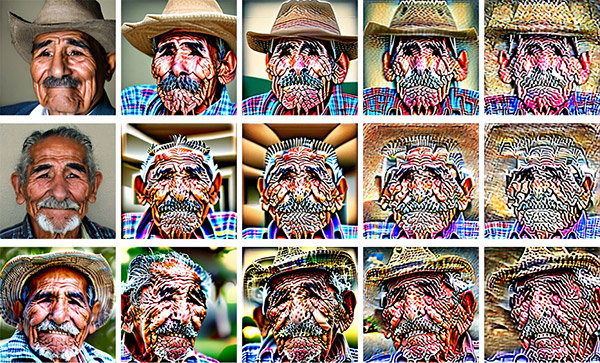
| Model collapse could halt the improvement of large language models when they run out of human-produced training data and are instead trained on AI-generated data. (M. Boháček & H. Farid/arXiv (CC BY 4.0)) | |||||
AI fed AI-generated data spews nonsenseTraining successive versions of artificial intelligence (AI) models on text generated by the previous iteration quickly leads to the system producing gibberish. This collapse happens because each new model learns not from reality, but from the previous model’s prediction of reality, with errors getting amplified over time. Even before complete collapse, learning from AI-generated texts means less common information in the dataset gets ‘forgotten’. “The message is we have to be very careful about what ends up in our training data,” says AI researcher and study co-author Zakhar Shumaylov. Nature | 6 min readReference: Nature paper |
|||||
How placebos ease painIn mice, the placebo effect seems to activate parts of the brain typically associated with movement and coordination. The animals were conditioned to expect pain relief, mimicking how some people can get pain relief from taking a sugar pill they believe contains a drug. Analysis of the mice’s neurons in the active regions revealed that 65% had opioid receptors — the same kind that are activated by powerful painkillers. The research “provides a new target that we can look for in human studies”, says neuroscientist Tom Wager. Nature | 4 min readReference: Nature paper |
|||||
Music memory is age-resistantEighty-year-olds can identify tunes just as well as teenagers can. “You’ll hear anecdotes all the time of how people with severe Alzheimer’s can't speak, can’t recognize people, but will sing the songs of their childhood or play the piano,” says music scientist Sarah Sauvé, who tested how well roughly 90 healthy volunteers, aged 18 to 86 years, could recognize themes across three pieces of music. Musical memory and recognition did not vary with age, even when the music was unfamiliar. Nature | 4 min readReference: PLoS ONE paper |
|||||
|
|||||
|
|||||
|
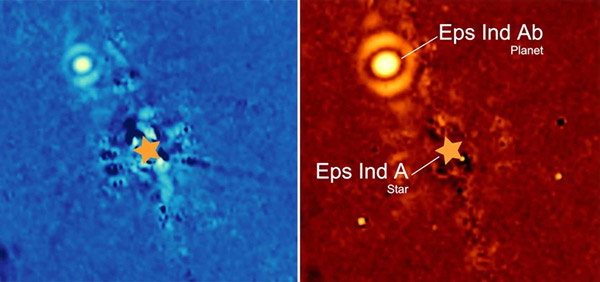
This glowing speck is a freezing exoplanet six times the size of Jupiter. It’s one of the closest planets outside our Solar System and the first that was discovered through direct imaging with the James Webb Space Telescope. Usually, astronomers infer the existence of a planet by the effects they have on the star they orbit. (Nature | 4 min read) Reference: Nature paper (T. Müller (MPIA/HdA), E. Matthews (MPIA)) |
|||||
|
|||||
Protect scientists’ thinking timeDigital devices and instant messaging have enormous benefits, including speeding up research. But they are also a distraction, argues a Nature editorial. In his book Slow Productivity, computer scientist Cal Newport says that having to concentrate without interruptions is key to high-quality work. More studies should explore the impact of lost concentration time on science, the editorial suggests, and whether tools to automate routine tasks could free up more thinking time — or have the opposite effect. Nature | 5 min read |
|||||
The climate scientist turned whistleblower“I don’t want to be here, but if not me, who?” asks climate scientist Virginia Burkett, who is demanding better policies to protect US government scientists against political interference. In a lengthy whistleblower complaint, she is seeking an investigation into “abuse of authority and gross mismanagement” under former US president Donald Trump. Burkett says that, in 2017, she was demoted after criticizing the government for dismantling climate research programmes, cutting science budgets and attempting to water down an influential climate report. “This is not about what happened to me, it’s about what could happen to others,” Burkett says. Nature | 8 min read |
|||||
Did complex life start on Snowball Earth?More than 500 million years ago, the globe was covered in glaciers and sea ice. This Snowball Earth seems hostile to life, yet it was probably during this time that single-celled organisms first evolved into complex, multicellular creatures. One possible answer to this conundrum: when seawater gets colder, it gets more viscous, so individual cells could have started to stick together to move through it more efficiently in search of food. In experiments with modern single-celled green algae, cells living in viscous gels formed coordinated groups to keep swimming. Quanta Magazine | 11 min readReference: Proceedings of the Royal Society B paper |
|||||
Quote of the day“Where are all the loud, obvious indicators of aliens?”Evolutionary biologist Jacob Wilde says that our notion that extraterrestrial technology should be a display of cosmic power distracts us from looking for more subtle signs. (Scientific American | 6 min read) |
|||||
|
|
|||||
|
|||||
|
|
|||||
|
Want more? Update your preferences to sign up to our other free Nature Briefing newsletters:
|
|||||
Access Nature and 54 other Nature journals
Nature+ is our most affordable 30-day subscription, giving you online access to a wide range of specialist Nature Portfolio journals, including Nature. |
|||||
|
|||||
|
You received this newsletter because you subscribed with the email address: - Please add [email protected] to your address book. Enjoying this newsletter? You can use this form to recommend it to a friend or colleague — thank you! Had enough? To unsubscribe from this Briefing, but keep receiving your other Nature Briefing newsletters, please update your subscription preferences. To stop all Nature Briefing emails forever, click here to remove your personal data from our system. Fancy a bit of a read? View our privacy policy. Forwarded by a friend? Get the Briefing straight to your inbox: subscribe for free. Want to master time management, protect your mental health and brush up on your skills? Sign up for our free short e-mail series for working scientists, Back to the lab. Get more from Nature: Register for free on nature.com to sign up for other newsletters specific to your field and email alerts from Nature Portfolio journals. Would you like to read the Briefing in other languages? 关注Nature Portfolio官方微信订阅号,每周二为您推送Nature Briefing精选中文内容——自然每周简报。
Nature Portfolio | The Springer Nature Campus, 4 Crinan Street, London, N1 9XW, United Kingdom Nature Portfolio, part of Springer Nature. |