How the ‘steroid Olympics’ could highlight cracks in the anti-doping system
What matters in science |

Is this your brand on Milled? Claim it.
|
|||||
|
|||||
|
Hello Nature readers, |
|||||
|
|||||
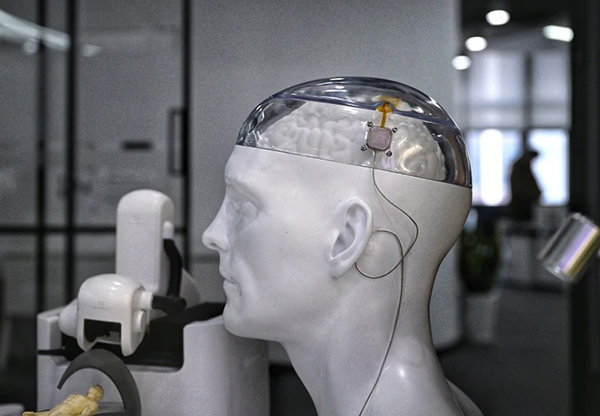
| A brain–computer interface developed by Chinese company NeuroXess. (Chengdu Economic Daily/VCG via Getty) | |||||
China chases real-world success with BCIsStart-up firms in China are ramping up their efforts to develop artificial-intelligence-powered brain–computer interfaces (BCIs) that can help people move, speak and control external devices. One company, NeuroXess, has run a small trial in which a BCI enabled one man with a spinal cord injury to control appliances by moving a computer cursor with his thoughts. The company has also developed a large language model that enables a brain implant to decode Mandarin at a rate faster than the average talking speed of a native speaker. Nature | 5 min read |
|||||
The race to trial Ebola treatments is onScientists are racing to trial experimental treatments and potentially vaccines against the rare Bundibugyo species of the Ebola virus, which is spreading in the Democratic Republic of the Congo and Uganda. A World Health Organization-sponsored clinical trial is set to test two treatments — a broad-acting antiviral and a mixture of two antibodies that recognizes diverse strains of Ebola — pending approval by the two countries’ governments. Options for vaccines are limited, but health officials are considering whether an approved vaccine for another species of Ebola virus could be trialled in the current outbreak. Nature | 5 min read |
|||||
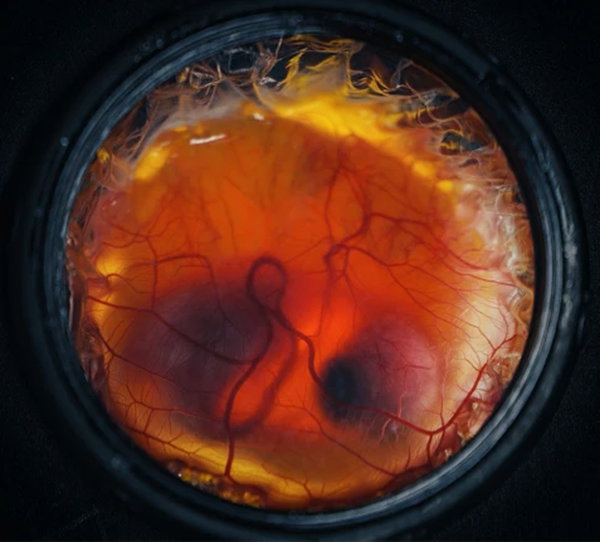
Artificial egg aims to hatch extinct birdsThe de-extinction company Colossal Biosciences says it has developed a key technology for bringing back extinct birds and rescuing endangered ones: an artificial egg. Colossal says it hopes to use the egg as part of its plan to resurrect the extinct South Island giant moa (Dinornis robustus). The egg is detailed in a press release and video, but not in a paper or preprint. “It could be really important, it could be fantabulous,” says stem-cell biologist Paul Mozdziak. “Without data, it’s really impossible to judge.” Nature | 7 min read |
|||||
|
|||||
| Colossal says that the artificial egg — a 3D-printed lattice shell that protects a transparent silicon membrane — has ‘hatched’ around two dozen chicken and quail. (Colossal Biosciences) | |||||
|
|||||
How AI is transforming mathematicsA string of remarkable successes for AI in mathematics has led some in the field to anticipate a time when the technology autonomously makes contributions at the level of the greatest mathematicians — and beyond. Others say — considering that AIs have superhuman access to all of existing mathematics, and never get tired — it’s surprising how little the systems have yet accomplished. A key issue is how to verify a solution generated by a technology that is known for its extremely convincing ‘hallucinations’ and difficult-to-spot mistakes. Nature | 11 min read |
|||||
Books of a feather reviewed togetherAs a follow-up to his book focused on the challenges faced by migrating birds in a changing climate, naturalist Scott Weidensaul’s The Return of the Oystercatcher celebrates the successes of conservation efforts helping bird species to bounce back. Ornithologist Louis Lefebvre’s A Bird’s IQ offers good news of a different sort — namely, that birds are smarter than we think and remarkably resilient. Nature | 8 min read |
|||||
Use ‘steroid Olympics’ to spur changeThis week, the first ‘Enhanced Games’ — which permits the use of performance-enhancing drugs — is taking place in the United States. The head of the US anti-doping agency has called it a “dangerous clown show”, but it could play a role in highlighting the cracks in the current sports system, argues sociologist April Henning. “The sporting world needs an integrity organization that encompasses anti-doping, safeguarding, anti-bullying and anti-match-fixing policies” to better support athletes, who are under immense financial, mental and physical pressures, Henning writes. Nature | 7 min read |
|||||
Quote of the day“It is not so much longing for the past as an attempt to hold onto the kinds of everyday spaces that once made the city feel alive.”A certain elephant-shaped slide was once commonplace in China’s neighbourhood playgrounds. Urban-planning researcher Qing Qin ponders why its disappearance has prompted adults to organize elephant-slide searches, and what it tells us about how to make a city truly child friendly. (Nature Cities | 7 min read) |
|||||
|
|
|||||
|
|||||
|
|
|||||
Free newsletters from NatureWant more? Update your preferences to sign up to our other Nature Briefing newsletters:
|
|||||
|
|||||
|
You received this newsletter because you subscribed with the email address: - Please add [email protected] to your address book. Enjoying this newsletter? You can use this form to recommend it to a friend or colleague — thank you! Had enough? To unsubscribe from this Briefing, but keep receiving your other Nature Briefing newsletters, please update your subscription preferences. To stop all Nature Briefing emails forever, click here to remove your personal data from our system. Fancy a bit of a read? View our privacy policy. Forwarded by a friend? Get the Briefing straight to your inbox: subscribe for free. Want to master time management, protect your mental health and brush up on your skills? Sign up for our free short e-mail series for working scientists, Back to the lab. Get more from Nature: Register for free on nature.com to sign up for other newsletters specific to your field and email alerts from Nature Portfolio journals. Would you like to read the Briefing in other languages? 关注Nature Portfolio官方微信订阅号,每周二为您推送Nature Briefing精选中文内容——自然每周简报。
Nature Portfolio | The Springer Nature Campus, 4 Crinan Street, London, N1 9XW, United Kingdom Nature Portfolio, part of Springer Nature. |