‘I had no choice but to commit misconduct’: elite researchers tell all in anonymous interviews
What matters in science |

Is this your brand on Milled? Claim it.
|
|||||
|
|||||
|
Hello Nature readers, |
|||||
|
|||||
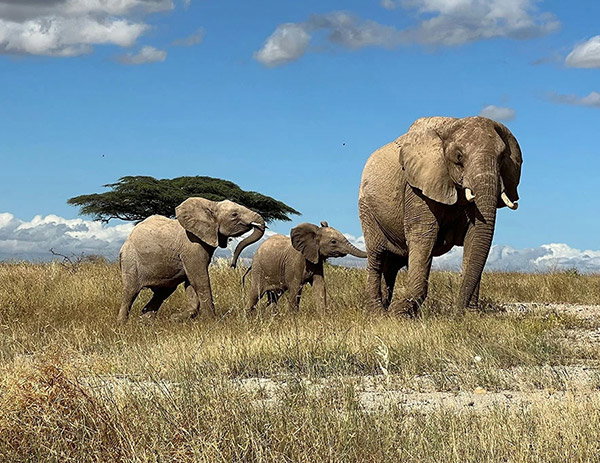
| Bottlenose dolphins (Tursiops truncatus) and orange-fronted parakeets (Eupsittula canicularis) call to their compatriots by mimicking the addressee’s call. Elephants are the first, other than humans, to be observed using arbitrary ‘names’ that are not imitative. (George Wittemyer) | |||||
Call me by your (elephant) nameElephants seem to use proper names to address their fellows — a habit that appears to otherwise be unique to humans. Scientists used machine learning to analyse 469 deep rumbles made by wild female African savannah elephants (Loxodonta africana) and their families in Kenya. They found patterns that indicate that calls are specific to individuals. The researchers also played recorded calls to elephants out in the field and watched how the animals responded. “They could tell if a call was addressed to them just by hearing that call,” says behavioural ecologist and study co-author Michael Pardo. Nature | 4 min readReference: Nature Ecology & Evolution paper or read the authors’ own summary in the Nature Ecology & Evolution research briefing (6 min read) |
|||||
‘I had no choice but to commit misconduct’“I had no choice but to commit [research] misconduct,” admits a researcher at an elite Chinese university. The shocking revelation is documented in a collection of several dozen anonymous, in-depth interviews offering rare, first-hand accounts of researchers who engaged in unethical behaviour. The study co-authors — sociologist Zhang Xinqu and criminologist Wang Peng — suggest that researchers felt compelled, and even encouraged, to engage in misconduct to protect their jobs. This pressure, they conclude, ultimately came from the Double First-Class Initiative, a Chinese programme to create globally recognized universities. Nature | 6 min readReference: Research Ethics paper |
|||||
US advisors back Alzheimer’s treatmentAn advisory committee to the US Food and Drug Administration (FDA) unanimously recommended that the agency approve Eli Lilly’s donanemab for Alzheimer’s disease. In trials, the drug slowed cognitive decline by around 35% over 18 months in people with mild to moderate disease. This rate is similar to that seen in rival drug lecanemab, which the FDA approved last year. The advisors recommended more research on whether donanemab is effective in people at varying stages of the disease and in people of colour. Nature | 5 min readReference: Peripheral and Central Nervous System Drugs Advisory Committee report |
|||||
What European elections mean for climateThe European Green Party suffered losses and far-right parties made gains in last week’s European Parliament elections. The outcome suggests that climate change is less of a priority for voters across the bloc amid the cost-of-living crisis and Russia’s invasion of Ukraine. But the new parliament is unlikely to dismantle Europe’s key climate goals, say researchers. “When you look at polling data, there's not much climate scepticism left in Europe,” says environmental economist Aurélien Saussay. Nature | 5 min read |
|||||
|
|||||
Megavote spawns psephological tsunamiBy the end of this year, close to half of the global population will have gone to the polls — the biggest manifestation of the democratic process in history. Psephologists — researchers who study public sentiment and voting patterns — will be spoiled for the data they use to understand the political lie of the land. Pollsters will try to predict who will vote, and for whom. Psephological predictions can also offer a glimpse of future government policies relevant to funding and other research interests. Nature | 5 min read |
|||||
Five best science books this weekAndrew Robinson’s pick of the top five science books to read this week includes the last book by influential environmentalist James Lovelock, an exploration of the act of culling wild animals and a call for guardrails in the age of artificial intelligence. Nature | 4 min read |
|||||
Where fungus is kingLurking in London’s Kew Gardens is the world’s largest fungarium. This collection of 1.3 million specimens includes around half of all the species known to science. Inside, mycologists delve into how the organisms sequester carbon, nourish the root systems of other plants and otherwise influence critical ecosystems. Wired | 7 min read |
|||||
|
|||||
|
|||||
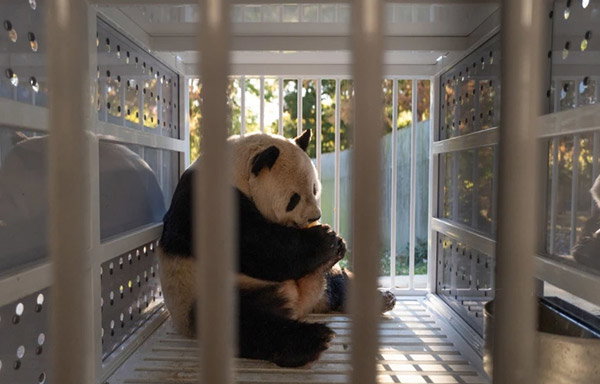
| Giant panda Tian Tian enjoys a frozen treat in his travel crate during his journey from Smithsonian’s National Zoo to China. As the zoo prepares to welcome two giant pandas (Ailuropoda melanoleuca) from China, its director Brandie Smith discusses the departure of their predecessors: Tian Tian, Mei Xiang and their cub, Xiao Qi Ji. “Shipping three large herbivores halfway round the world when there is no margin for error is a huge undertaking. There are so many moving parts and the entire focus is on the well-being of these animals,” says Smith. “It didn’t really hit me until I went into the panda house a couple of days after they had left — that was the saddest time,” she adds. (Nature | 9 min read) (Roshan Patel/Smithsonian’s National Zoo) | |||||
Quote of the day“How can we issue and communicate effective warnings when even such a significant storm changes little in most people’s lives?”The solar storm that many people experienced as delightful auroras also triggered communications-systems blackouts and disruptions to global navigation. The dilemma can be solved, argues space-weather scientist Sean Elvidge, with a ‘traffic light’ model of warnings for specific sectors. (Nature | 5 min read) |
|||||
|
|
|||||
|
|||||
|
|
|||||
|
Want more? Update your preferences to sign up to our other free Nature Briefing newsletters:
|
|||||

|
|||||
ACCESS NATURE AND 54 OTHER NATURE JOURNALS
|
|||||
|
|||||
|
You received this newsletter because you subscribed with the email address: - Please add [email protected] to your address book. Enjoying this newsletter? You can use this form to recommend it to a friend or colleague — thank you! Had enough? To unsubscribe from this Briefing, but keep receiving your other Nature Briefing newsletters, please update your subscription preferences. To stop all Nature Briefing emails forever, click here to remove your personal data from our system. Fancy a bit of a read? View our privacy policy. Forwarded by a friend? Get the Briefing straight to your inbox: subscribe for free. Want to master time management, protect your mental health and brush up on your skills? Sign up for our free short e-mail series for working scientists, Back to the lab. Get more from Nature: Register for free on nature.com to sign up for other newsletters specific to your field and email alerts from Nature Portfolio journals. Would you like to read the Briefing in other languages? 关注Nature Portfolio官方微信订阅号,每周二为您推送Nature Briefing精选中文内容——自然每周简报。
Nature Portfolio | The Springer Nature Campus, 4 Crinan Street, London, N1 9XW, United Kingdom Nature Portfolio, part of Springer Nature. |