Iron-Age human bones were made into tools before interment
What matters in science |

Is this your brand on Milled? Claim it.
|
|||||
|
|||||
|
Hello Nature readers, |
|||||
|
|||||
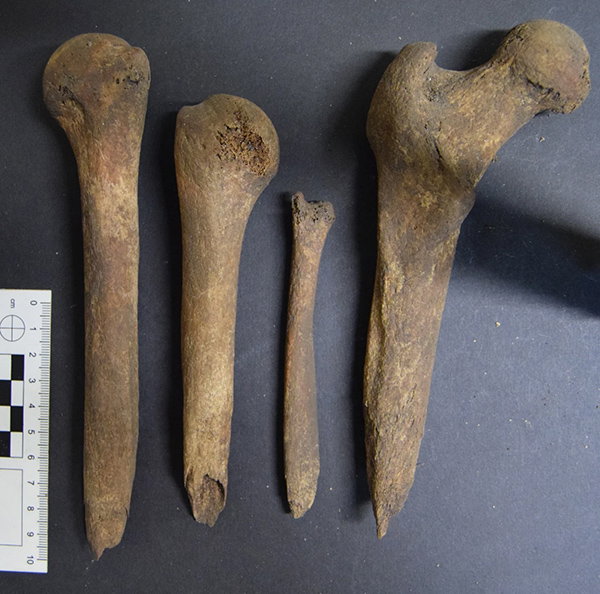
| A human leg bone (far right) and three arm bones unearthed in Scotland show signs of having been worked to sharp points. (Laura Castells Navarro) | |||||
Mysterious mortuary processing in Iron AgeThe remains of an adult buried some 2,000 years ago in what is now Scotland show signs that her brain might have been removed and her bones modified as tools, before her skeleton was carefully reassembled and interred. The finding adds to the mystery of how Iron Age Britons treated their dead: few human remains have survived from that period. The Independent | 5 min readReference: Antiquity paper |
|||||
AI can’t beat humans at rigorous maths testFour artificial intelligence models have failed to match top mathematicians in a test of research-level maths problems. The test posed models — including OpenAI’s ChatGPT 5.5 Pro — questions that research teams had solved, but not yet published. Then they gave the AI answers to mathematicians to formally grade. The best-performing model solved six of the ten problems, but three of the questions stumped every AI competitor. It seems that the systems were “missing one more critical and unexpected idea that the human solution uses to close the last gap”, says mathematician Johannes Schmitt. Nature | 6 min readReference: First Proof test results |
|||||
Vaping after smoking worse than quittingData from more than 4.5 million people in South Korea indicates that former smokers who used electronic cigarettes had a higher risk of both lung cancer incidence and lung cancer-related death, compared to those who quit completely. But both groups had lower rates of death than those who continue to smoke cigarettes. New Scientist | 5 min read (paywall) or read the short Nature Research HighlightReference: Nature Medicine paper |
|||||
|
|||||
Communities should shape the economyIn The Common Good Economy, economist Mariana Mazzucato sets out how communities can actively shape economic decisions and not just endure their consequences. Mazzucato challenges the idea that economic policy should remain the exclusive domain of detached experts and corporate elites and calls for markets and governments to reorganize their systems around social needs. If her vision was put into practice, “it would directly confront today’s economic power structures, thus opening the path towards political transformation”, writes economist Clara Mattei in her review. “That is a good thing.” Nature | 7 min read |
|||||
A neutral ground for science to thriveThe International Centre for Theoretical Physics (ICTP) in Italy, founded in 1964 by Pakistani Nobel laureate Abdus Salam, “has always been a scientific oasis in a rather chaotic world”, says its director Atish Dabholkar. As a United Nations organization with a mandate to strengthen engagement with scientists from the developing world, the Centre “continues to be one of the few places where scientists from countries in conflict may take refuge”. Now, Dabholkar wants to help the organization build relationships “based on partnership rather than patronage”, with countries such as India, China and Brazil that have built vibrant scientific ecosystems. Nature India | 9 min read |
|||||
Watching where the animals goMillions of animal species have sometimes been treated as if they are as fleeting ephemera, living brief and transitory lives in ‘uninhabited’ wilderness. Now researchers are turning to ever-more sophisticated AI and wildlife-tracking technologies to understand animals’ complex relationships with place, notes explorer and writer Ryan Huling. For example, Movebank is a free database of animal tracking information hosted by the Max Planck Institute of Animal Behavior that grows by nearly 12 million records each day. Nature | 14 min read |
|||||
|
|||||
|
|||||
|
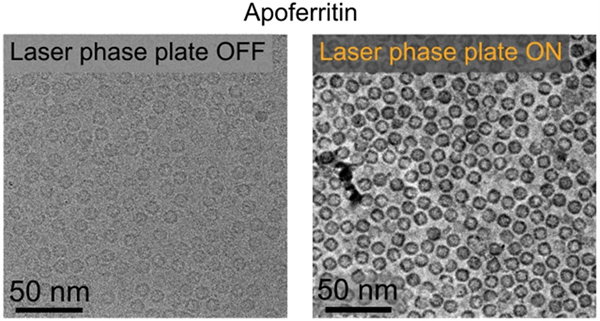
After 15 years of debate over its feasibility, scientists have demonstrated that a technology called a laser phase plate can sharpen the resolution of protein-structure images produced by cryo-electron microscopy (cryo-EM). The technology should extend the cryo-EM technique to a broader range of proteins than was previously possible, and simplify experiments that reconstruct protein behaviour in the cellular environment. (Nature | 5 min read) Reference: Science paper & bioRxiv preprint (not peer reviewed) (Holger Müller, Jessie Zhang/UC Berkeley) |
|||||
Quote of the day“You can get very technical sieves, of course, but the one in my kitchen is perfect in that it’s robust, cheap and easy to sterilize.”Arctic researcher David Thomas is one of the researchers who’ve found that everyday items around the house can do a better job than specialized equipment for some types of science. (Nature | 11 min read — don’t miss the photo of Thomas with his ladle-on-a-stick tool collecting brine samples in the Arctic) |
|||||
|
|
|||||
|
|||||
|
|
|||||
Free newsletters from NatureWant more? Update your preferences to sign up to our other Nature Briefing newsletters:
|
|||||
|
|||||
|
You received this newsletter because you subscribed with the email address: - Please add [email protected] to your address book. Enjoying this newsletter? You can use this form to recommend it to a friend or colleague — thank you! Had enough? To unsubscribe from this Briefing, but keep receiving your other Nature Briefing newsletters, please update your subscription preferences. To stop all Nature Briefing emails forever, click here to remove your personal data from our system. Fancy a bit of a read? View our privacy policy. Forwarded by a friend? Get the Briefing straight to your inbox: subscribe for free. Want to master time management, protect your mental health and brush up on your skills? Sign up for our free short e-mail series for working scientists, Back to the lab. Get more from Nature: Register for free on nature.com to sign up for other newsletters specific to your field and email alerts from Nature Portfolio journals. Would you like to read the Briefing in other languages? 关注Nature Portfolio官方微信订阅号,每周二为您推送Nature Briefing精选中文内容——自然每周简报。
Nature Portfolio | The Springer Nature Campus, 4 Crinan Street, London, N1 9XW, United Kingdom Nature Portfolio, part of Springer Nature. |