JWST gets great view of Earth-sized exoplanet
What matters in science |

Is this your brand on Milled? Claim it.
|
|||||
|
|||||
|
Hello Nature readers, |
|||||
|
|||||
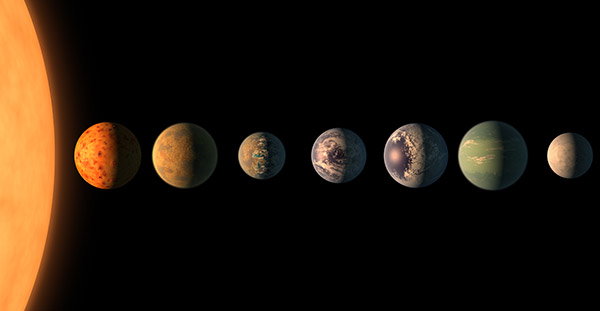
| The seven roughly Earth-sized planets in the TRAPPIST-1 system (artist’s rendering). (NASA/JPL-Caltech) | |||||
JWST gets great view of exciting exoplanetThe exoplanet TRAPPIST-1b — one of seven roughly Earth-sized planets in the TRAPPIST-1 system — probably doesn’t have an atmosphere. It’s not surprising: TRAPPIST-1b is the closest to its star and is blasted by four times as much radiation as Earth receives from the Sun. But the work shows the transformational power of the James Webb Space Telescope (JWST) to observe the system, which offers a unique laboratory for studying planetary environments and how they might become suitable for life. Nature | 3 min readReference: Nature paper |
|||||
How scientists cut their carbon footprintsAs the effects of climate change grow, scientists from fields spanning astronomy to biology are trying to decarbonize their research. They say that the time for carbon-footprint assessments is over — we must take action, and that needs institutional support. “The situation is not that different from the one you can experience as a citizen,” says Pierrick Martin, an astrophysicist at an institute that is trying to reduce the heavy toll of its observatory. “There are things you can do yourself, at your level, in your local environment, that are worth something. But this has limits, and you can’t escape from political decisions at some point.” Nature | 5 min read |
|||||
Glass beads on Moon’s surface store waterThere could be close to 300 billion tonnes of water stored in glass beads scattered across the Moon’s surface. Researchers found the beads in lunar soil samples collected by China’s Chang’e-5 spacecraft. The beads are created during meteoroid impacts, which throw up showers of molten droplets that solidify into tiny spheres. They contain water, which might have formed when the solar wind reacted with oxygen on their surfaces. The water could be extracted and used by astronauts on future lunar missions, says planetary scientist Mahesh Anand. “With this finding, the potential for exploring the moon in a sustainable manner is higher than it’s ever been.” The Guardian | 3 min readReference: Nature Geoscience paper |
|||||
|
|||||
Chronic pain: the long road to discoveryCountless people — around 20 million in the United States alone, by one estimate — experience debilitating, regular pain. Research into how to help them has been slow, but the science is building and viable treatments are available. Nature editor Lucy Odling-Smee, who has experienced chronic pain herself, delves into the treatments that have shown promise and why they are not always getting to those who need them. Nature | 16 min read |
|||||

|
|||||
ACCESS NATURE AND 54 OTHER NATURE JOURNALS
|
|||||
How fairness can foster research integrityLast May, a group including bioethicists, researchers, institutional leaders and journal editors was formed at the 7th World Conference on Research Integrity to look at the myriad ways in which research programmes and practices disadvantage those living in low- and middle-income countries. Seven members present the result: the Cape Town Statement. It includes 20 recommendations, drawn from discussions involving around 300 people from an estimated 50 countries, on the theme of ‘fostering research integrity in an unequal world’. Nature | 11 min readReference: The Cape Town Statement on Fostering Research Integrity Through the Promotion of Fairness, Equity, and Diversity |
|||||
Pandemic still hits academic parents hardFor scientist parents, the pandemic raised the long-standing barriers of combining work and caregiving even higher. The crisis disrupted research and interrupted publishing, setting off a vicious downward spiral of productivity that hinders funding success and puts the brakes on careers. Nature talked to five mothers in academia about what institutions have done to make adjustments for pandemic disruptions and what other support parents, and especially mothers, need. Nature | 10 min read |
|||||
|
|||||
|
|||||
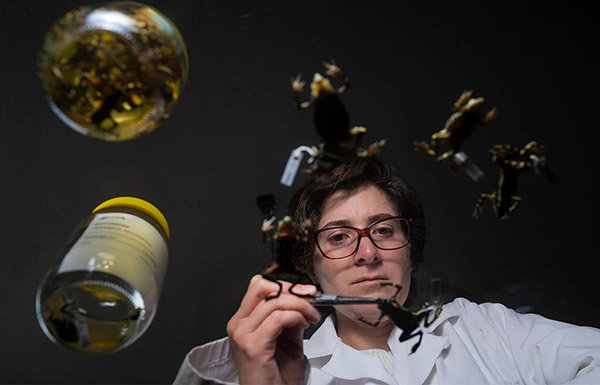
| Conservation biologist Andrea Terán-Valdez aims to protect endangered frogs in Ecuador by breeding populations, cataloguing new species and fighting industrial development. “So far, we have gathered information on 652 species,” she says. “There are many more, and many are disappearing before we can describe them.” Finding and describing new frog species is a powerful conservation tool because it compels governments to protect them, she notes. “We don’t want to lose any other species — we have already lost too many.” (Nature | 3 min read) (Jaime Culebras) | |||||
Quote of the day“In every field, there are things that are considered important or influential. It’s very much fashion-based: the structure of what people choose to research is built out of aesthetic judgments.”Mathematician Emmy Murphy thinks about maths as existing in the space between us: a social phenomenon that is moved and shaped by human minds. (Quanta | 10 min read) |
|||||
|
|
|||||
|
|||||
|
|
|||||
|
|||||
|
You received this newsletter because you subscribed with the email address: - Please add [email protected] to your address book. Enjoying this newsletter? You can use this form to recommend it to a friend or colleague — thank you! Want to switch to the weekly edition? Update your preferences. Had enough? Unsubscribe from the Nature Briefing. Fancy a bit of a read? View our privacy policy. Forwarded by a friend? Get the Briefing straight to your inbox: subscribe for free. Want to master time management, protect your mental health and brush up on your skills? Sign up for our free short e-mail series for working scientists, Back to the lab. Get more from Nature: Register for free on nature.com to sign up for other newsletters specific to your field and email alerts from Nature Research journals. Would you like to read the Briefing in other languages? 关注Nature Portfolio官方微信订阅号,每周二为您推送Nature Briefing精选中文内容——自然每周简报。
Nature | The Springer Nature Campus, 4 Crinan Street, London, N1 9XW, United Kingdom Nature Research, part of Springer Nature. |