Mouse eyes can photosynthesize after a plant-to-animal transplant
What matters in science |

Is this your brand on Milled? Claim it.
|
|||||
|
|||||
|
Hello Nature readers, |
|||||
|
|||||
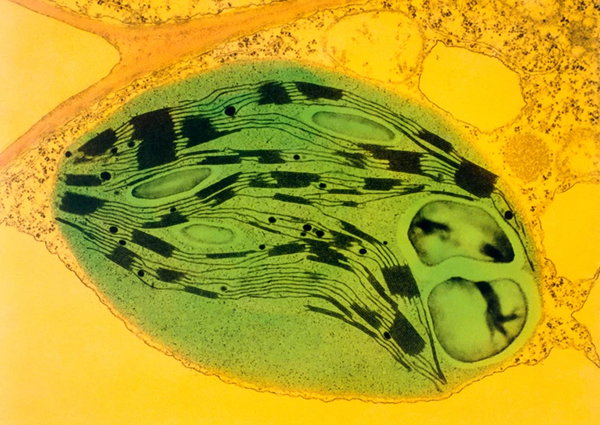
| Scientists have harnessed grana (visible as black blocks in a green chloroplast) to induce photosynthesis in mammalian cells. (Biophoto Associates/Science Photo Library) | |||||
Drops let mouse eyes ‘photosynthesize’Photosynthetic machinery can be harvested from spinach and transplanted into the eyes of mice, where it transforms light into molecules that carry energy and can tame inflammation. To see how this approach might someday translate into therapeutic applications, researchers made drops, containing light-harvesting apparatus from spinach (Spinacia oleraceae) cells, that soothed dry-eye disease in mice. “This is very exciting, even if it’s a bit crazy now,” says biologist and study co-author David Tai Leong. Nature | 4 min readReference: Cell paper |
|||||
Ebola outbreak is public health emergencyAn outbreak of Ebola in the Democratic Republic of the Congo (DRC) has been declared a public health emergency of international concern by the World Health Organization. At least 10 people had tested positive for the Ebola virus and more than 330 people had suspected infections, according to the US Centers for Disease Control and Prevention on Sunday. Infections have also been reported in neighbouring Uganda. A lab in the DRC confirmed that the outbreak was caused by the Bundibugyo species of Ebola virus, for which there is no approved vaccine or treatment. The outbreak has almost certainly been spreading undetected for weeks, and the most important action is getting more diagnostic tests to the DRC and surrounding nations, say researchers. Nature | 5 min read |
|||||
|
|||||
NIH ousts infectious-disease leadersThree senior officials at the US National Institute of Allergy and Infectious Diseases (NIAID) have been given the choice to either accept reassignment outside the institute or resign, sources at the NIAID have told Nature. With these departures, scientists in most senior positions at the NIAID will have been ousted from their jobs, including officials in eight of the top ten leadership spots, since President Donald Trump began his second term as president. The reassignment of career scientists is highly unusual, and feeds some scientists’ fears of a growing political influence over science at the US National Institutes of Health (NIH), which oversees the NIAID. Nature | 6 min read |
|||||
Smuggling inquiry locks down US labsDozens of researchers at Indiana University (IU) Bloomington have been locked out of their laboratories for more than a week in what some scientists say is an act of government retaliation against IU plant microbiologist Roger Innes. Innes has criticized the administration of US President Donald Trump for deporting Chinese scientists on the basis of smuggling experimental samples that it deemed to be dangerous. The university says the lockdown was done at the request of the US Department of Agriculture. Nature | 8 min read |
|||||
|
|||||
|
|||||
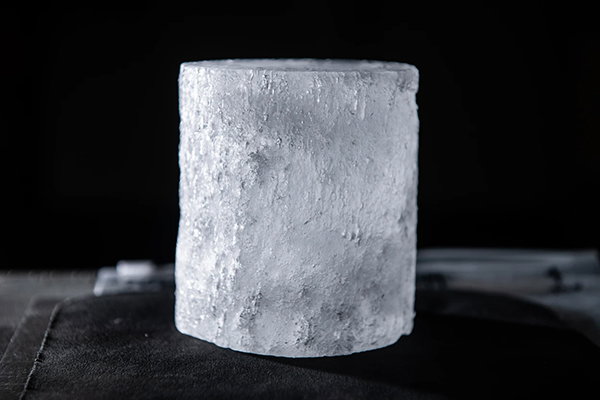
| This is a piece of an Antarctic ice core — part of which contains evidence that Earth is passing through an interstellar dust cloud. The ancient ice contains levels of the rare isotope iron-60 — a fingerprint of interstellar dust formed by supernova explosions. — that are lower than the levels found in more recent periods. The authors say this suggests that, during the past 40,000 years, the Solar System has been crossing a part of the Local Interstellar Cloud, where such dust is relatively dense. (Nature Research Highlights | 4 min read) (Alfred Wegener Institute/Esther Horvath) | |||||
|
|||||
There’s no such thing as ‘bad character’In Marked by Time, criminologist Robert Sampson explores the idea, common in modern policing and court practices, that people who become serial criminal offenders have a ‘bad character’. Sampson lays out evidence that this common assumption is fundamentally flawed because it doesn’t take into account the changing historical circumstances surrounding a person’s chances of being arrested. The book is “disquieting but effective”, says sociologist Christopher Browning in his review. It “makes a compelling case for rooting out character-based assumptions” in the criminal justice system. Nature | 6 min read |
|||||
Your secret science skills might surprise youFor Yasmin Proctor-Kent, the sewing skills that she needed to reach the finals of The Great British Sewing Bee are similar to what it takes to master mathematics. Biologist Chantle Edillor used a fascination with sourdough starters to pivot from studying human diseases to exploring yeast-based cures. And public-health researcher Brandon Brown says that tending to his orchard isn’t unlike his academic work: “the work is never done … the fun never ends”. They are among the scientists contributing to a six-part series of the Nature Careers Working Scientist podcast about creativity in science. Subscribe to the Nature Careers Working Scientist podcast on Apple Podcasts, Spotify, YouTube or your favourite podcast app. |
|||||
Inside the ‘interstitium’In simple terms, the cardiovascular system moves blood around our bodies and the lymphatic system moves lymph. Now some scientists have raised the controversial idea that there is a third circulatory system, which runs through our connective tissues: the interstitium. They say that this hyaluronic acid-filled space, criss-crossed with collagen bundles, could be “a route of molecular, microbiome, and cellular trafficking and communication” — and a route of cancer spread. The New York Times Magazine | Leisurely scrollReference: Human Pathology paper |
|||||
Quote of the day“Cigarettes are the only legal products that kill two in three people who use them as intended.”Regulations for e-cigarettes should recognize that they help people quit smoking, while not ignoring a sharp increase in vaping among young people, argue a group of behavioral scientists, addiction researchers and a public-health physician. (Nature Human Behaviour | 15 min read) |
|||||
|
|
|||||
|
|||||
|
|
|||||
Free newsletters from NatureWant more? Update your preferences to sign up to our other Nature Briefing newsletters:
|
|||||
|
|||||
|
You received this newsletter because you subscribed with the email address: - Please add [email protected] to your address book. Enjoying this newsletter? You can use this form to recommend it to a friend or colleague — thank you! Had enough? To unsubscribe from this Briefing, but keep receiving your other Nature Briefing newsletters, please update your subscription preferences. To stop all Nature Briefing emails forever, click here to remove your personal data from our system. Fancy a bit of a read? View our privacy policy. Forwarded by a friend? Get the Briefing straight to your inbox: subscribe for free. Want to master time management, protect your mental health and brush up on your skills? Sign up for our free short e-mail series for working scientists, Back to the lab. Get more from Nature: Register for free on nature.com to sign up for other newsletters specific to your field and email alerts from Nature Portfolio journals. Would you like to read the Briefing in other languages? 关注Nature Portfolio官方微信订阅号,每周二为您推送Nature Briefing精选中文内容——自然每周简报。
Nature Portfolio | The Springer Nature Campus, 4 Crinan Street, London, N1 9XW, United Kingdom Nature Portfolio, part of Springer Nature. |