Mouse-to-mouse resuscitation: mice give unconscious friends first aid
What matters in science |

Is this your brand on Milled? Claim it.
|
||||||
|
||||||
|
Hello Nature readers, |
||||||
|
||||||
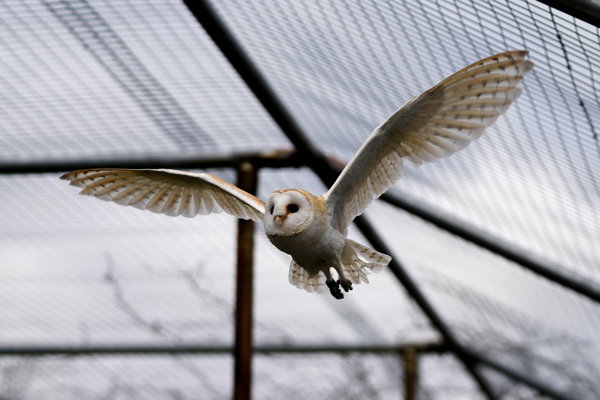
| Researchers in Israel, Jordan, the Palestinian territories and European countries are working together to study barn owls (Tyto alba) to help control pests instead of toxic rodenticides. (Thanassis Stravrakis/AP Photo/Alamy) | ||||||
Collaborations continue amidst conflictScientists from Israel, the Palestinian territories and neighbouring countries are continuing to work together, even after 15 months of war. For example, in January, 60 Palestinian, Jordanian and Israeli experts met in Athens to discuss how to solve the region’s water issues and other environmental problems. But the weight of conflict weighs heavy on the region’s scientific community: for example, scholars and universities in Israel grapple with formal and informal boycotts, while researchers and administrators in Gaza face the wholesale destruction of their institutions. “I’m hoping that following the ceasefire, and when things calm down, collaborations across the Middle East will grow,” says quantum physicist Roee Ozeri. “In general, I think science is a great bridge between people, and between nations.” Nature | 7 min read |
||||||
Microlightning might have sparked lifeThe energy from ‘microlightning’ might have powered chemical reactions that formed the building blocks for life on Earth. When water sprays as a fine mist — after the crash of a wave, for example — it forms minute, charged droplets. The proximity of oppositely-charged droplets to one another generates an electrical discharge and a tiny flash of light. Researchers found that in the presence of gases including nitrogen, methane and carbon dioxide, microlightning caused the synthesis of molecules such as the amino acid glycine and uracil, a key component of RNA. The Guardian | 4 min readReference: Science Advances paper |
||||||
Mouse-to-mouse resuscitationMice that find another mouse unconscious will attempt to resuscitate it in a similar manner to people giving first aid. Researchers found that if a mouse encountered an anaesthetized friend, it would begin a grooming routine focused on the head. If that didn’t rouse their companion, the rescuer began to bite around the mouth and pull at their tongue. This behaviour was more forceful in mice that had spent more time with the unconscious individual, and resulted in a quicker recovery time. LiveScience | 6 min readReference: Science paper |
||||||
| ||||||
|
||||||
|
||||||
Truth is more important than techIn A Climate of Truth, climate scientist Mike Berners-Lee argues that technological advances will never be enough to tackle the ‘polycrisis’ of global climate, food and energy issues. Instead, he sets out a radical manifesto for truth, writes conservation scientist Julia Jones in her review. Berners-Lee posits that if people received - from politicians, businesses and media - an honest view of the catastrophic state of the planet and the radical change required, they would vote for leaders who can deliver what's needed. “Whether greater honesty from our politicians really is the panacea Berners-Lee implies needed to solve the polycrisis, we certainly need more of it,” writes Jones. Nature | 7 min read |
||||||
Marking out the level of the ever-shifting seaSea level, far from being a natural constant, is a human construct, writes historian Wilko Graf von Hardenberg. What started as a hodge-podge marking of local variations evolved into a standardized global benchmark by way of colonial powers’ love of maps, René Descartes’s theories about the tides, and a growing fascination with the achievements of mountaineers. Issues in Science and Technology | 14 min read |
||||||
|
||||||
Quote of the day“It was hard to ignore the troubling mismatch between a widespread reliance on single-use plastic and working in a research field focused on conservation.”After realizing that their research was producing disturbing amounts of plastic waste, fish biologists Anthony Gagliano and Marie Launay took action to cut their rubbish by 50% — and say how you can do it, too. (Nature | 5 min read — read more in Nature Spotlight: Green laboratories) |
||||||
|
|
||||||
|
||||||
|
|
||||||
Free newsletters from NatureWant more? Update your preferences to sign up to our other Nature Briefing newsletters:
|
||||||
Access Nature and 54 other Nature journals
Nature+ is our most affordable 30-day subscription, giving you online access to a wide range of specialist Nature Portfolio journals, including Nature. |
||||||
|
||||||
|
You received this newsletter because you subscribed with the email address: - Please add [email protected] to your address book. Enjoying this newsletter? You can use this form to recommend it to a friend or colleague — thank you! Had enough? To unsubscribe from this Briefing, but keep receiving your other Nature Briefing newsletters, please update your subscription preferences. To stop all Nature Briefing emails forever, click here to remove your personal data from our system. Fancy a bit of a read? View our privacy policy. Forwarded by a friend? Get the Briefing straight to your inbox: subscribe for free. Want to master time management, protect your mental health and brush up on your skills? Sign up for our free short e-mail series for working scientists, Back to the lab. Get more from Nature: Register for free on nature.com to sign up for other newsletters specific to your field and email alerts from Nature Portfolio journals. Would you like to read the Briefing in other languages? 关注Nature Portfolio官方微信订阅号,每周二为您推送Nature Briefing精选中文内容——自然每周简报。
Nature Portfolio | The Springer Nature Campus, 4 Crinan Street, London, N1 9XW, United Kingdom Nature Portfolio, part of Springer Nature. |