‘One of the darkest days in modern scientific history’: mass layoffs across US health agencies
What matters in science |

Is this your brand on Milled? Claim it.
|
|||||
|
|||||
|
Hello Nature readers, |
|||||
|
|||||
| (Sandip Guha) | |||||
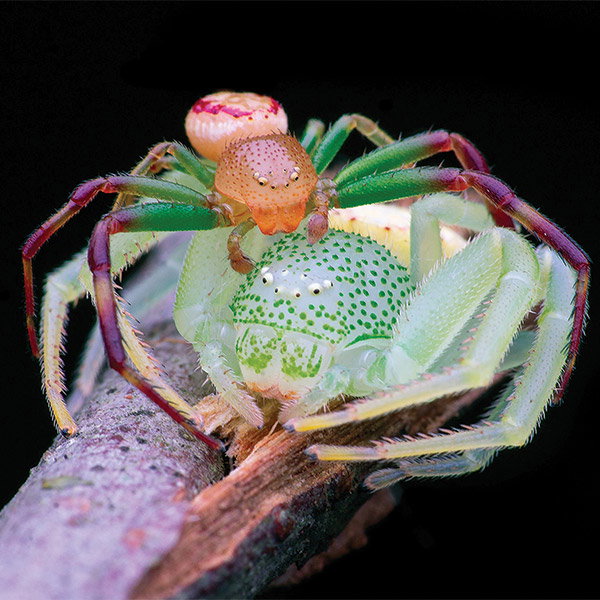
The month’s best science imagesThis shot of a pair of courting crab spiders, taken by nature photographer Sandip Guha in Shiliguri, India, highlights the difference in size between the male and his much larger mate (in some crab-spider species, the female is more than 60 times as big). The photo was a winner at this year’s London Camera Exchange Photographer of the Year competition. |
|||||
Leaders, staff purged at US health agenciesThousands of people are losing their jobs at agencies across the US Department of Health and Human Services, including at the Food and Drug Administration, the Centers for Disease Control and Prevention, and the National Institutes of Health. Among the leaders who were offered the choice between administrative leave or reassignment to remote locations is infectious-disease physician Jeanne Marrazzo, who succeeded Anthony Fauci as the director of the National Institute of Allergy and Infectious Diseases. “This will go down as one of the darkest days in modern scientific history,” says infectious-diseases epidemiologist Michael Osterholm. Nature | 5 min read |
|||||
Instant thought-to-speech implantA brain-reading implant has allowed a woman with paralysis to hear what she intends to say nearly instantly. Enhanced with AI algorithms, her brain–computer interface (BCI) can simultaneously decode words from neural signals and turn them into speech within 3 seconds. But there’s still room for improvement. Although the BCI works for short sentences, it still operates with “quite a big delay” compared with a natural conversation, says computational neuroscientist Christian Herff. Nature | 4 min read including video of the implant in action |
|||||
What will happen to 23andMe’s data?If defunct consumer-genomics company 23andMe is allowed to auction off its database, it could be the biggest genetic data set to ever change hands: it contains DNA information from around 15 million people. What that means for users is unclear: 23andMe says that a new owner must abide by the current privacy policy, but the policy also says that the terms could be altered. Insurance companies or law-enforcement agencies might gain access to the database, and researchers worry that scientific access might be curtailed (the data have previously powered more than 250 scientific studies). Nature | 5 min read |
|||||
|
|||||
|
|||||
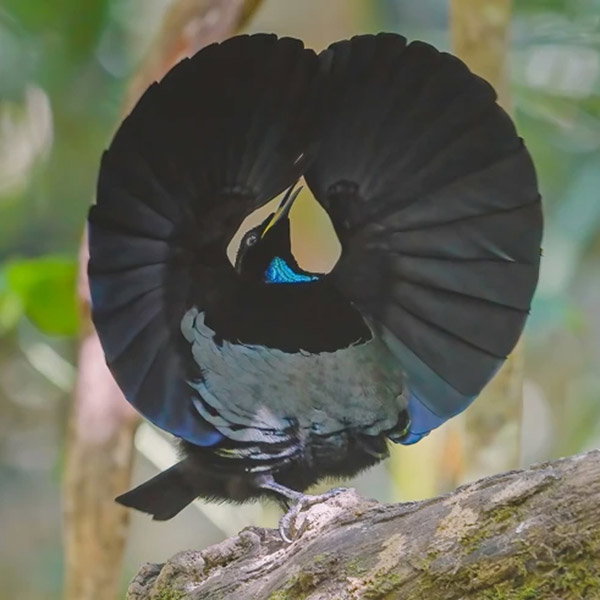
| Many male birds, such as the Victoria’s riflebird (Ptiloris victoriae), ‘dance’ to woo females. (Getty) | |||||
Why male birds work it so hardIn Birds, Sex & Beauty, science writer Matt Ridley interweaves his love of natural history with a mash-up of popular science and travel writing to explore sexual selection in birds. Do females prefer showy tails or seductive dances to increase the chance that their own sons inherit these ‘sexy’ traits, and so pass on their genes? Or perhaps it’s the ‘handicap principle’ — a male who can survive despite such burdens must be a fine specimen in other ways. The real story might be a more nuanced mix of drivers, alongside natural selection, writes zoologist Tim Coulson in his review. Nature | 7 min read |
|||||
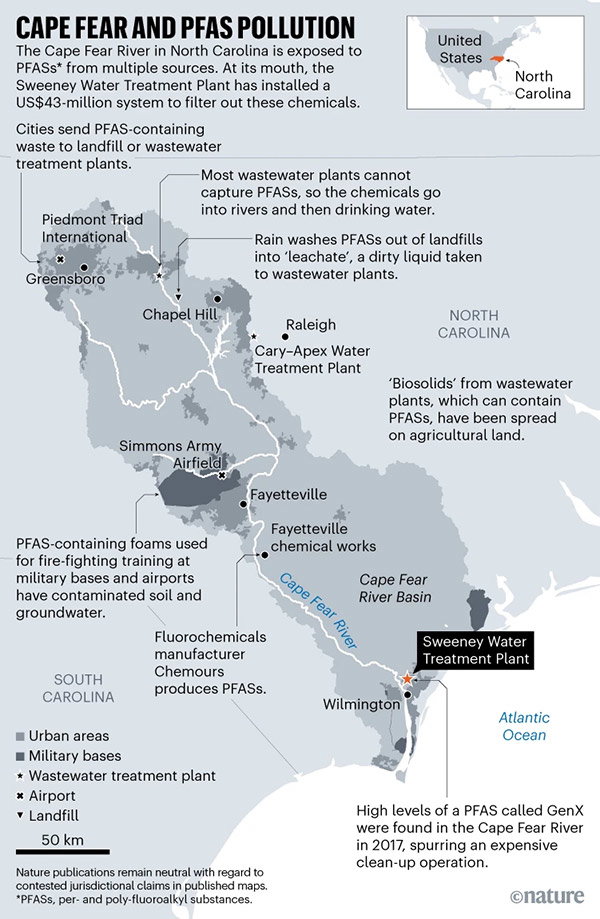
How to clean up ‘forever chemicals’In April 2024, the US Environmental Protection Agency put strict nationwide limits on the concentrations of certain ‘forever chemicals’ in drinking water, kicking off a challenging multibillion-dollar clean-up effort. Researchers are developing a myriad of ways to capture per- and poly-fluoroalkyl substances (PFASs), but they all have pros and cons. And once the chemicals are mopped up, there’s also the question of how best to destroy them. Nature | 14 min read |
|||||
|
|||||
| (RTI International (Adapted from https://go.nature.com/429E3DL)) | |||||
Quote of the day“We are sending this SOS to sound a clear warning: the nation’s scientific enterprise is being decimated.”Around 1,900 members of the National Academies of Sciences, Engineering, and Medicine — making up a who’s who of US science — have published an open letter addressed to the American people arguing that the US research enterprise is being destabilized by Trump administration and that a “a climate of fear has descended on the research community”. (The Washington Post | 4 min read) |
|||||
|
|
|||||
|
|||||
|
|
|||||
Free newsletters from NatureWant more? Update your preferences to sign up to our other Nature Briefing newsletters:
|
|||||
Access Nature and 54 other Nature journals
Nature+ is our most affordable 30-day subscription, giving you online access to a wide range of specialist Nature Portfolio journals, including Nature. |
|||||
|
|||||
|
You received this newsletter because you subscribed with the email address: - Please add [email protected] to your address book. Enjoying this newsletter? You can use this form to recommend it to a friend or colleague — thank you! Had enough? To unsubscribe from this Briefing, but keep receiving your other Nature Briefing newsletters, please update your subscription preferences. To stop all Nature Briefing emails forever, click here to remove your personal data from our system. Fancy a bit of a read? View our privacy policy. Forwarded by a friend? Get the Briefing straight to your inbox: subscribe for free. Want to master time management, protect your mental health and brush up on your skills? Sign up for our free short e-mail series for working scientists, Back to the lab. Get more from Nature: Register for free on nature.com to sign up for other newsletters specific to your field and email alerts from Nature Portfolio journals. Would you like to read the Briefing in other languages? 关注Nature Portfolio官方微信订阅号,每周二为您推送Nature Briefing精选中文内容——自然每周简报。
Nature Portfolio | The Springer Nature Campus, 4 Crinan Street, London, N1 9XW, United Kingdom Nature Portfolio, part of Springer Nature. |