Pigeons might find their way by following their liver
What matters in science |

Is this your brand on Milled? Claim it.
|
|||||
|
|||||
|
Hello Nature readers, |
|||||
|
|||||
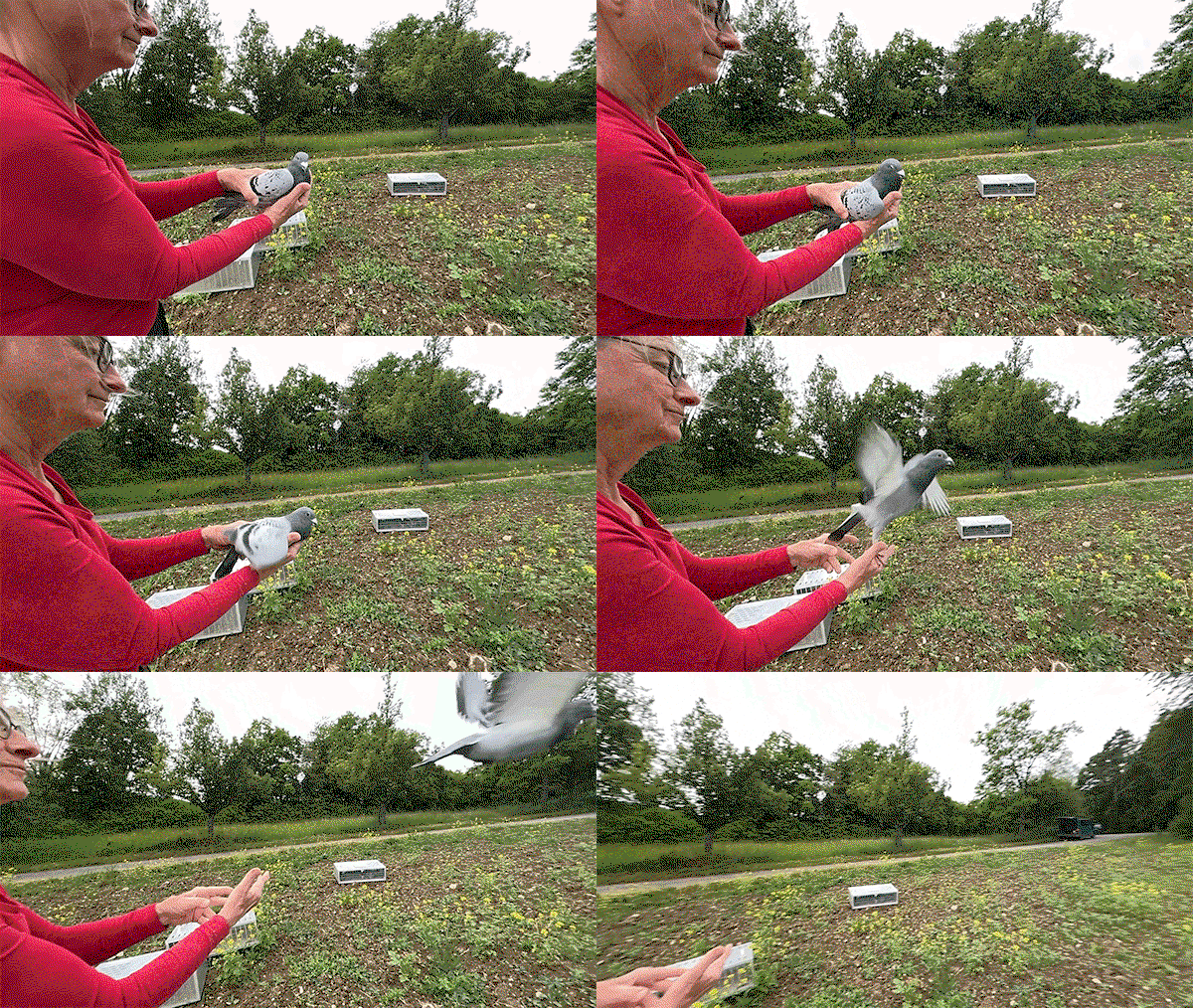
| Homing pigeons can use the Sun to find their way in broad daylight, but fall back on Earth’s magnetic field as a guide when it’s overcast or dark. (Christian Ziegler/Max Planck Institute of Animal Behavior) | |||||
Magnetic cells help pigeons navigateIron-loaded immune cells in the livers of homing pigeons could help the birds navigate using Earth’s magnetic field. Researchers found that macrophages in pigeon liver tissue are full of a magnetic form of iron called ferritin. When the team depleted these cells in a group of homing pigeons and released them in overcast conditions, the birds got lost along a route they’d nailed in the sunshine. The results are “intriguing”, but don’t confirm that ferritin is behind the pigeons’ knack for navigation, says sensory ecologist Catherine Lohmann. Science | 6 min readReference: Science paper |
|||||
Heart therapies cast off shadow of the pastThe first clinical trial aimed at using gene therapy to grow new heart-muscle cells is now underway — one of a new wave of such treatments to regenerate the heart. Some scientists are cautiously optimistic that these therapies could one day be used to treat conditions such as heart failure. But others remain sceptical, in part because the field’s past is mired in controversy. In the early 2000s, a flurry of papers reported that the heart has stem cells that can regenerate heart muscle — but some of the results have since been retracted. Nature | 7 min read |
|||||
Rocket explosion spells a setback for NASAA ‘New Glenn’ rocket made by billionaire Jeff Bezos’s space-tech firm Blue Origin exploded during a routine engine test on 28 May, damaging much of the surrounding Space Launch Complex 36 (LC-36). The accident, during which no one was injured, puts a question mark over the timeline of NASA’s Moon Base 1 mission, scheduled to launch this autumn. The mission is slated to use Blue Origin’s Endurance lander, flown on a New Glenn rocket, to deliver scientific instruments to the Moon. But LC-36 is the only facility in the world that can launch a New Glenn, and rebuilding it could take months, experts say. BBC | 5 min read |
|||||
Share your careers highs and lowsNature wants to hear from working scientists about how they feel about their careers at a time of rapid change in science. Are you burnt out? Excited about artificial intelligence? Optimistic about your future in science — or not? You can take our 15-minute 2026 survey, and opt in for a prize draw, until 26 June. Take the survey |
|||||
|
|||||
The homegrown snake museumAround a decade ago, biologist Alex Bentley stumbled upon an unusual museum in a small Ecuadorian town. Inside was farmer Manuel Genaro Peñafiel’s collection of snake specimens he’d been amassing since 1958. The collection was vast, but had never been formally documented. In 2023, Bentley and Peñafiel, with the help of more than 100 other townspeople, set to work cataloguing the specimens within — all 666 of them. Some species in the collection hadn’t been seen in the surrounding habitat for decades, and seven had never been formally recorded in the area. The New York Times | 11 min read |
|||||
Alaska’s tsunamis-in-waitingAt any moment, a mass of slow-moving bedrock could collapse and plunge into Portage Lake in Alaska, triggering a tsunami that could wipe out a visitor centre, capsize tour boats and threaten cruise ships. The cause? Destabilization of the bedrock due in part to a retreating glacier and melting permafrost, both accelerated by climate change. Independent geologist Bretwood Higman has made it his life’s work to sound the alarm about such tsunamis-in-waiting. Government bureaucracy and an unwillingness to face up to the problem mean progress is slow. “The most likely scenario is something really, really bad is going to happen before we are on top of any of it,” says Higman. National Geographic | 27 min read (intermittent paywall) |
|||||
Futures: science fiction from NatureA jaded explorer decides to strike out on their own in Scraping and your suit is designed to keep you alive at all costs in Sarcophagus. Nature | 5 min read & Nature | 5 min read |
|||||
Podcast: How I jazz up my scienceTheoretical physicist Stephon Alexander credits his saxophone for making him the scientist he is. As a jazz musician, the ability to improvise has made him “more fluid and flexible mentally in terms of approaching and attacking physics problems”, he tells Nature’s Working Scientist Podcast. And playing alongside others has taught Alexander how to collaborate effectively. “You have to be able to coexist and play with them in service of the music,” he says. Similarly, “it's important to be able to be in dialogue with other physicists from different schools of thought”. Nature Working Scientist Podcast | 20 min listen |
|||||

|
|||||
Quote of the day“I saw this vision in my head of this graph spanning 150 years of different human impacts on whale populations … I’ve been chasing that figure ever since.”Conservation biologist Kathleen Hunt uses baleen, the fingernail-like material that some whales use to filter krill and other foods from water, to build a time-stamped record of the animals’ reproduction, stress levels and environment. (Nature | 12 min read) |
|||||
|
|
|||||
|
|||||
|
|
|||||
Free newsletters from NatureWant more? Update your preferences to sign up to our other Nature Briefing newsletters:
|
|||||
|
|||||
|
You received this newsletter because you subscribed with the email address: - Please add [email protected] to your address book. Enjoying this newsletter? You can use this form to recommend it to a friend or colleague — thank you! Had enough? To unsubscribe from this Briefing, but keep receiving your other Nature Briefing newsletters, please update your subscription preferences. To stop all Nature Briefing emails forever, click here to remove your personal data from our system. Fancy a bit of a read? View our privacy policy. Forwarded by a friend? Get the Briefing straight to your inbox: subscribe for free. Want to master time management, protect your mental health and brush up on your skills? Sign up for our free short e-mail series for working scientists, Back to the lab. Get more from Nature: Register for free on nature.com to sign up for other newsletters specific to your field and email alerts from Nature Portfolio journals. Would you like to read the Briefing in other languages? 关注Nature Portfolio官方微信订阅号,每周二为您推送Nature Briefing精选中文内容——自然每周简报。
Nature Portfolio | The Springer Nature Campus, 4 Crinan Street, London, N1 9XW, United Kingdom Nature Portfolio, part of Springer Nature. |