Rare mutation protected one man from early Alzheimer’s
What matters in science |

Is this your brand on Milled? Claim it.
|
|||||
|
|||||
|
Hello Nature readers, |
|||||
|
|||||
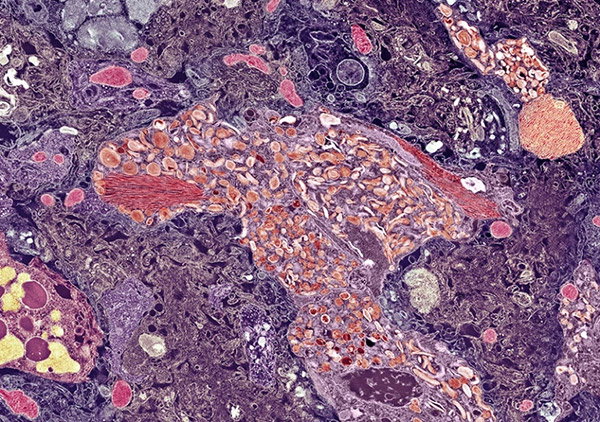
| The brain of a person with Alzheimer's disease shows an amyloid plaque and tau fibres (dark pink lines) under the electron microscope. (Thomas Deerink/NCIR/SPL) | |||||
How one man’s mutation delays Alzheimer’sA rare genetic mutation seems to have protected a man from early-onset Alzheimer’s disease. Like many of the 6,000 members of his extended family, the man carried a mutation that leads people to develop Alzheimer’s in their forties or earlier. But he also had a second mutation in a gene coding for a protein called reelin. The man’s brain scans looked like that of a person with severe dementia, with high levels of amyloid plaques — yet he had only mild cognitive impairment in his late 60s. The study challenges the theory that the plaques are the primary cause of Alzheimer’s. Nature | 6 min readReference: Nature Medicine paper |
|||||
Oil profits rise while climate investment lagsLast year, the profits of nine of the biggest oil companies totalled US$457 billion, about one-sixth of the annual investment needed to meet nations’ carbon-cutting pledges. Annual spending on green energy is currently about $1.4 trillion, but more than twice that would need to be spent each year until 2030 to meet climate targets. “Big oil should reinvest its profit in low-carbon-energy infrastructure,” says climate scientist Charlie Wilson. Some countries have tried to encourage this by allowing companies to avoid taxes on bumper earnings if profits are ploughed back into energy-production capacity. Nature | 4 min read |
|||||
First brain-based drug for hot flushesA first-of-its-kind drug to treat menopausal hot flushes without hormones has been approved in the United States. Fezolinetant, which is produced by Japanese company Astellas Pharma and will be sold as Veozah, blocks a receptor in brain cells that are involved in regulating body temperature. In clinical trials, fezolinetant reduced the frequency of the symptom by about 60%. “Hot flashes are not just a nuisance,” says gynaecologist JoAnn Pinkerton. “This has a profound effect on women’s lives.” Nature | 5 min read |
|||||
DNA ‘bycatch’ reveals personal informationTrace human DNA inadvertently recovered during environmental or microbiome studies can reveal a person’s sex, ancestry, disease risks and sometimes even their full identity. Sand from sea-turtle nesting sites contained enough genetic bycatch that researchers could easily recognize human X and Y chromosomes. Anonymized faecal microbiome samples, collected by another team, contained enough human DNA to re-identify almost all the donors. These examples raise concerns about DNA-based surveillance and misuse by police, governments or commercial companies, says law and bioethics scholar Natalie Ram. Science | 7 min readGo deeper with an expert analysis by bioethicist Natalie Ram in the Nature News & Views article (7 min read, Nature paywall) References: Nature Ecology & Evolution paper & Nature Microbiology paper |
|||||
|
|||||
Five grass roots for inclusionary geoscienceEarth sciences and geosciences are some of the least diverse academic fields. Five researchers explain how they are creating a more welcoming space, including through book clubs, workshops, virtual field trips and living wages. “It’s important to continually centre people of colour, without worrying about how white people will respond,” says geophysicist Vashan Wright who co-founded the Unlearning Racism in Geoscience programme. Nature | 10 min read |
|||||

|
|||||
ACCESS NATURE AND 54 OTHER NATURE JOURNALS
|
|||||
An independent eye on scholarly searchSearch engines that rely on generative artificial intelligence to help parse scholarly information must be audited independently, argues innovation researcher Michael Gusenbauer. He is the founder of Search Smart, which aims to lay bare the abilities of scholarly search engines including Google Scholar and PubMed. While building Search Smart, “I often found capabilities or limitations that were omitted or inaccurately described in the search tools’ own frequently asked questions,” he writes. “If researchers are not aware of the limitations and biases of such systems, then research outcomes will deteriorate.” Nature | 5 min read |
|||||
What comes after the ISS dies?After housing astronauts for more than three decades, the ageing International Space Station (ISS) will be brought back to Earth in 2031 and crashed into the ocean. “It will be a sad day,” says ISS astronaut Frank de Winne. “There is so much that we have learned.” Smaller commercial projects will probably take the ISS’s place. A company that already takes space tourists to the station on SpaceX rockets, Axiom Space, wants to attach modules to the ISS. These could eventually be detached to form its own pay-to-use station. Several other companies hope to change NASA’s mind about deorbiting the ISS: CisLunar wants to recycle the station in space by melting down some of its metal or repurposing certain modules. BBC Future | 6 min read |
|||||
|
|||||
|
|||||
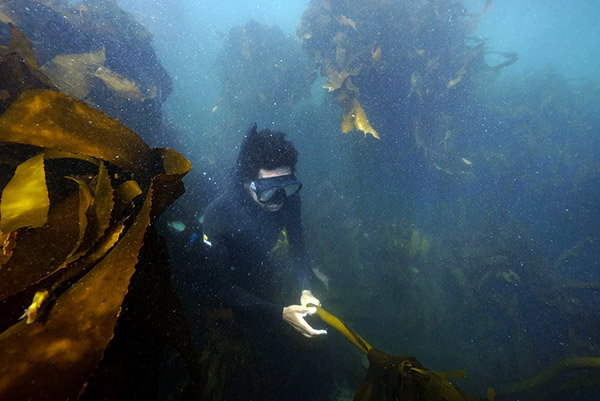
| Conservationist Loyiso Dunga grew up afraid of the ocean. That changed when she began mapping South Africa’s kelp forests: she wanted to see what was below the surface. “In this image, taken near where I first encountered kelp forests off the coast of Windmill beach, south of Cape Town, I am looking for the different types of animal that live in these forests,” she says. Working for the non-profit environmental organization Parley for the Oceans, Dunga now raises awareness of how these underwater forests, and all the biodiversity that they harbour, are affected by offshore mining and pollution. (Nature | 3 min read) (Barry Christianson for Nature) | |||||
Quote of the day“The idea is that we eliminate evaluation of results from the evaluation of science, so that we can select based on quality rather than based on which results were positive or significant.”Neuroscientist Chris Chambers explains how registered reports, papers in which the methodology is peer reviewed before data are collected, could eliminate some of the preference for flashy results. (Nature Podcast | 26 min listen) |
|||||
|
|
|||||
|
|||||
|
|
|||||
|
|||||
|
You received this newsletter because you subscribed with the email address: - Please add [email protected] to your address book. Enjoying this newsletter? You can use this form to recommend it to a friend or colleague — thank you! Want to switch to the weekly edition? Update your preferences. Had enough? Unsubscribe from the Nature Briefing. Fancy a bit of a read? View our privacy policy. Forwarded by a friend? Get the Briefing straight to your inbox: subscribe for free. Want to master time management, protect your mental health and brush up on your skills? Sign up for our free short e-mail series for working scientists, Back to the lab. Get more from Nature: Register for free on nature.com to sign up for other newsletters specific to your field and email alerts from Nature Research journals. Would you like to read the Briefing in other languages? 关注Nature Portfolio官方微信订阅号,每周二为您推送Nature Briefing精选中文内容——自然每周简报。
Nature | The Springer Nature Campus, 4 Crinan Street, London, N1 9XW, United Kingdom Nature Research, part of Springer Nature. |