Reading for pleasure is linked to a happier, sharper mind
What matters in science |

Is this your brand on Milled? Claim it.
|
||
|
||
|
Hello Nature readers, |
||
|
||
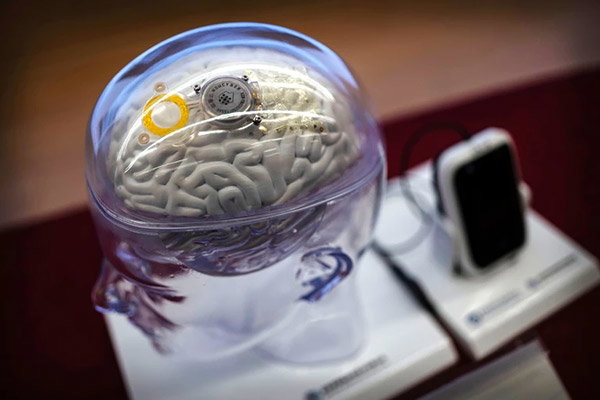
| Some of the neural signals involved in speech and gesture overlap, which can make them difficult for brain–computer interfaces to decode both at the same time. (Kevin Frayer/Getty) | ||
BCI translates both words and gesturesA new brain–computer interface (BCI) is the first of its kind to translate its user’s speech and movement at the same time. The device, tested in two people with forms of paralysis, uses artificial intelligence to convert electrical brain activity into text that appears on screen and to prompt a personalized animated avatar to move — all within seconds of the user’s intent. The work is “a step towards more multifunctional BCIs” that better capture the expressivity of communication than do current technologies, says bioengineer and study co-author Samantha Brosler. Nature | 5 min readReference: Nature Neuroscience paper |
||
|
||
Reading for pleasure has big brain benefitsReading for pleasure is linked with structural brain changes and a laundry list of positive effects, including improved mental health and reduced risk of cognitive decline. A survey of evidence for the benefits of cracking a book also notes that starting young is linked to better attention, memory, executive function, academic achievement and fewer mental health problems. The key, says neuropsychologist and co-author Barbara Sahakian, is pleasure. “Read for enjoyment, as you will read more often and longer,” she says. New Scientist | 4 min read (free registration required)Reference: Psychological Medicine review |
||
Science philanthropy is rising in BrazilPhilanthropists in Brazil are beginning to funnel money into science — a trend that could protect research funding if the winner of next month’s presidential election doesn’t prioritize science. Historically, scientists at leading Brazilian universities have been critical of others who accept private funding, arguing that science should be fully government-funded. But researchers who have received philanthropic funding say that it provides a welcome degree of flexibility, or has helped them launch projects when public funding doesn’t stretch far enough. Nature | 5 min read |
||
|
||
The geologic hydrogen gold rush“At the moment, we still don’t know if it’s almost nothing or completely everywhere.” That’s the conundrum, in the words of geophysicist David Waltham, facing energy prospectors around the world who are searching for deposits of hydrogen trapped in rocks underground. Excitement sparked when researchers estimated that Earth’s subsurface probably contains tens of trillions of tonnes of the clean-burning gas. “If it is going to happen, I would expect that we would see proof of concept — flowing hydrogen gas — within the next two to three years,” says geologist Chris Ballentine. Nature | 7 min read |
||
‘EU should be bold with gene-edited crops’The European Union’s newly relaxed stance on the cultivation of gene-edited crops could be a game-changer for the region’s agriculture sector. But flaws in the new rules — such as strict caps on the permitted number of gene-edits in a crop — might limit their usefulness and harm public perception of gene-edited crops, argues plant geneticist Nico De Storme. “As implementation progresses, the EU should consider building in flexibility”, he writes. The bloc “missed out on the agrotechnological revolution brought about by genetically modified organisms — it must not make the same mistake again”. Nature | 5 min read |
||
Revisiting the legacy of Paul KammererPaul Kammerer was a renowned zoologist with a history of dramatic love affairs and a reputation for self-promotion, who died by suicide just a few weeks after he was accused of academic fraud. A century after his death, his ideas deserve a fresh look, writes evolutionary biologist Max Telford. Nature | 15 min read |
||
Quote of the day“Who wants to be the first government to have a university become insolvent on their watch? That’s a hell of a legacy.”Nature asked eight leaders in higher education what they thought about the state of UK institutions. Six of them — including Damien Page, the vice-chancellor and chief executive of Buckinghamshire New University — thought that financial failure was stalking the sector. (Nature | 8 min read) |
||
|
|
||
|
||
|
|
||
|
||
|
If you enjoy this newsletter, please recommend it to a friend or colleague. Click here to forward it by e-mail. Thank you! You received this newsletter because you subscribed with the email address: - To stop all Nature Briefing e-mails forever, click here to remove your personal data from our system. |
||
|
Nature Portfolio | The Springer Nature Campus, 4 Crinan Street, London, N1 9XW, United Kingdom Nature Portfolio, part of Springer Nature. |