Scientists are ‘under attack for someone else’s political gain’, says vaccine specialist Peter Hotez
What matters in science |

Is this your brand on Milled? Claim it.
|
|||||
|
|||||
|
Hello Nature readers, |
|||||
|
|||||
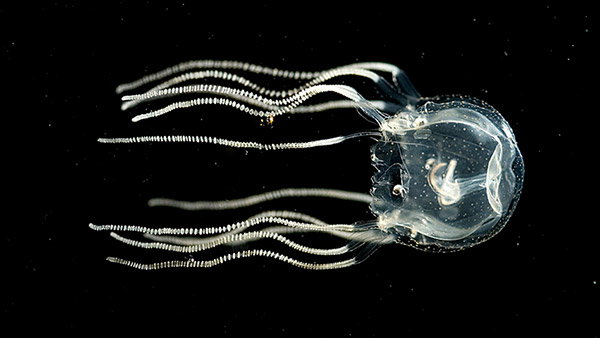
| Caribbean box jellyfish (Tripedalia cystophora) can learn to associate a striped pattern with the sensation of bumping into something, which might help them to avoid obstacles in murky water. (Jan Bielecki) | |||||
Brainless box jellies learn from experienceJellyfish have demonstrated that you don’t need a centralized nervous system to learn by association. Tiny Caribbean box jellyfish (Tripedalia cystophora) can be trained to associate the feeling of bumping into an obstacle with a visual cue, and to use the information to avoid future collisions. Learning happens in the jellies’ rhopalia — structures containing rudimentary eyes plus nerve centres that control swimming pulses. Electrophysiologist and study co-author Jan Bielecki wants to use the findings to teach robots to recognize patterns. “That’s the future of the jellyfish brain,” he says. “We want to stick them on a chip.” Nature | 5 min readReference: Current Biology paper |
|||||
Surprising start to Japan’s ‘Ivy League’ fundOnly one institution, rather than the expected four to six, has been selected to receive a new grant from the Japanese government aimed at creating ‘elite’ universities. The ¥10-trillion (US$75-billion) fund was established to rival the Ivy League, a group of elite universities in the United States. Tohoku University’s application bypassed nine others, including those from Japan’s two most prestigious institutions. The exact amount that Tohoku will receive has not yet been announced. Nature | 4 min read |
|||||
Question of the weekIt’s almost Nobel Prize season, when a handful of scientists will receive life-changing calls telling them they have won. Critics argue that this individual recognition doesn’t reflect the collaborative way science is done today — and that the prizes perpetuate biases and sexism. What do you think? |
|||||
|
|||||
Scientists ‘under attack for political gain’During the COVID-19 pandemic, vaccine specialist Peter Hotez experienced first-hand what it’s like to become a target of “anti-science aggression”: “It’s an organized, well-financed, politically motivated campaign that’s meant to tear down the fabric of science. They couldn’t care less about me; it’s what I represent.” In his new book, The Deadly Rise of Anti-science, he calls for more vigorous pushback against attacks on science and scientists. “This has become a political problem that will require political solutions.” Nature | 7 min read |
|||||

|
|||||
ACCESS NATURE AND 54 OTHER NATURE JOURNALS
|
|||||
Five criteria for higher-yielding cropsThere are thousands of papers that report how small genetic modifications can increase crop yields hugely. “Hardly any findings have translated into yield increases on actual farms,” writes a group of plant breeders, geneticists and evolutionary and plant biologists. They lay out five steps to avoid misleading claims:
|
|||||
Futures: Would you still love me?A scientist used the multiverse to take the ‘would you still love me if I was a worm’ meme to extreme lengths in the latest short story for Nature’s Futures series. Nature | 6 min read |
|||||
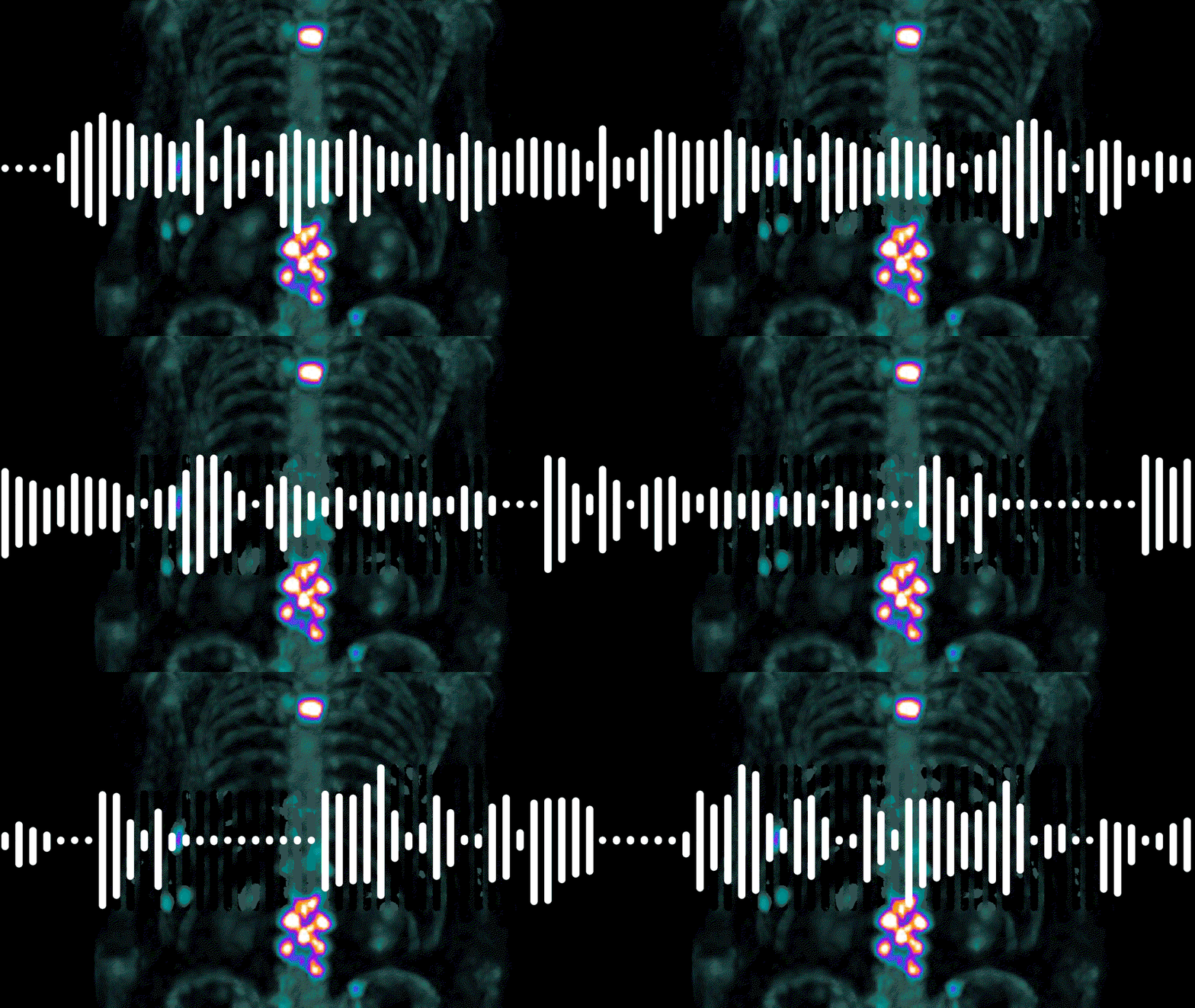
Podcast: Why vertebrae attract tumour cellsA newly discovered type of stem cell seems to be one of the reasons cancer spreads to the spine more often than to other bones. Vertebral skeletal stem cells, and the cells that derive from them, secrete high levels of a protein that attracts cancer cells. Stopping the cells from producing the protein reduces this metastatic preference drastically. The study’s implications could reach beyond cancer: vertebral stem cells could help people undergoing spinal fusion surgery, which often fails for unknown reasons. Nature Podcast | 24 min listenSubscribe to the Nature Podcast on Apple Podcasts, Google Podcasts or Spotify, or use the RSS feed. |
|||||
|
|||||
Quote of the day“Some of the agents started going to the bar at noon. I’m not blaming them, because I’ve done that.”Some of the 25 AI-powered characters that computer scientist Joon Park let loose in the virtual town of Smallville started showing some “subtle unexpected behaviours”. (Nature | 6 min read) |
|||||
|
|
|||||
|
|||||
|
|
|||||
|
|||||
|
You received this newsletter because you subscribed with the email address: - Please add [email protected] to your address book. Enjoying this newsletter? You can use this form to recommend it to a friend or colleague — thank you! Want to switch to the weekly edition? Update your preferences. Had enough? Unsubscribe from the Nature Briefing. Fancy a bit of a read? View our privacy policy. Forwarded by a friend? Get the Briefing straight to your inbox: subscribe for free. Want to master time management, protect your mental health and brush up on your skills? Sign up for our free short e-mail series for working scientists, Back to the lab. Get more from Nature: Register for free on nature.com to sign up for other newsletters specific to your field and email alerts from Nature Research journals. Would you like to read the Briefing in other languages? 关注Nature Portfolio官方微信订阅号,每周二为您推送Nature Briefing精选中文内容——自然每周简报。
Nature | The Springer Nature Campus, 4 Crinan Street, London, N1 9XW, United Kingdom Nature Research, part of Springer Nature. |