Super El Niño is already wreaking havoc — what comes next?
What matters in science |

Is this your brand on Milled? Claim it.
|
||||||
|
||||||
|
Hello Nature readers, |
||||||
|
||||||
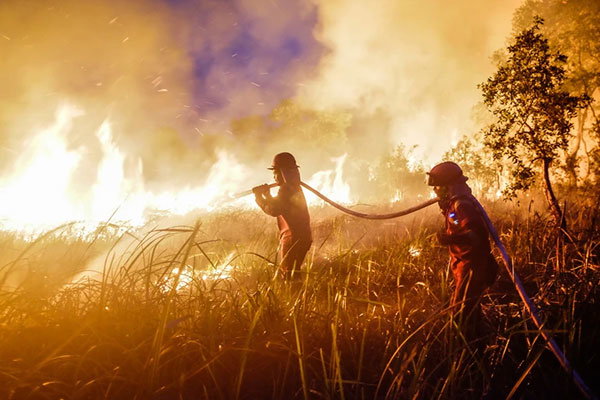
| (Bagus Kurniawan/NurPhoto via Getty) | ||||||
How this year’s super El Niño is differentThis year’s El Niño weather event is forecast to reach unprecedented strength. It’s also the first strong El Niño to form in the eastern (rather than central) Pacific since the late 1990s, when the Earth was cooler. These facts, combined with the climate crisis, make El Niño’s effects hard to predict, experts say. So far, the impacts resemble those of previous strong events, and are far-reaching:
Read more: The United Nations cultural organization UNESCO has released an online tool for heritage professionals and policymakers to prepare for the impact of El Niño on cultural sites. |
||||||
NSF funding to align with Trump goalsThe US National Science Foundation (NSF) is changing how it funds research grants — and how it decides which ones to fund — to better align with the priorities of US President Donald Trump’s administration. An NSF letter describes a shift to a “portfolio-based” approach to making grants that combines traditional “investigator-driven inquiry” with “NSF-directed opportunities”. It doesn’t specify what the opportunities will be. Agency staff who spoke to Nature worry that the changes will lead to further cuts for discovery-focused, curiosity-led research. Nature | 6 min readReference: NSF statement |
||||||
|
||||||
| ||||||
|
||||||
|
||||||
|
||||||
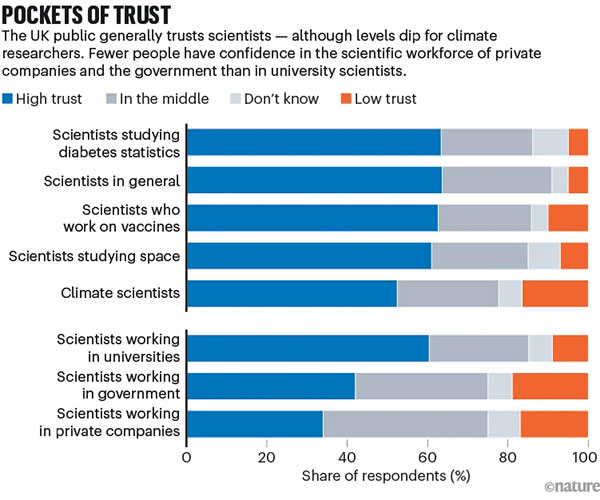
| Nearly two-thirds of 4,262 adults in the United Kingdom surveyed said they trust scientists, giving a score of 7 or higher on a zero-to-ten scale. The most influential factors were whether respondents felt that scientists are "on the side of people like them" and whether they thought of scientists as open and transparent. As for actions that respondents said would help build trust, the top two were almost tied: scientists actively correcting misinformation, and explaining how their work improves ordinary people’s lives. (Nature | 6 min read) | ||||||
|
||||||
Tighten rules surrounding animal tradeThe ‘exotic’ wild animal trade disproportionately harms reptiles and amphibians, which are often taken directly from the wild and less effectively protected than mammals and birds, write a group of wildlife conservationists and animal-rights group members. Legal gaps enable the unsustainable trade in these species, but an upcoming meeting of the United Nations Convention against Transnational Organized Crime provides an unprecedented opportunity for reform. Governments around the world must act to strengthen the international response to wildlife trafficking to protect reptiles and amphibians harmed by the pet trade, the group writes. Nature | 10 min read |
||||||
Five best science books this weekAndrew Robinson’s pick of the top five science books to read this week includes the physics of spaceflight and the story of a polio vaccine pioneer. Nature | 4 min read |
||||||
Quote of the day“Memory is fragile at first, more like wet cement than carved stone.”Psychologist Michael Craig explores evidence that we retain information better when we take a moment of rest, compared with jumping straight into an absorbing task. (The Conversation | 6 min read) |
||||||
|
|
||||||
|
||||||
|
|
||||||
|
||||||
|
If you enjoy this newsletter, please recommend it to a friend or colleague. Click here to forward it by e-mail. Thank you! You received this newsletter because you subscribed with the email address: - To stop all Nature Briefing e-mails forever, click here to remove your personal data from our system. |
||||||
|
Nature Portfolio | The Springer Nature Campus, 4 Crinan Street, London, N1 9XW, United Kingdom Nature Portfolio, part of Springer Nature. |