The ‘master’ proteins that protect us from deadly mutations
What matters in science |

Is this your brand on Milled? Claim it.
|
|||||
|
|||||
|
Hello Nature readers, |
|||||
|
|||||
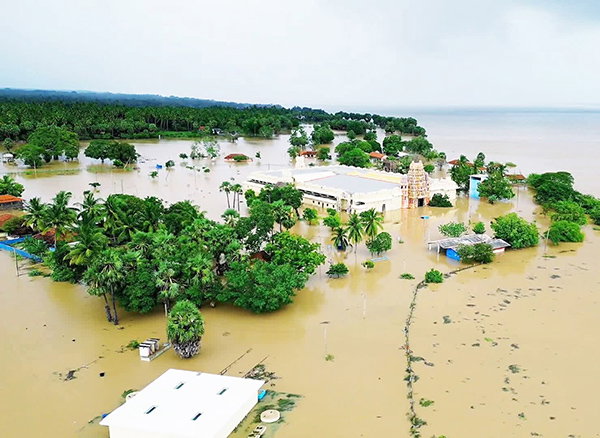
| During cyclone Ditwah, Sri Lanka received 10% of its yearly rainfall in a single day. (Majority World/Getty) | |||||
Asia and the Pacific suffer under rising heatSea levels and ocean temperatures reached alarming highs in Asia last year, while Japan, China and Korea all recorded their hottest summer on record. Deadly floods hit Pakistan, extreme rain fell in Sri Lanka and 14 tropical cyclones impacted the Macao region. “The report clearly shows that the Asian region is one of the most vulnerable to climate change,” says oceanographer Matthew England. Early warning and coordinated action will be essential to save lives, says the report. Nature | 6 min readReference: State of the Climate in Asia report |
|||||
Should nicotine be regulated like drugs?A call by the Pacific island nation of Palau for nicotine to be regulated like narcotics by the United Nations will trigger an assessment and a vote by member states. If nicotine were to be added to the UN Convention on Psychotropic Substances, it would effectively make it illegal to sell nicotine products that aren’t considered medicinal, says nicotine-treatment specialist Renee Bittoun. But tobacco-company lobbying makes it unlikely that nicotine will be added to the list, says Bittoun. Nature | 4 min read |
|||||
Goats can follow our dulcet tonesDomestic goats (Capra hircus) can follow the voice of a person to find a reward. A group of goats were each presented with two buckets, one empty and one containing food. When a hidden researcher spoke enthusiastically in the direction of the full bucket, the goats moved toward it 60% of the time — more often than would be expected by chance. Voice-following abilities have previously been found in dogs, but not chimpanzees, which could suggest that the skills arose through domestication. The Guardian | 3 min readReference: Royal Society Open Science paper |
|||||
US ocean observatory on the chopping blockLast month, the National Science Foundation (NSF) abruptly decided to dismantle much of the Ocean Observatories Initiative (OOI) — a network of underwater and floating infrastructure, and a fixed subsea observatory in the Pacific Northwest. Marine scientists have long debated the correct balance between spending on costly infrastructure like these, and funding research grants. But the sudden break-up of OOI has triggered widespread condemnation. The NSF has not shared its reasoning for the decision, so researchers are left wondering to what extent the move reflects scientific priorities, policy changes or the predilections of the Trump administration. |
|||||
Where academic freedom is up (and down)Bangladesh, Uzbekistan and Montenegro are among the nine countries that have seen significant improvements in academic freedom in the past ten years, says a new report that looks at individual and institutional metrics. Meanwhile, 50 countries — including big hitters such as the United Kingdom — experienced declines. The report specifically calls out the “fast and steep deterioration” of academic freedom in the United States because of “state and federal attacks [that] have generated severe pressure on American universities”. Scientific American | 6 min readReference: Academic Freedom Index report |
|||||
|
|||||
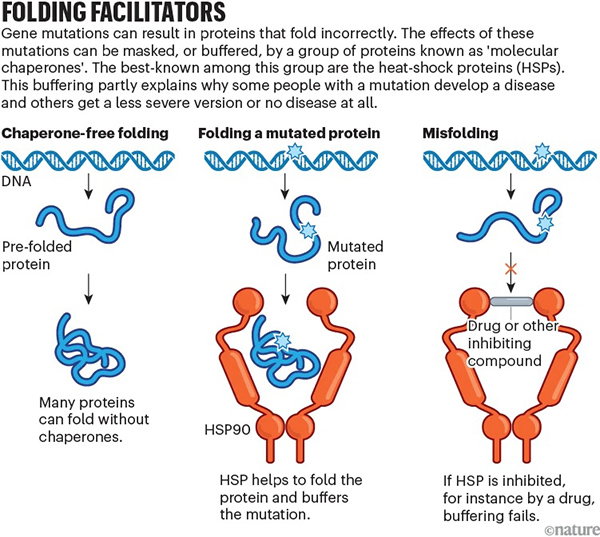
The proteins that protect us from mutationsOur genomes are full of mutations that have the potential to cause harm. But often they don’t, thanks to a family of proteins that ‘buffer’ the mutation’s ill effects. These proteins, called HSPs, have been on scientists’ radar for decades, but advances in techniques such as cell screening and genetic editing are giving new insight into the proteins’ roles. Researchers are now trying to unpick how buffer proteins have influenced human evolution, and are investigating how to exploit them in treatments for diseases such as breast cancer. Nature | 12 min read |
|||||
|
|||||
Video: give me a hand, mantaGalápagos sharks (Carcharhinus galapagensis) have been caught on camera scraping up against manta rays (Mobula birostris) to scratch themselves. The backs and bellies of mantas are covered with rough dermal denticles that might help the sharks scrape parasites off their snouts and gills. The mantas don’t seem to mind when young sharks do it, but get a bit skittish when bigger sharks get too close for comfort. Scientific American | 5 min read & 30 sec videoReference: Marine Biodiversity paper & Environmental Biology of Fishes paper |
|||||
Quote of the day“What does success look like in public health? It’s often the things we don’t see, the headlines we don’t read, the diseases that don’t develop.”As passengers from the MV Hondius cruise ship end their hantavirus isolation period, global public-health researcher Devi Sridhar celebrates the work that kept the deadly infection from spreading more widely. (The Guardian | 8 min read) |
|||||
|
|
|||||
|
|||||
|
|
|||||
Free newsletters from NatureWant more? Update your preferences to sign up to our other Nature Briefing newsletters:
|
|||||
|
|||||
|
You received this newsletter because you subscribed with the email address: - Please add [email protected] to your address book. Enjoying this newsletter? You can use this form to recommend it to a friend or colleague — thank you! Had enough? To unsubscribe from this Briefing, but keep receiving your other Nature Briefing newsletters, please update your subscription preferences. To stop all Nature Briefing emails forever, click here to remove your personal data from our system. Fancy a bit of a read? View our privacy policy. Forwarded by a friend? Get the Briefing straight to your inbox: subscribe for free. Want to master time management, protect your mental health and brush up on your skills? Sign up for our free short e-mail series for working scientists, Back to the lab. Get more from Nature: Register for free on nature.com to sign up for other newsletters specific to your field and email alerts from Nature Portfolio journals. Would you like to read the Briefing in other languages? 关注Nature Portfolio官方微信订阅号,每周二为您推送Nature Briefing精选中文内容——自然每周简报。
Nature Portfolio | The Springer Nature Campus, 4 Crinan Street, London, N1 9XW, United Kingdom Nature Portfolio, part of Springer Nature. |