Wearable robot helps kids with neuromuscular disease to stand
What matters in science |

Is this your brand on Milled? Claim it.
|
|||||
|
|||||
|
Hello Nature readers, |
|||||
|
|||||
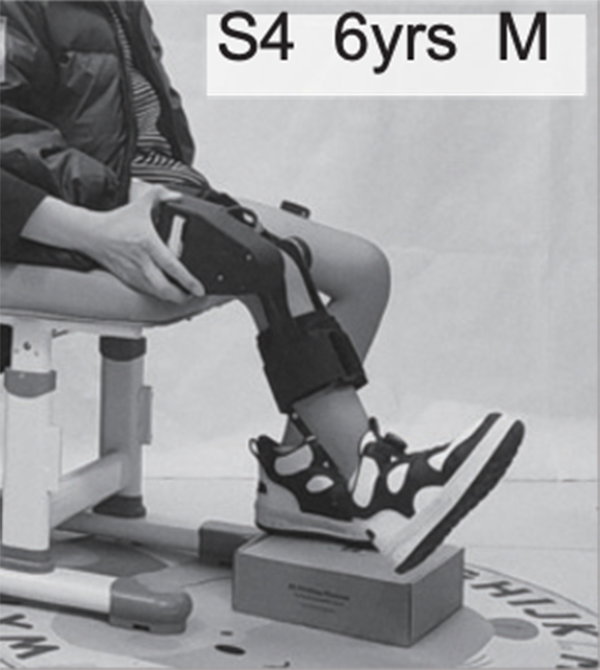
| To help children to engage with the challenging sessions using a new robotic device, researchers gamified the training so that the kids saw themselves kicking a ball as they extended their leg. (Yuebing Li et al/Nature) | |||||
Robot rehabs kids with rare diseaseA lightweight, wearable robotic device can help children living with a rare condition called spinal muscular atrophy (SMA) improve their knee function, which could help them stand unassisted. The device provides resistance training tailored to the individual needs of children who are unable to walk because of SMA. After using the robot for six weeks, six children — aged between 6 and 10 years — could stand from a lower sitting angle, had 20% bigger quadriceps, and could generate more than twice as much force when bending their knees, compared to pre-training assessments. Nature | 5 min readReference: Nature paper |
|||||
Tough peer review can lead to citation boostPapers that are put through the wringer during the peer review process go on to have a higher impact in science than those that sail through it. Researchers used artificial intelligence to analyse the peer-review correspondence associated with a selection of papers published in Nature Communications. They found that papers that elicited stronger criticism from reviewers and required more-extensive revisions received more citations than did papers that drew lighter comments. A higher ‘quality’ of reviewer comments — those that were more specific and well-reasoned — was also associated with a boost in citations to the published product. Nature | 5 min readReference: arXiv preprint (not peer reviewed) |
|||||
Catching up on Zs could keep you healthyAn extra-long snooze after a short night’s sleep appears to offset some of the negative health effects associated with sleep deprivation. Researchers found that people who caught up on sleep the night after a brief slumber — termed ‘sleep rebound’ — were less likely to die in the eight years following the study period than were people who didn’t. They also found that most sleep rebounders didn’t wait until the weekend to sleep in. Instead, they tried to compensate for lost sleep as soon as possible. Science | 4 min readReference: Nature Communications paper |
|||||
|
|||||
|
|||||
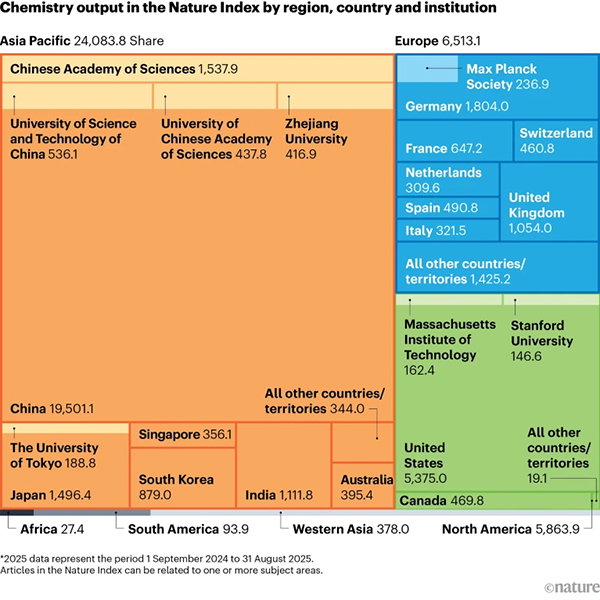
| According to the Nature Index database of research articles in a selected group of scientific journals, China has increased its chemistry research output by almost 350% since 2015. Its contribution as of 2025 is higher than the top 50 other countries combined. (Nature Index | 4 min read) | |||||
|
|||||
African ants are in poachers’ crosshairsIn East Africa, giant ants are the new flavour of the month for poachers. The queens of one species, Messor cephalotes, are in particular demand because their striking colouring is sought after by collectors. Removing a queen can spell disaster for its colony, which relies on it to produce more offspring, and the collapse of ant populations can have serious ecological consequences, experts say. Countries such as Kenya are trying to clamp down on trafficking, but the insects’ size, the complexity of species identification and limited monitoring capacity make the ant trade hard to detect. Nature Africa | 6 min read |
|||||
Chemists tackle the ‘PFAS’ problemFluorine-containing compounds are everywhere, from weatherproof clothing and non-stick cookware to batteries and computer chips. But the strong chemical bonds that make fluorine products so useful are also their greatest flaw. Per- and polyfluoroalkyl substances (PFASs) — ‘forever chemicals’ — are toxic, do not break down naturally, and making them is a hazardous, energy-intensive process. Chemists are rising to the challenge, investigating alternatives to fluorochemicals and ways to recycle PFAS waste. Driving the field forward are proposed PFAS bans, such as the one being considered in the European Union. Nature Index | 13 min read |
|||||
How to support science under siegeObservers focused on the threats to publicly funded science in the United States should widen their view, argues virologist Humberto Debat. “From the perspective of a scientist working in the Global South, what is happening in the US looks less like an anomaly and more like another addition to a growing list of countries where the scientific community is under siege,” he writes. For example, Debat points to Argentina, where he has a laboratory, and which has seen its scientific infrastructure dismantled by the administration of President Javier Milei. The international scientific community can no longer absorb these shocks on an ad-hoc basis, he argues: global scientific bodies and funders must get organized to shore up science during times of trouble. eLife | 13 min read |
|||||
Quote of the dayEbola care is “often seen as an international force flying in and saving Africans. But the majority of people saving lives and risking their lives are Africans.”Whilst some African countries do rely on foreign aid to help curb disease outbreaks, their contributions shouldn’t overshadow the work of African health workers, says epidemiologist Lina Moses. (The New York Times | 6 min read) |
|||||
|
|
|||||
|
|||||
|
|
|||||
Free newsletters from NatureWant more? Update your preferences to sign up to our other Nature Briefing newsletters:
|
|||||
|
|||||
|
You received this newsletter because you subscribed with the email address: - Please add [email protected] to your address book. Enjoying this newsletter? You can use this form to recommend it to a friend or colleague — thank you! Had enough? To unsubscribe from this Briefing, but keep receiving your other Nature Briefing newsletters, please update your subscription preferences. To stop all Nature Briefing emails forever, click here to remove your personal data from our system. Fancy a bit of a read? View our privacy policy. Forwarded by a friend? Get the Briefing straight to your inbox: subscribe for free. Want to master time management, protect your mental health and brush up on your skills? Sign up for our free short e-mail series for working scientists, Back to the lab. Get more from Nature: Register for free on nature.com to sign up for other newsletters specific to your field and email alerts from Nature Portfolio journals. Would you like to read the Briefing in other languages? 关注Nature Portfolio官方微信订阅号,每周二为您推送Nature Briefing精选中文内容——自然每周简报。
Nature Portfolio | The Springer Nature Campus, 4 Crinan Street, London, N1 9XW, United Kingdom Nature Portfolio, part of Springer Nature. |